
Struggling to mass-produce your unique plastic parts? The process can seem complex and expensive. But it's the most efficient way to get exactly what you need, at scale.
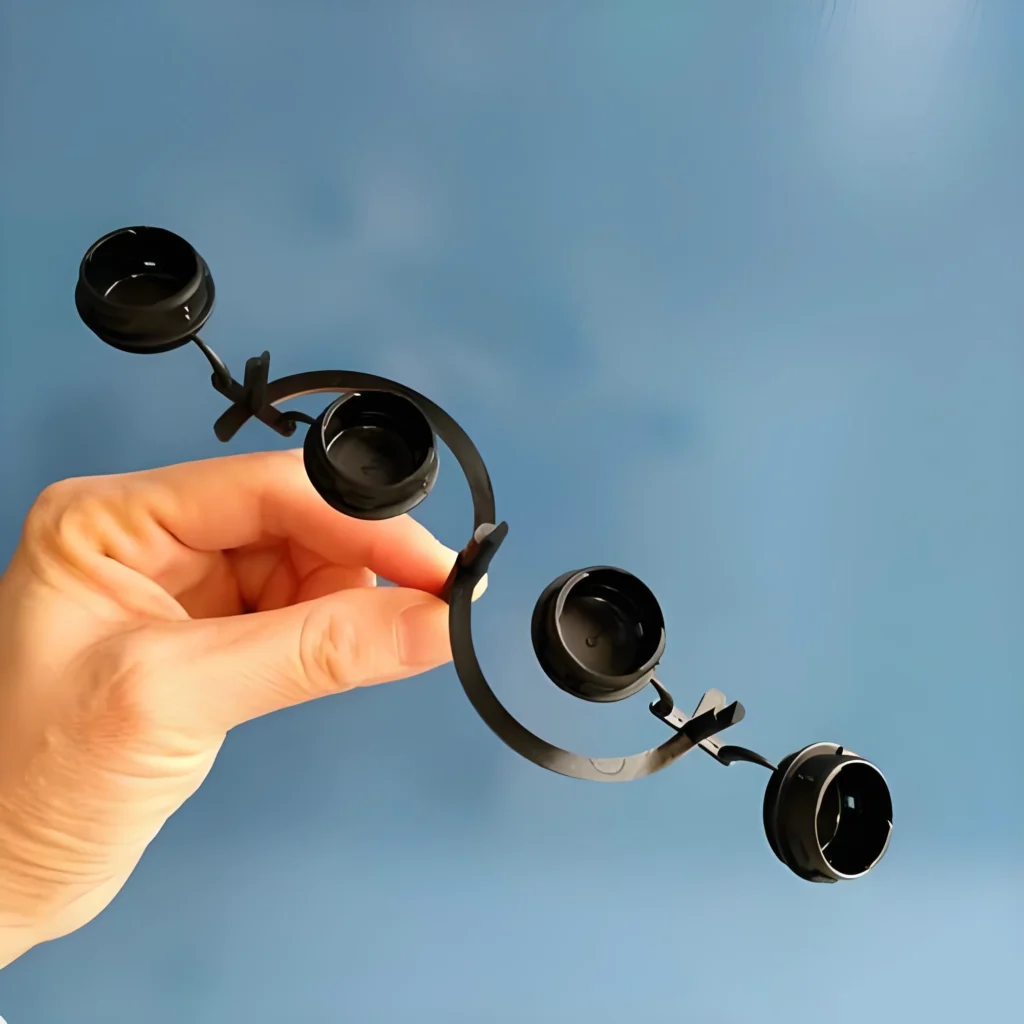
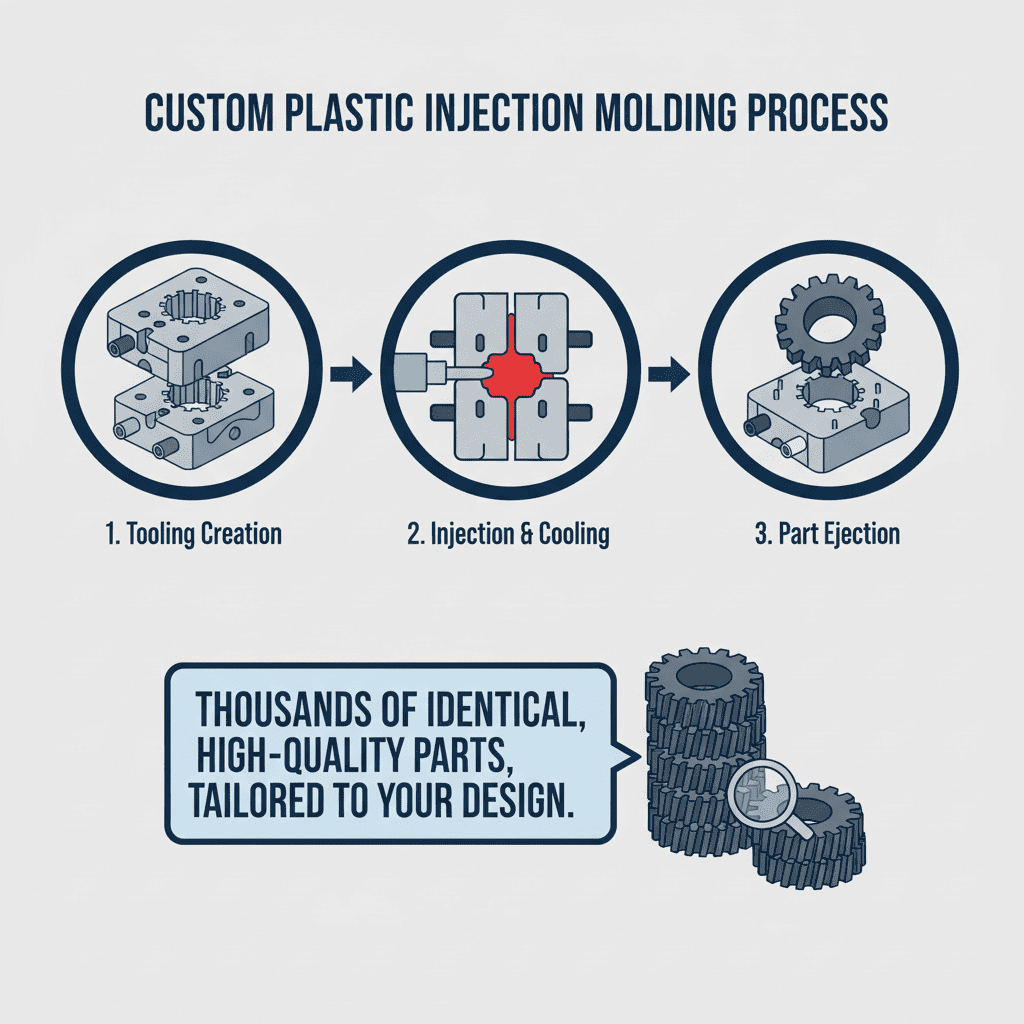
Custom plastic injection molding is a manufacturing process1 for producing parts in large volumes. It works by creating a unique mold2, or tool, specifically for your product. We then inject molten plastic into this mold to produce thousands or even millions of identical, high-quality parts3, tailored to your design.

This process might sound straightforward, but a lot goes into making it successful. As someone with 15 years in this business, I've seen how getting the details right from the start makes all the difference. It's more than just squirting plastic into a cavity; it's a precise science. Let's break down what really makes custom molding work and how it can benefit your project.
How do we guarantee precision in custom molding?
Worried your custom parts won't meet tight tolerances4? Inconsistent quality can ruin a project and your budget. We ensure every piece is perfect by matching the right materials with a precisely engineered mold.
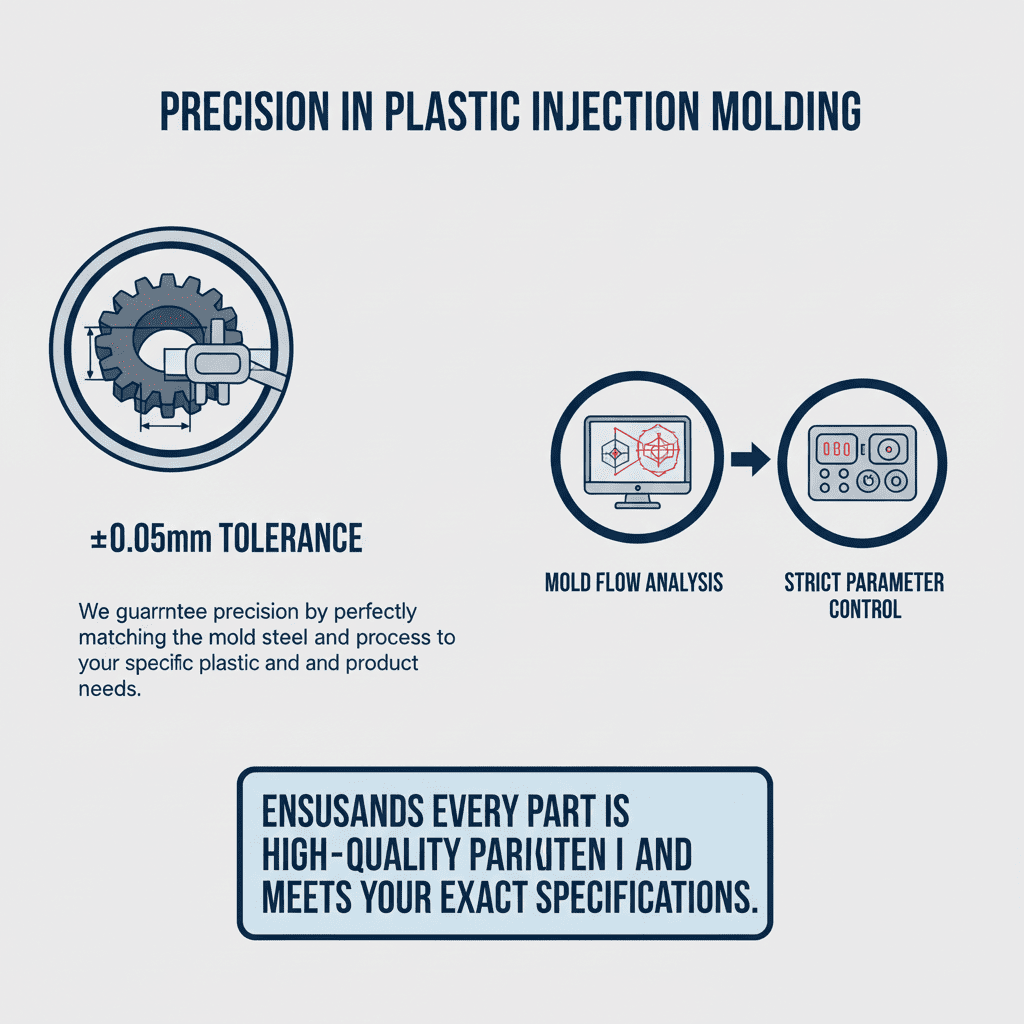
We guarantee precision by perfectly matching the mold steel5 and process to your specific plastic and product needs. For tight tolerances like ±0.05mm, we use advanced tools like mold flow analysis6 and strict parameter control. This ensures every part is consistent and meets your exact specifications.
Achieving precision starts long before we inject any plastic. It's all about the foundation: the mold and the material. When a client like an educational toy developer comes to us, their first concern is often durability and fit. The parts have to snap together perfectly, time after time. To do this, we must first choose the right mold steel. The choice depends entirely on the plastic material and production volume.
Mold Steel and Material Matching
| Material Property | Challenge | Recommended Mold Steel | Why it Matters |
|---|---|---|---|
| General Purpose (ABS, PP) | Standard wear | 718H | A good all-rounder for moderate production runs. |
| Abrasive (Glass-Fiber) | High wear and tear | H13 (Hardened) | This steel is extremely tough and resists abrasion from fibers. |
| Corrosive (PVC) | Chemical degradation | S136 (Stainless) | It resists rust and corrosion, keeping the mold surface perfect. |
This match is critical. Using the wrong steel means the mold can wear out or corrode, causing part dimensions to drift and fail quality checks. For some projects, we need to hold tolerances as tight as ±0.02mm. This level of accuracy is only possible when we also control the process parameters perfectly, like injection pressure and temperature, using simulations to get it right before production even begins.
Is custom injection molding cost-effective7 for large orders?
Thinking about a large production run? You need a method that is both reliable and affordable. One-off production methods get incredibly expensive when you need thousands of units.
Yes, it is highly cost-effective for large orders. The initial investment in a custom mold is spread across thousands or even hundreds of thousands of parts. This "one-time setup, repeat use" model, combined with high-speed automation, dramatically lowers the cost per piece.
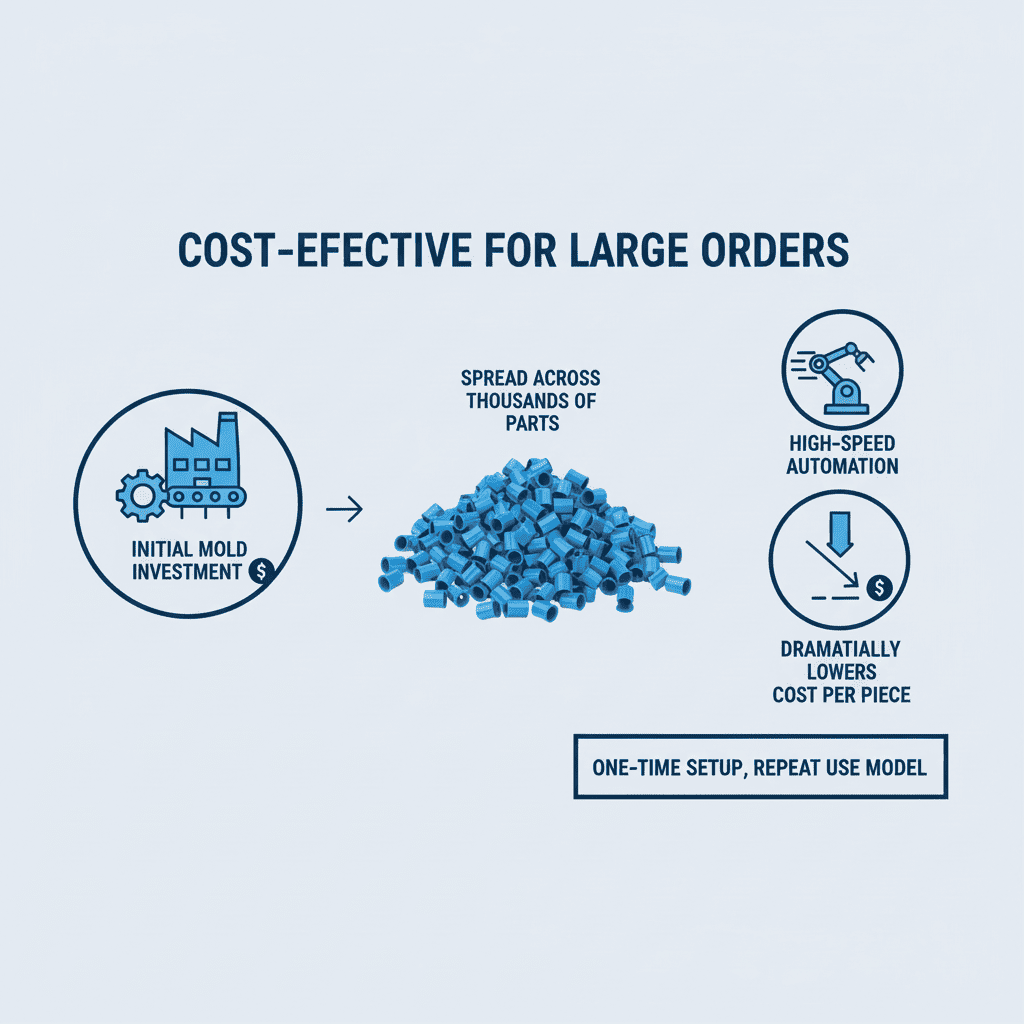
The real magic of injection molding is its economy of scale. I remember working with a large distributor of automotive interior parts. They needed to produce over 500,000 units of a specific dashboard component annually. The initial cost of the mold seemed high, but we broke it down. A high-quality steel mold has a lifespan of hundreds of thousands of cycles, sometimes over a million. By investing in one durable mold, they could produce parts for years with minimal recurring tooling costs. This is the "once-and-done" power of molding.
The Economics of Scale
- Mold Reusability: We build molds to last. A single mold can be used repeatedly, so the initial investment is divided by a huge number of parts, making each one very cheap.
- Automation: Our factory in Dongguan uses automated production lines. Robots handle the parts, and machines run 24/7. This reduces labor costs and increases output, further lowering the unit price.
- Material Efficiency: Injection molding is a "net-shape" process. This means the final part is formed in its final shape with very little waste. Our raw material utilization is often over 95%. Less waste means lower material costs passed on to the client.
For projects with high volumes, this efficiency is unbeatable. It allows companies to produce high-quality, precision parts at a cost that other manufacturing methods simply cannot match. It transforms a large capital expense into a tiny fractional cost for each item sold.
Can injection molding create complex parts8 for special industries?
Does your product have intricate shapes, internal channels, or need to meet strict industry standards? Traditional assembly methods can be slow, expensive, and create weak points.
Absolutely. Injection molding excels at producing complex, single-piece parts that would otherwise require multiple assembly steps. We can also use specialized plastic additives to meet the strict functional requirements of industries like medical, automotive, and electronics.
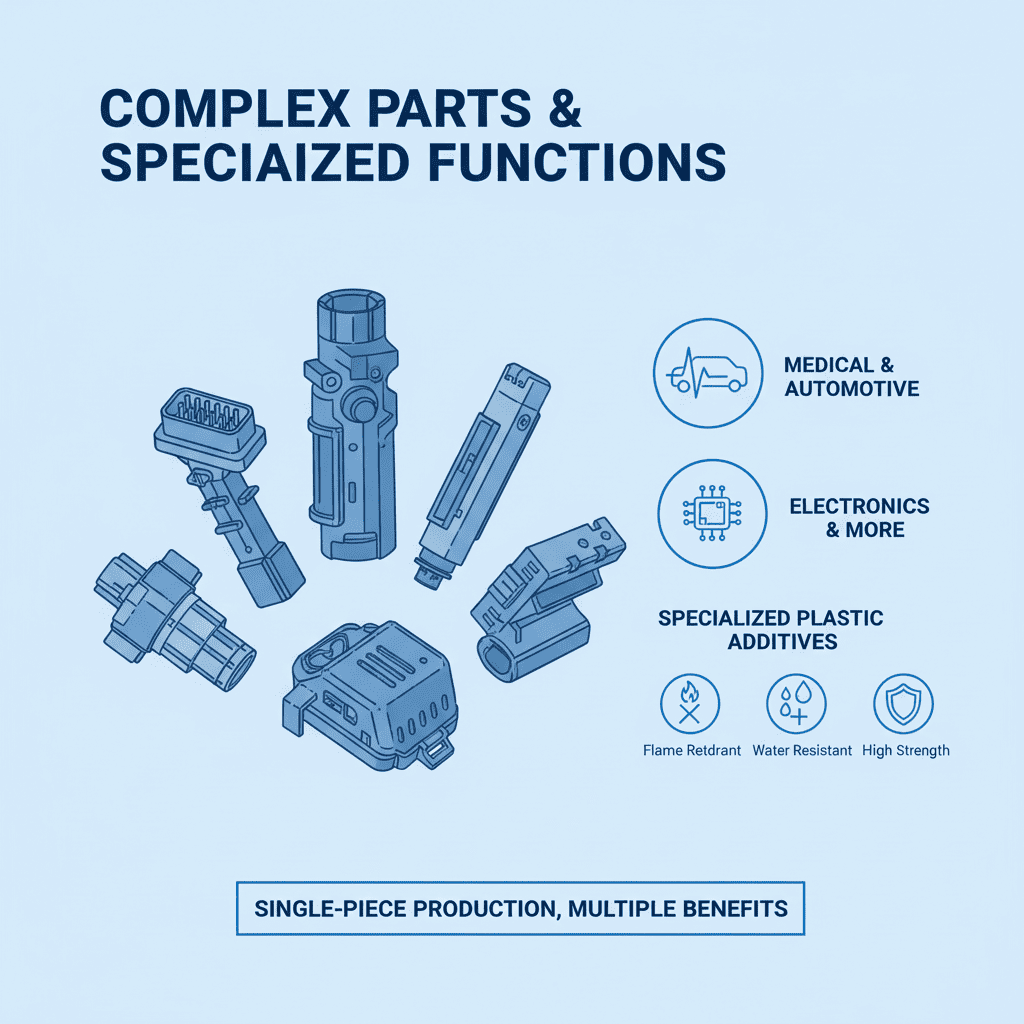
The flexibility of injection molding is one of its greatest strengths. We can create parts with complex geometries, like internal screw threads, hollow chambers, and fine ribbing, all in a single shot. This integration is a game-changer. For example, we worked with a medical device company that needed a housing compliant with USP Class VI standards. The design was complex and had to be perfectly smooth and free of seams where bacteria could grow. Instead of machining and bonding multiple pieces, we designed a mold that created the entire part at once.
Adapting to Industry-Specific Needs
- Complex Geometry: We can mold intricate features directly into the part, eliminating the need for costly and time-consuming secondary operations like drilling or gluing. This also makes the final product much stronger.
- Multi-Material Molding: Our multi-shot injection molding process allows us to combine different materials in one part. Think of a toothbrush with a hard plastic handle and a soft, grippy rubber overlay. This is all done in one automated cycle.
- Performance Additives: We can modify the plastic to give it special properties. By mixing in additives, we can enhance a part's performance to meet specific needs.
| Additive | Benefit | Common Industry |
|---|---|---|
| Glass Fibers | Increases strength and rigidity | Automotive, Industrial |
| Flame Retardants | Prevents or slows the spread of fire | Electronics, Consumer Goods |
| Antimicrobial Agents | Inhibits the growth of bacteria | Medical, Food Service |
This adaptability makes injection molding the go-to solution for developers in demanding fields. It provides the technical freedom to design for function without being limited by manufacturing constraints.
Conclusion
Custom plastic injection molding offers unparalleled precision, cost-effectiveness at scale, and design flexibility, making it the ideal solution for bringing high-quality, complex products to market efficiently.
Learn about the detailed steps involved in the plastic manufacturing process to appreciate its complexity and efficiency. ↩
Discover the importance of creating a unique mold and how it impacts the quality of the final product. ↩
Find out what makes parts high-quality in injection molding and how to ensure your products meet these standards. ↩
Understand the significance of tight tolerances in manufacturing and how they affect product quality. ↩
Learn about different types of mold steel and their specific applications in injection molding. ↩
Explore how mold flow analysis enhances the injection molding process and ensures precision. ↩
Discover why custom injection molding is a cost-effective solution for large production runs. ↩
Discover how injection molding can produce complex parts and its advantages for specialized industries. ↩