
Custom plastic mold making is the foundation of high-quality custom injection molded parts for industrial, consumer, and commercial applications. Whether you are conducting low volume injection molding for prototype testing or small-batch mass production, precise mold making plastic processes directly determine part accuracy, surface finish, production efficiency, and overall manufacturing cost. Many product developers and procurement teams encounter defective parts, delayed delivery, and unexpected budget overruns simply due to common but avoidable mold design and manufacturing mistakes. To ensure reliable custom plastic part production, we break down five critical mistakes to avoid in mold making plastic for custom parts.
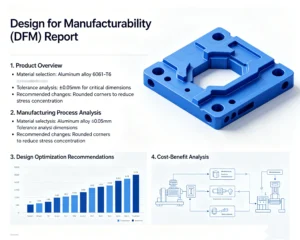
The first and most prevalent mistake is skipping professional DFM analysis for plastic molds before production. DFM (Design for Manufacturability) analysis is the core step to verify mold structure feasibility, including wall thickness uniformity, draft angle design, undercut position, and rib structure rationality. Many clients provide only finished product drawings and rush into mold making plastic processing, ignoring structural defects that cannot be produced by injection molding. Without thorough DFM checking, molds may face demolding difficulties, part shrinkage, or warpage after production, leading to secondary mold modification and prolonged project cycles.
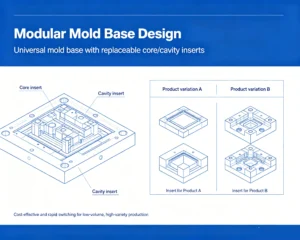
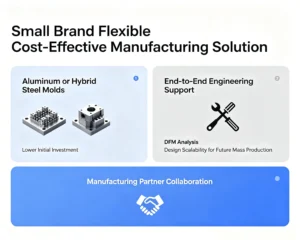
Secondly, unreasonable material selection for mold making plastic severely undermines mold durability and part consistency. Different custom plastic parts require matched mold core materials and plastic raw materials. For low volume injection molding prototypes, aluminum molds are cost-effective and efficient, while long-term small-batch production requires steel molds for higher precision and wear resistance. Choosing low-grade mold materials to cut initial costs will result in frequent mold wear, burrs on custom injection molded parts, and unstable product dimensions, greatly increasing subsequent maintenance and replacement costs.
The third critical error is neglecting cooling system optimization in plastic mold manufacturing. The cooling system dominates injection molding cycle time and part quality. Many novice mold makers design overly simple cooling channels or arrange channels unevenly, causing inconsistent cooling speed of custom plastic parts. Local overheating leads to sink marks, bubbles, and deformation, while insufficient cooling efficiency extends each molding cycle, reducing overall production output. Optimized cooling channel layout is essential for stable, high-efficiency low volume injection molding.
Fourthly, ignoring draft angle setting is a common fatal flaw in custom plastic mold making. Sufficient draft angles allow smooth demolding of plastic parts without scratching or damaging product surfaces. Many custom part designs pursue vertical appearance and omit standard draft angles, resulting in tight demolding, part cracking, or surface abrasion during mass production. This mistake is particularly harmful for precision custom injection molded parts with strict surface requirements, ruining product aesthetics and usability.
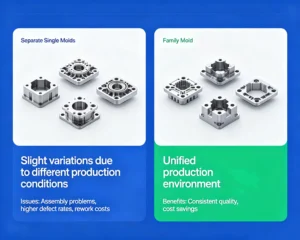
Finally, overlooking tolerance matching between mold design and custom part requirements leads to unqualified finished products. Different industrial custom parts have distinct dimensional tolerance standards for assembly and application. Many mold making plastic processes adopt unified standard tolerance without targeted adjustment, causing assembly failure of matched parts. Excessive tolerance deviation leads to mass product scrapping, which is a huge waste of time and cost for small-batch customization projects.
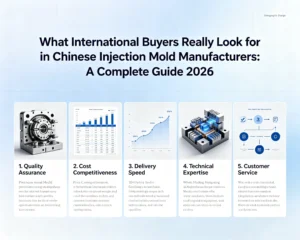
In conclusion, high-quality mold making plastic for custom parts relies on standardized processes, professional DFM analysis, reasonable material selection, optimized structural design, and precise tolerance control. Avoiding these five critical mistakes can effectively eliminate most quality defects in custom plastic part production, improve low volume injection molding efficiency, and help clients obtain stable, cost-effective customized plastic products. Professional plastic mold manufacturing focuses on detail optimization, which is the key to successful custom molding projects of all scales.