
Struggling with high mold costs for your new product? This risk can kill your project before it even starts. We offer flexible solutions that let you launch without breaking the bank.
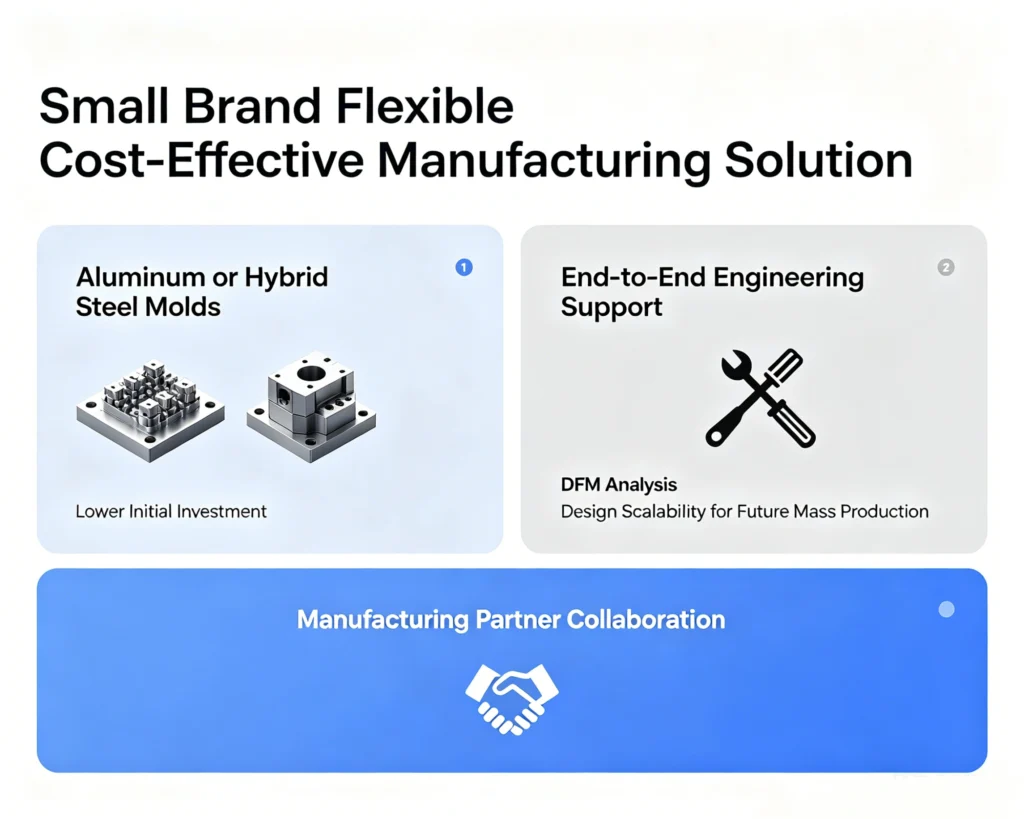
The best solution for small brands is a flexible, cost-effective approach. This involves using aluminum or hybrid steel molds to lower initial investment1, combined with a manufacturing partner who provides end-to-end engineering support, from DFM analysis2 to ensuring your design can scale for future mass production.

When I talk to founders of small brands, I hear the same story over and over. They have a brilliant idea, a great design, but they hit a wall when they get quotes for traditional steel production molds. The cost is just too high, and the minimum order quantities are massive. It feels like the manufacturing world is only built for giants. But that's not true. The key isn't to find the cheapest unit price; it's to find the smartest, most flexible path to market. This is where a true manufacturing partner shines, by helping you navigate these early stages with strategies designed for growth3. Let's explore how we make this happen for brands just like yours.
How Can Small Brands Achieve Cost-Effective Flexibility in Molding?
Worried that a high-quality mold is too expensive? This fear often forces brands to compromise on their vision. But what if you could have both quality and affordability?
For low volume injection molding, prioritize a small batch injection mold made from aluminum or pre-hardened P20 steel. This dramatically cuts your initial tooling costs and shortens lead times4, allowing you to get to market faster and test your product without a huge financial risk.
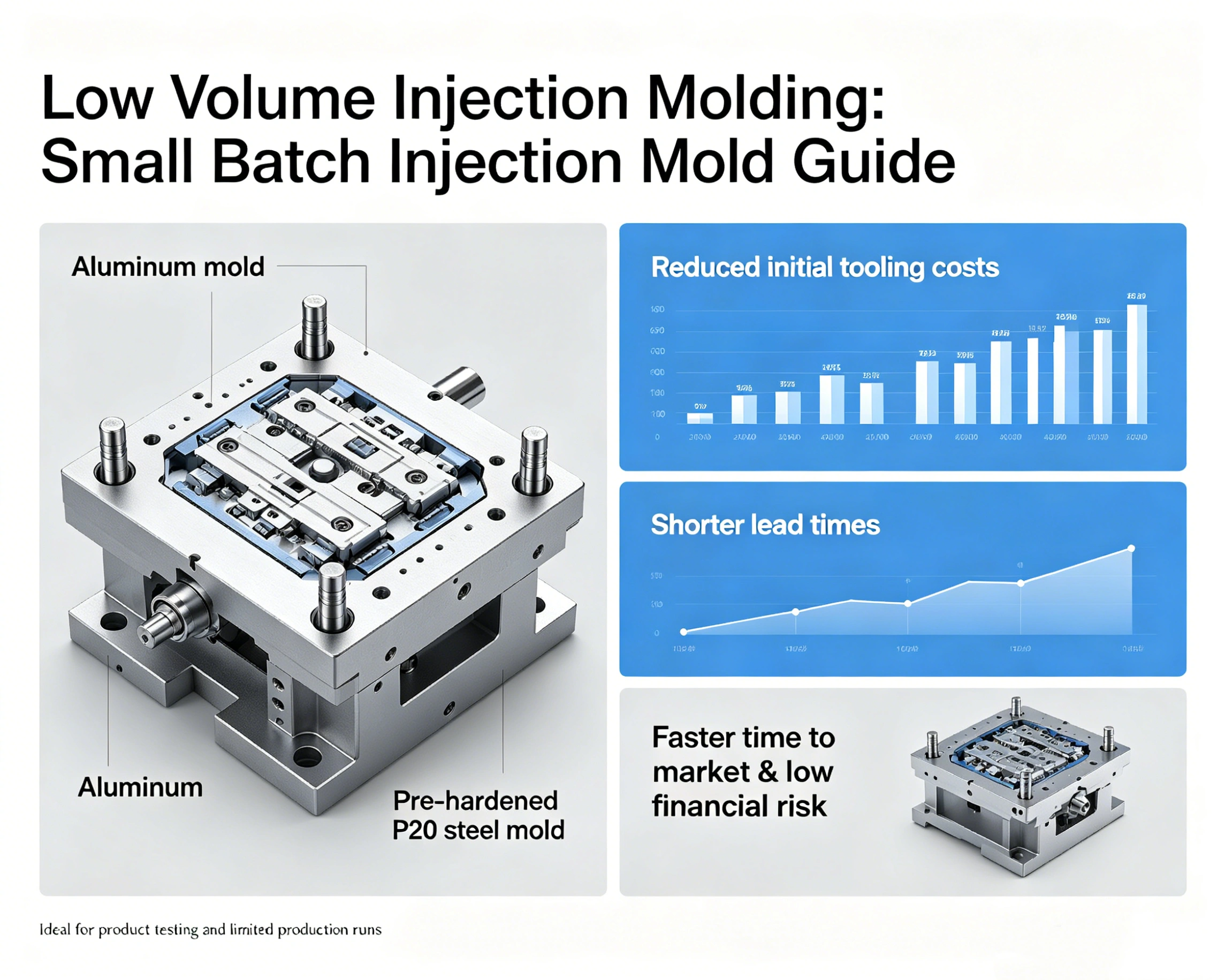
When you're a small brand, cash flow is king. Spending a massive amount on a hardened steel mold for a product you haven't even market-tested is a huge gamble. We always advise our clients to think about "cost-effective flexibility" instead. This means choosing the right tool for the job at hand. For production runs between 500 and 10,000 units5, an aluminum or a softer steel mold is often the perfect solution. It won't last for a million shots, but it doesn't need to. Its purpose is to help you launch, gather feedback, and iterate your design quickly. As a China flexiable mold supplier, we see this as the smartest way to manage risk and use your capital wisely. It's about spending money on what matters now—getting your product into customers' hands—while keeping the door open for future growth.
| Mold Material | Initial Cost | Lifespan (Shots) | Best For |
|---|---|---|---|
| Aluminum | Low | 1,000 - 10,000 | Prototypes, market testing |
| P20 Steel | Medium | 50,000 - 100,000 | Small batch injection molding |
| Hardened Steel | High | 500,000+ | High-volume mass production |
Why Is Comprehensive Engineering Support a Crucial Part of the Solution?
Have you ever had a great design that failed in production? It’s a frustrating and costly setback. A good manufacturing partner helps you avoid this by spotting problems before they happen.
A true custom injection mold maker is more than a supplier; they are an extension of your team. We provide in-depth DFM analysis and custom plastic part design6 support to ensure your product is not only beautiful but also manufacturable, durable, and cost-effective from the very first shot.
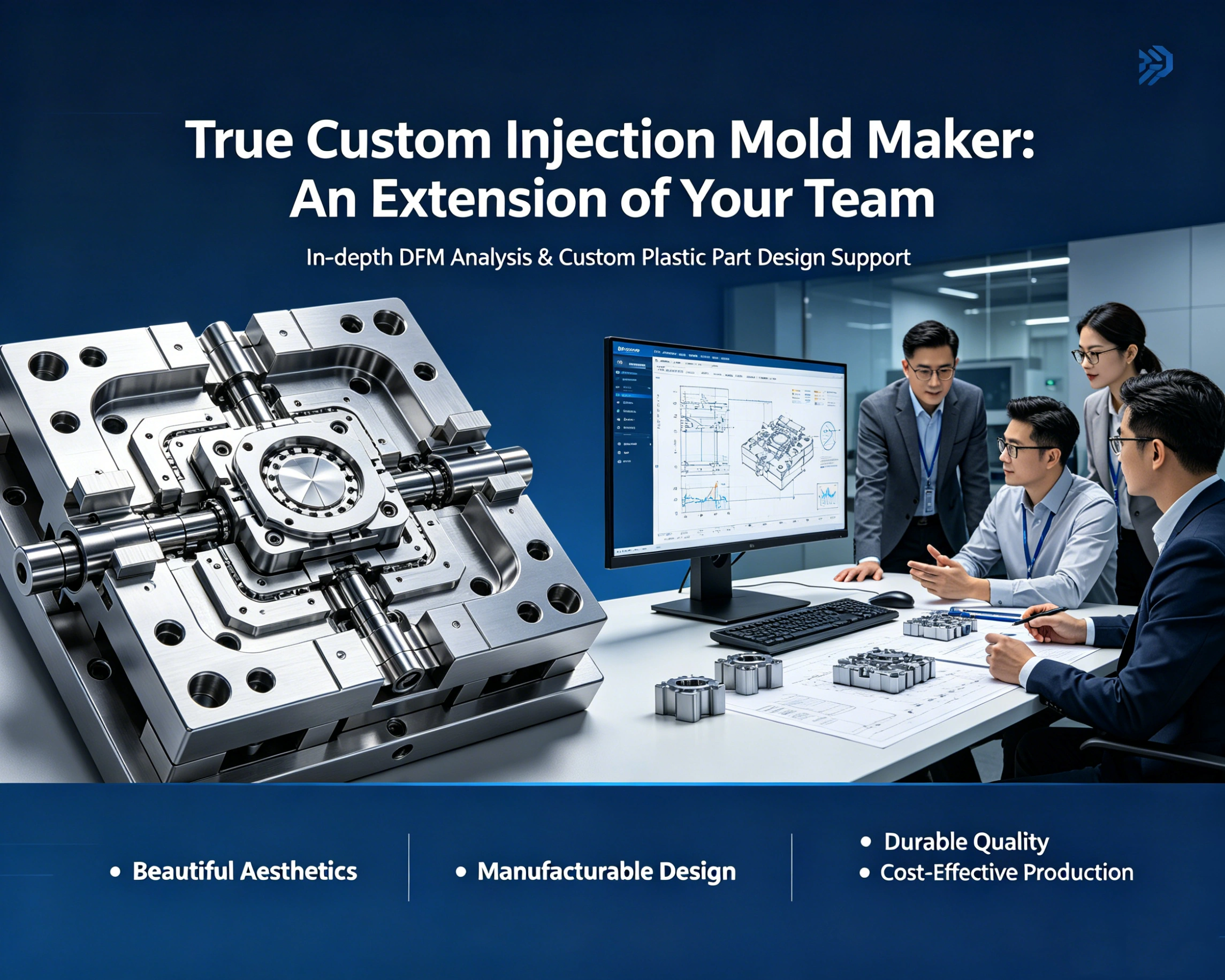
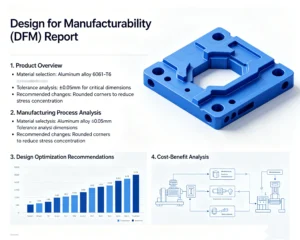
I remember working with a STEM toy developer. Their design was brilliant, but it had some features that were impossible to mold without complex, expensive actions in the tool. Instead of just quoting a high price, we sat down with them. Our engineers performed a complete Design for Manufacturability (DFM) analysis. We suggested a few tiny, almost invisible changes to the custom plastic part design—adjusting a draft angle here, modifying a rib there. These changes simplified the mold design, cut the tooling cost by 30%7, and improved the part's strength. This is what we mean by partnership. It’s not just about making parts; it's about making your product successful. We also handle localization8, ensuring all materials comply with standards like RoHS and REACH9 for your target market. This proactive approach to quality control and compliance is built into our process, protecting your brand and your investment.
How Can Your Low-Volume Production Scale for Future Growth?
Your product is a hit, and demand is soaring. But now you're stuck with a low-volume mold. The thought of paying for brand-new tooling just to scale up is daunting.
A strategic low volume injection molding solution plans for success. By using systems like a Master Unit Die (MUD) or designing the initial mold with scalability in mind, you can transition from small batches to mass production without starting from scratch, saving significant time and money.
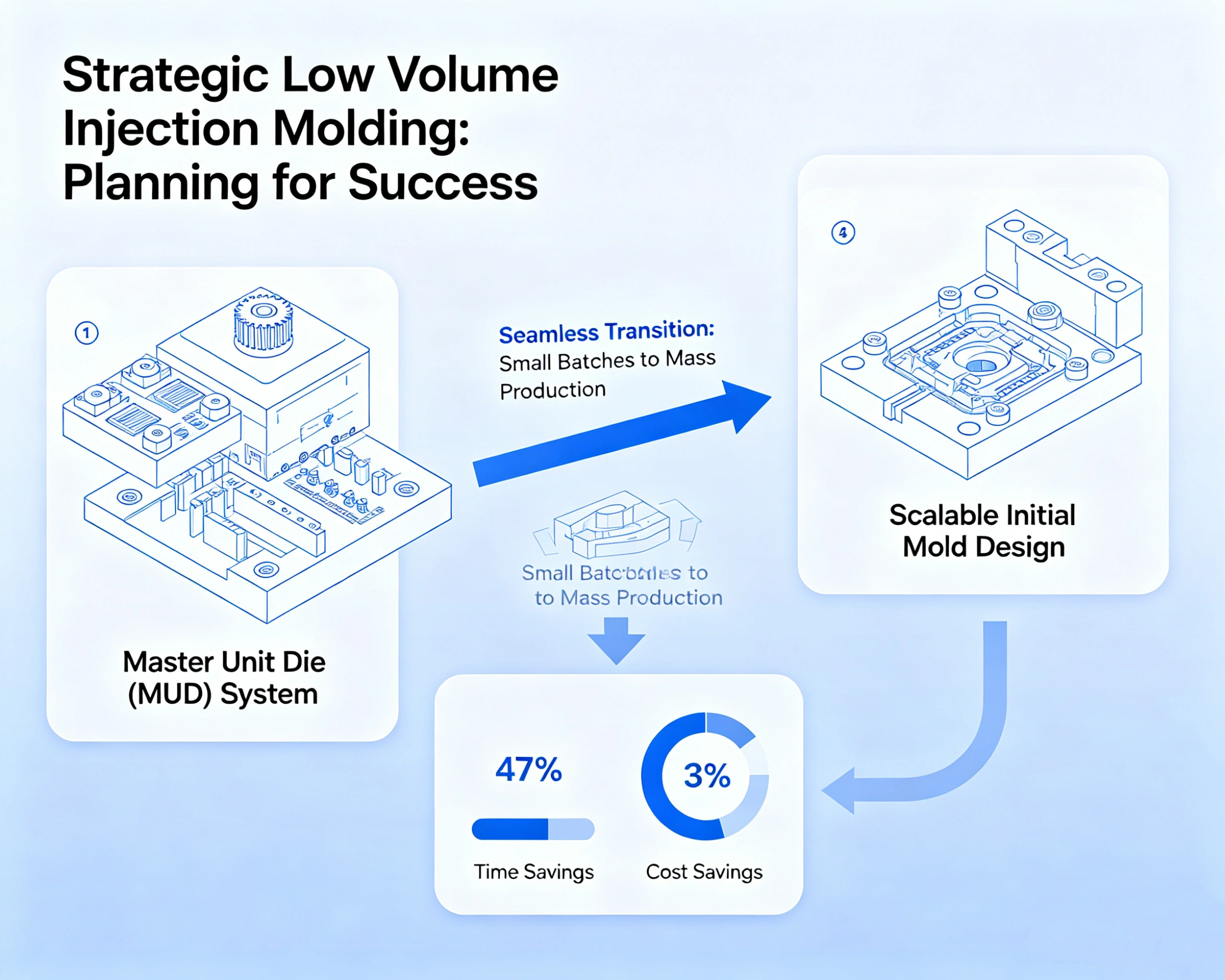
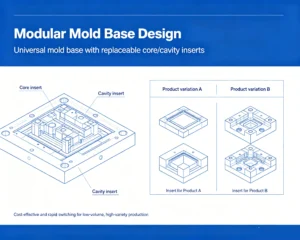
We believe small batch injection molding shouldn't be a dead end; it should be a stepping stone. One of the most effective strategies we use is a Master Unit Die (MUD) system10. Think of it as a universal mold frame that we own and maintain. We only need to build the small, custom core and cavity inserts for your specific part. This is already a huge cost saver for the initial run. But the real magic happens when you're ready to scale. If your product takes off, we can seamlessly transition your existing inserts into a dedicated, multi-cavity production mold base. This "scalable flexibility" means you don't pay for a whole new mold. You're building on the investment you already made. This turns your initial pilot run into a strategic first step toward mass production, transforming precision mold manufacturing11 from a cost center into a growth enabler.
Conclusion
The right low-volume solution combines flexible tooling, deep engineering partnership, and a clear path to scale, empowering your brand to launch smart and grow fast.
"The process, microstructure, and mechanical properties of hybrid ...", https://www.sciencedirect.com/science/article/abs/pii/S1755581725000045. This source explains how aluminum and hybrid steel molds are commonly used to reduce initial tooling costs in low-volume injection molding. Evidence role: mechanism; source type: education. Supports: Using aluminum or hybrid steel molds can lower the initial investment for small brands.. ↩
"Design for manufacturability - Wikipedia", https://en.wikipedia.org/wiki/Design_for_manufacturability. This source defines Design for Manufacturability (DFM) analysis and its role in optimizing product designs for manufacturing. Evidence role: definition; source type: encyclopedia. Supports: DFM analysis helps identify and resolve design issues before production begins.. ↩
"Strategically Scaling A Small Business | The Small Bus. Expo", https://www.thesmallbusinessexpo.com/guide/strategically-scaling-a-small-business/. This source outlines strategies for small brands to scale their manufacturing processes effectively. Evidence role: general_support; source type: education. Supports: Small brands can use specific strategies to scale their manufacturing processes effectively.. Scope note: The strategies may vary depending on the industry and product type. ↩
"Understanding Lead Times in Injection Molding for Production ...", https://www.aprios.com/insights/lead-times-in-injection-molding-essential-insights-for-engineers. This source explains how using aluminum molds can reduce lead times in low-volume injection molding. Evidence role: mechanism; source type: education. Supports: Using aluminum molds can shorten lead times in low-volume injection molding.. Scope note: Lead time reductions may depend on the complexity of the mold and production process. ↩
"Prototype Tooling Lifespan: Factors Affecting Durability of Molds", https://protoshopinc.com/blog/prototype-tooling-lifespan-factors-affecting-durability-and-maintenance-of-molds/. This source provides data on the typical production volumes supported by aluminum and softer steel molds in low-volume injection molding. Evidence role: statistic; source type: research. Supports: Aluminum or softer steel molds are suitable for production runs between 500 and 10,000 units.. ↩
"Design of plastic components - Wikipedia", https://en.wikipedia.org/wiki/Design_of_plastic_components. This source explains the principles of custom plastic part design and its role in ensuring manufacturability and durability. Evidence role: definition; source type: education. Supports: Custom plastic part design ensures manufacturability and durability in injection molding.. ↩
"How Design for Manufacturing (DFM) Reduces Product Costs", https://www.sintelinc.com/post/design-for-manufacturing-reduce-product-costs. This source discusses how minor design adjustments during DFM analysis can significantly reduce tooling costs. Evidence role: statistic; source type: research. Supports: Minor design adjustments during DFM analysis can reduce tooling costs by up to 30%.. Scope note: The exact percentage reduction may vary depending on the specific design and manufacturing context. ↩
"[PDF] LOCALIZATION OF MANUFACTURING - DiVA portal", https://www.diva-portal.org/smash/get/diva2:36895/FULLTEXT01.pdf. This source defines localization in manufacturing and its role in adapting products to meet regional standards and preferences. Evidence role: definition; source type: encyclopedia. Supports: Localization involves adapting products to meet regional standards and preferences in manufacturing.. ↩
"Plastics Molding and Forming Effluent Guidelines | US EPA", https://www.epa.gov/eg/plastics-molding-and-forming-effluent-guidelines. This source outlines the requirements of RoHS and REACH standards for materials used in manufacturing. Evidence role: definition; source type: government. Supports: Materials used in manufacturing must comply with RoHS and REACH standards to meet regulatory requirements.. ↩
"Advanced Mud System for Microhole Coiled Tubing Drilling", https://www.netl.doe.gov/node/3632. This source explains the Master Unit Die (MUD) system and its advantages in low-volume and scalable injection molding. Evidence role: mechanism; source type: education. Supports: The Master Unit Die (MUD) system allows for cost-effective scalability in injection molding.. ↩
"What is Precision Injection Molding: Scientific Principles and ...", https://www.thogus.com/blog/post/what-is-precision-injection-molding-scientific-principles-and-capabilities/. This source provides an overview of precision mold manufacturing and its importance in producing high-quality injection molded parts. Evidence role: definition; source type: education. Supports: Precision mold manufacturing is crucial for producing high-quality injection molded parts. ↩