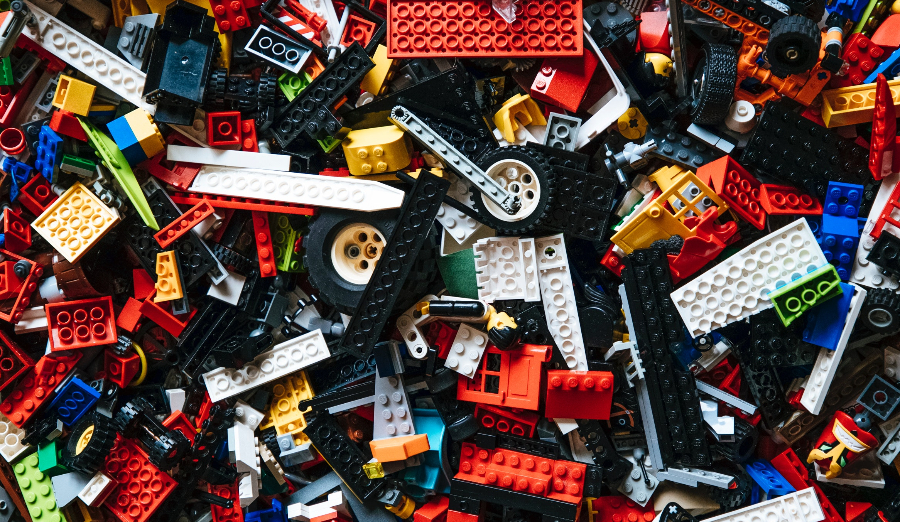
Ever wonder how every single LEGO brick fits together so perfectly? It’s a manufacturing marvel. The secret is a common process, but one they have perfected over decades.
Yes, LEGO elements are made using plastic injection molding1. They use a highly refined version of this process with extremely precise molds and a special type of plastic. This ensures every brick has the famous "clutch power" and consistency we all know and love.
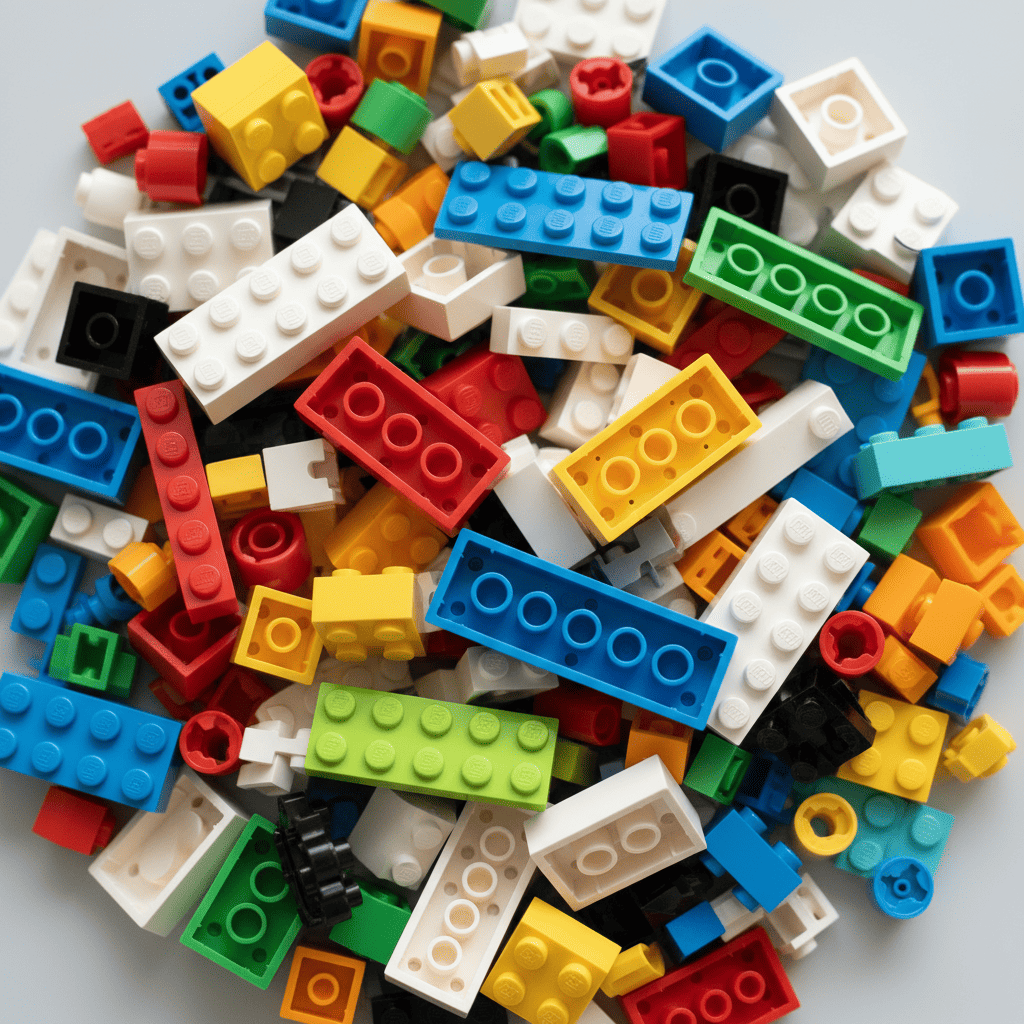
The simple answer is yes, but that doesn't tell the whole story. Knowing they use injection molding is like knowing a master chef uses an oven. The real magic is in how they use it. The level of precision and control is what makes a LEGO brick a LEGO brick. Let's dive deeper into what makes their process so unique.
What makes LEGO's injection molding process so special?
You know injection molding makes plastic parts. But why do LEGO bricks2 feel so different and high-quality? The details in their process are what create that unmistakable perfection.
LEGO's process is special due to its extreme precision. They use incredibly accurate molds, a specific high-quality ABS plastic, and very strict quality control3. This ensures every single brick has the perfect "clutch power" and consistent color, which is the secret behind their success.
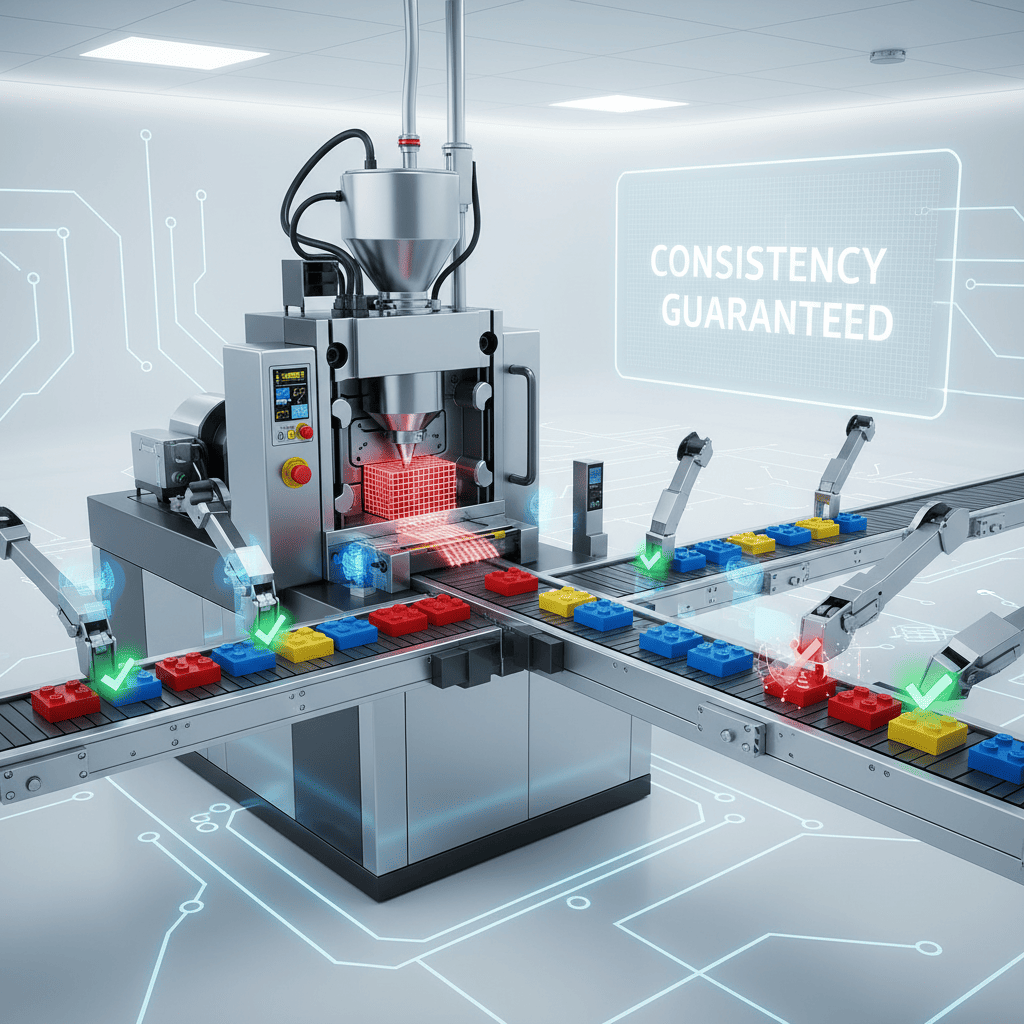
At our company, we've been making custom molds4 for over 15 years, and we understand that precision is everything. For a product like a LEGO brick, the process goes far beyond standard manufacturing. It's a combination of three key elements: the mold itself, the material used, and the relentless quality checks that happen every step of the way. Ordinary injection molding gets you a plastic part. LEGO's method gets you an engineering marvel5 that you can hold in your hand.
The Heart of Precision: The Molds
The mold is the most critical part. We know from experience that a good part starts with a great mold. LEGO's molds are built to tolerances of less than five-thousandths of a millimeter (0.005mm). This is more precise than many medical or automotive parts we work on. This accuracy ensures that a brick made today in one factory will connect perfectly with a brick made 40 years ago in another. These molds are incredibly expensive to make and maintain, which is a huge part of their quality advantage.
The Right Stuff: The Material
LEGO primarily uses a plastic called Acrylonitrile Butadiene Styrene6 (ABS). They don't just use any ABS; they use a specific formulation that gives the bricks their strength, gloss, and color stability. This material is chosen for its "clutch power," which is that satisfying click you feel when you connect two bricks. It's strong but has just enough give to be snapped together and pulled apart thousands of times without wearing out.
Checking Every Brick: Quality Control
LEGO's commitment to quality is legendary. Their process is highly automated, with sensors and cameras checking the bricks as they are made. They measure dimensions, check for defects, and ensure color consistency7. The failure rate is incredibly low, something like only 18 elements in every million produced fail to meet their standard. This is a benchmark for quality that we, as manufacturers, deeply respect and strive for in our own projects.
| Feature | Standard Injection Molding | LEGO's Injection Molding |
|---|---|---|
| Mold Tolerance | Typically ±0.1mm | As low as ±0.005mm |
| Material Used | Various commodity plastics | Custom-formulated ABS plastic |
| Color Consistency | Can vary between batches | Extremely high and globally uniform |
| Quality Checks | Spot checks, statistical sampling | Automated checks on most bricks |
Why can’t anyone just copy LEGO bricks?
Have you ever used cheap, imitation LEGO bricks that just don't fit right? Copying the design seems easy. But making a brick that actually works perfectly is incredibly difficult.
You can't just copy LEGO bricks because of their precision engineering and legal protections8. The molds required are extremely expensive and hard to make. Also, LEGO holds patents and trademarks9, so unauthorized copying is illegal and results in serious legal consequences.
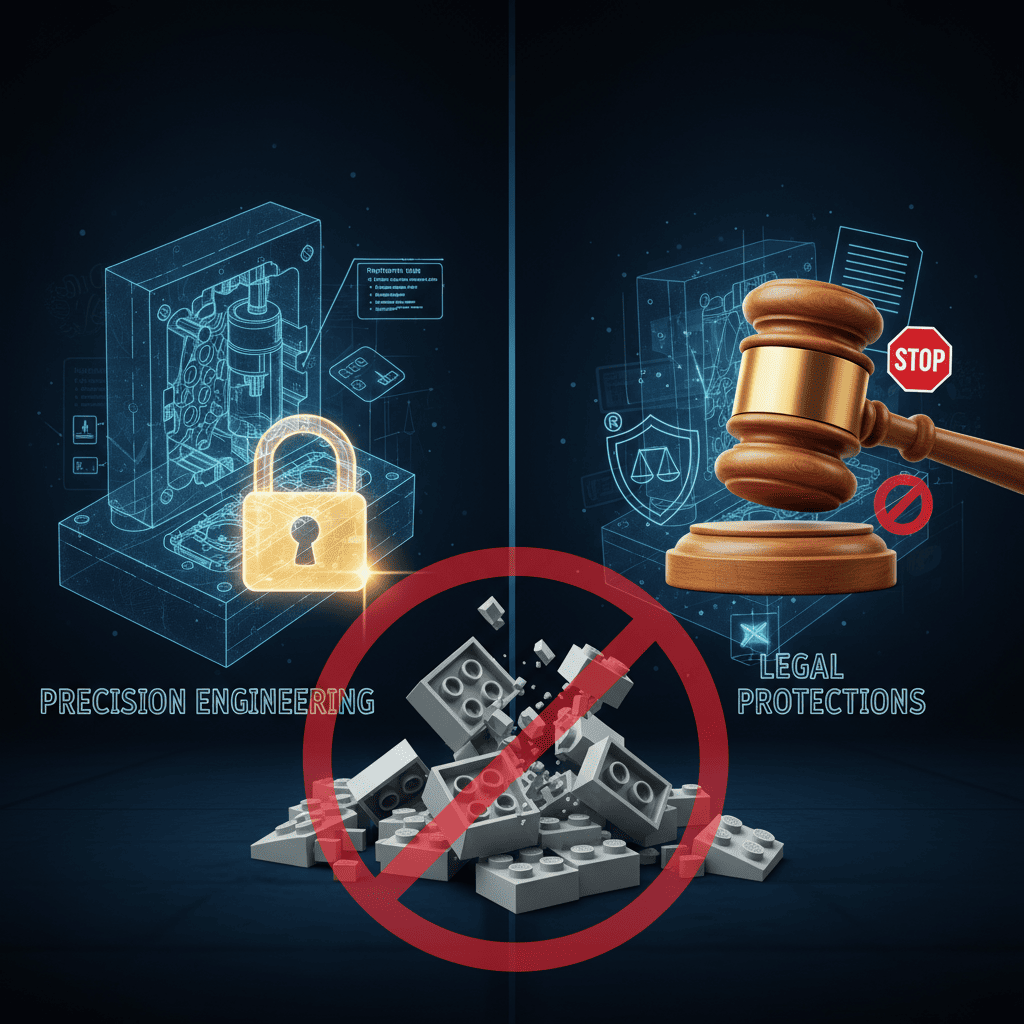
It’s tempting to think that since the patents on the basic brick design have expired, anyone can make them. In theory, that's true. But in practice, there are huge barriers that stop others from achieving the same quality. It's one thing to make a plastic brick; it's another thing entirely to make one that meets the LEGO standard. From my experience in the industry, I know there are two main walls that competitors hit: the technical wall and the legal wall.
The Technical Challenge
Replicating LEGO's quality is an immense technical hurdle. As we discussed, the process starts with the molds. A company would need to invest millions of dollars in creating molds with micron-level precision. Then, they would need to source or develop the exact same grade of ABS plastic to get the clutch power right. Too tight, and kids can't pull them apart. Too loose, and models fall apart. Finally, they would need a quality control system that is just as rigorous. Most companies that make knock-off bricks cut corners in all three of these areas. That’s why their bricks feel cheap, don't fit well, and have inconsistent colors. They are not investing in the infrastructure needed for true quality.
The Legal Consequences
Even if a company could perfectly replicate the brick, they would run into major legal trouble. LEGO is a powerful brand, and they protect their intellectual property fiercely. While the basic brick patent is old, they have many other protections in place.
- Trademarks: The "LEGO" name on the stud of each brick is a registered trademark. Any company that puts that logo on their brick is committing trademark infringement.
- Copyright: The designs of specific sets, characters, and instruction manuals are protected by copyright10. You can't just copy a LEGO Star Wars set and sell it.
- Design Patents: LEGO continuously releases new and unique elements, and these new designs are often protected by new design patents11. Companies that try to produce counterfeit products are often sued and can face huge fines and other penalties. LEGO has a global legal team dedicated to fighting infringement to protect their brand and their customers from low-quality, and sometimes unsafe, imitations.
Conclusion
LEGO bricks are made by injection molding, but their process is a masterclass in precision, material science, and quality control, protected by strong legal frameworks.
Explore this link to understand the fundamentals of plastic injection molding, a key process in creating high-quality products. ↩
Discover the unique features of LEGO bricks that set them apart from other brands, ensuring a perfect fit and quality. ↩
Explore effective quality control practices that ensure product consistency and reliability in manufacturing. ↩
Delve into the process of creating custom molds, essential for producing high-quality plastic parts. ↩
Explore what makes a product an engineering marvel, focusing on precision and innovation in design. ↩
Find out why ABS plastic is the material of choice for LEGO bricks, known for its strength and durability. ↩
Learn about the techniques used to maintain color consistency in plastic products, crucial for brand identity. ↩
Discover the legal frameworks that protect brands like LEGO from imitation and ensure product integrity. ↩
Understand how trademarks protect brand identity and prevent unauthorized use of brand names. ↩
Learn about copyright laws and their role in safeguarding creative designs and products. ↩
Discover how design patents protect innovative product designs, ensuring originality in the market. ↩