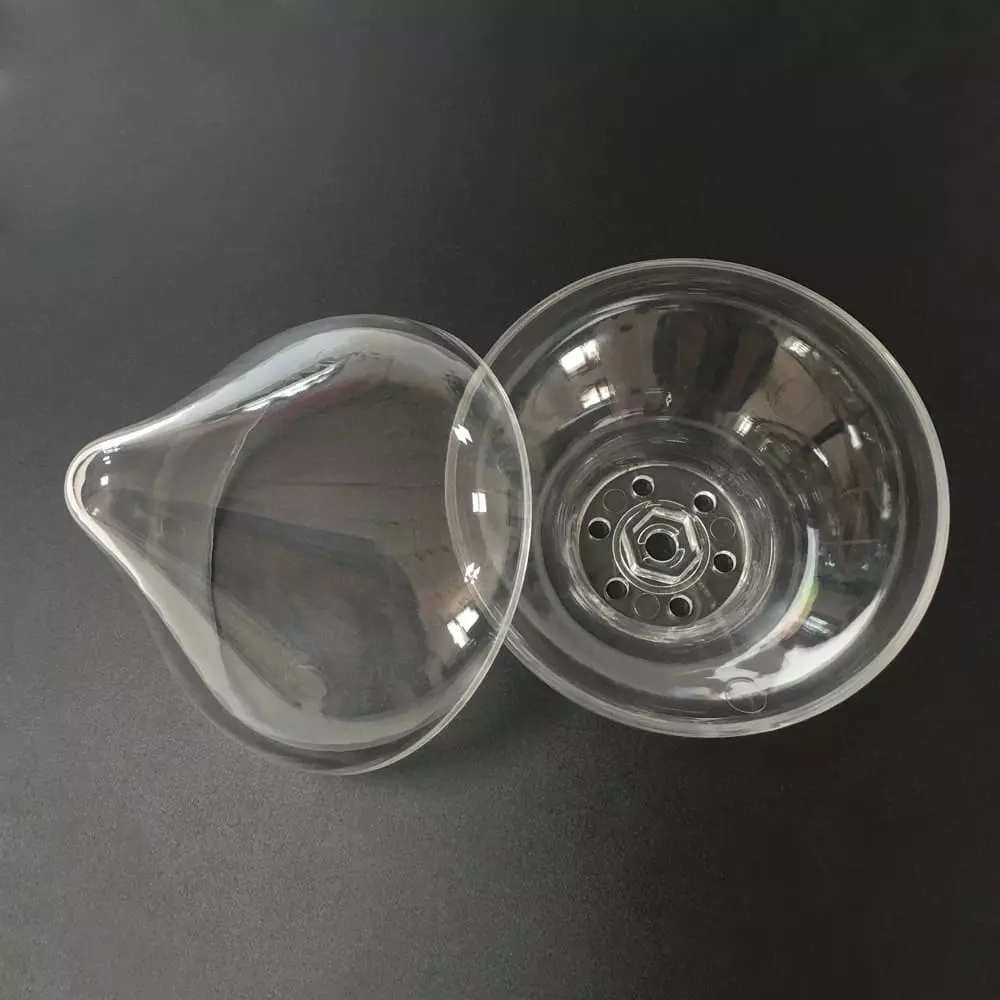
Struggling to pick the right clear plastic for your product? Worried about it cracking or yellowing? You need a material that looks great and performs perfectly.
The most common materials for transparent injection molding are Polycarbonate (PC)1, Acrylic (PMMA)2, Polystyrene (GPPS), and PET/PETG3. Each offers unique properties in clarity, strength, and cost, making the right choice dependent on your specific application and requirements.
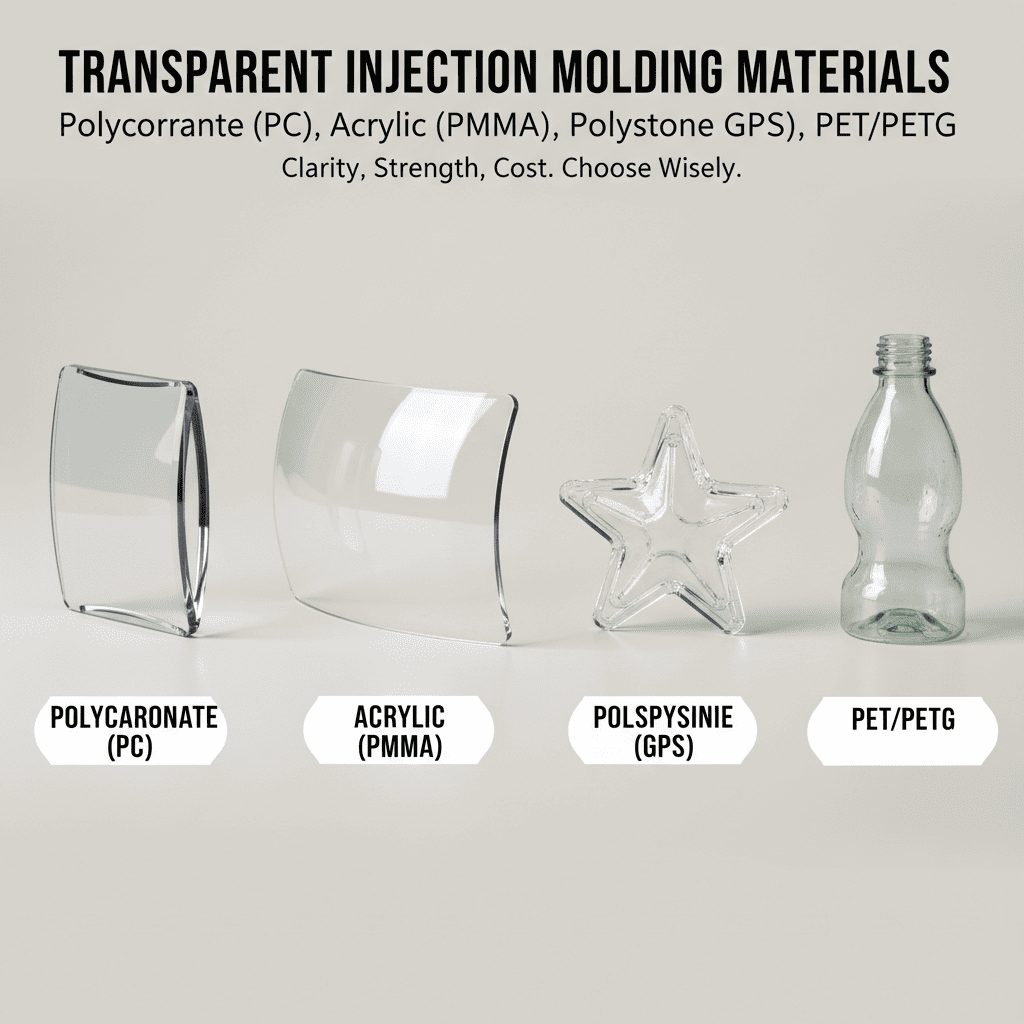
Choosing the right transparent material is a big decision. It affects how your product looks, how it works, and how much it costs. Let's look closer at the options. We will break down the top choices to help you find the perfect fit for your project.
When should you choose Polycarbonate (PC) for your clear parts?
Need parts that won't break under pressure? Concerned about high temperatures warping your design? PC offers a solution that is both tough and clear.
Choose Polycarbonate (PC) when your application demands exceptional impact strength and heat resistance. It's ideal for protective gear, automotive lighting, and durable medical devices where safety and performance are critical.
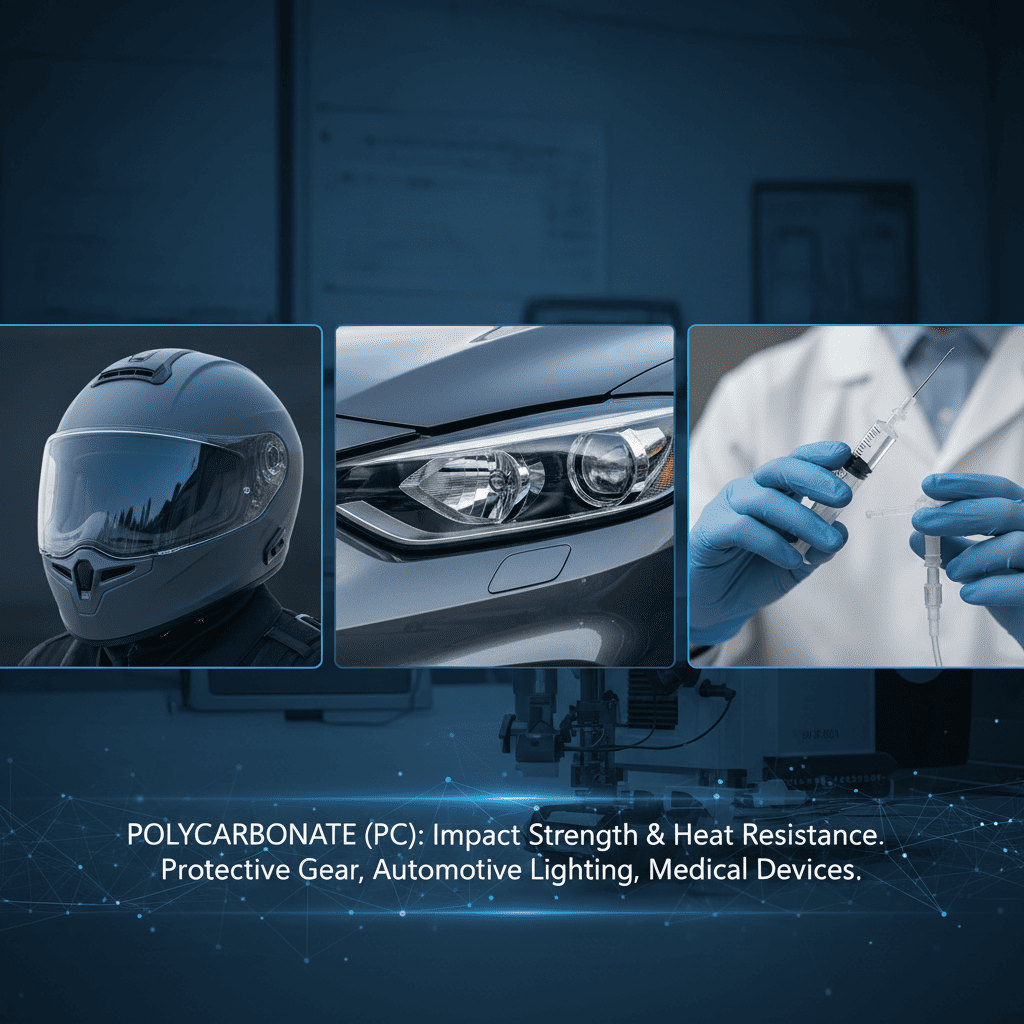
I remember a client who came to us to develop a housing for a rugged, handheld scanner. The device had to survive drops onto concrete and operate in hot environments. We immediately recommended Polycarbonate. Its toughness is almost legendary in the industry. We often call it "bulletproof glass" for a reason. PC can take a serious hit without cracking, which was essential for their product's lifespan and brand reputation. Beyond its strength, its ability to withstand heat meant the internal electronics would be safe, even if the device was left in a hot vehicle. This combination of properties makes it a go-to material for many of our clients in the automotive and electronics sectors. It provides peace of mind that other clear plastics just can't offer.
PC: A Closer Look at the Tough Stuff
Let's break down why PC is such a strong candidate for demanding applications.
| Feature | Description | Best Use Cases |
|---|---|---|
| Impact Strength | Extremely high, resistant to shattering and cracking. | Protective visors, safety glasses, device housings |
| Heat Resistance | Maintains its shape and strength at elevated temperatures. | Automotive light covers, electrical components |
| Transparency | Good clarity, though not as high as PMMA. Can be prone to scratching. | Lenses for rugged devices, light pipes |
| Dimensional Stability | Holds tight tolerances very well, even with temperature changes. | Precision mechanical parts, medical equipment |
We always advise our clients to consider the trade-offs. While PC is incredibly strong, it requires high processing temperatures, and it can be susceptible to scratching if not coated. For the handheld scanner project, we suggested a hard coating to protect the viewing window, giving them the perfect balance of toughness and durability.
Is Acrylic (PMMA) the best choice for clarity and scratch resistance?
Are you designing a product where visual appeal is everything? Tired of materials that look cloudy or scratch easily? PMMA could be the crystal-clear answer you're looking for.
Yes, for applications that prioritize optical perfection and a durable, high-gloss surface, Acrylic (PMMA) is often the best choice. It offers superior light transmission and inherent scratch resistance4.
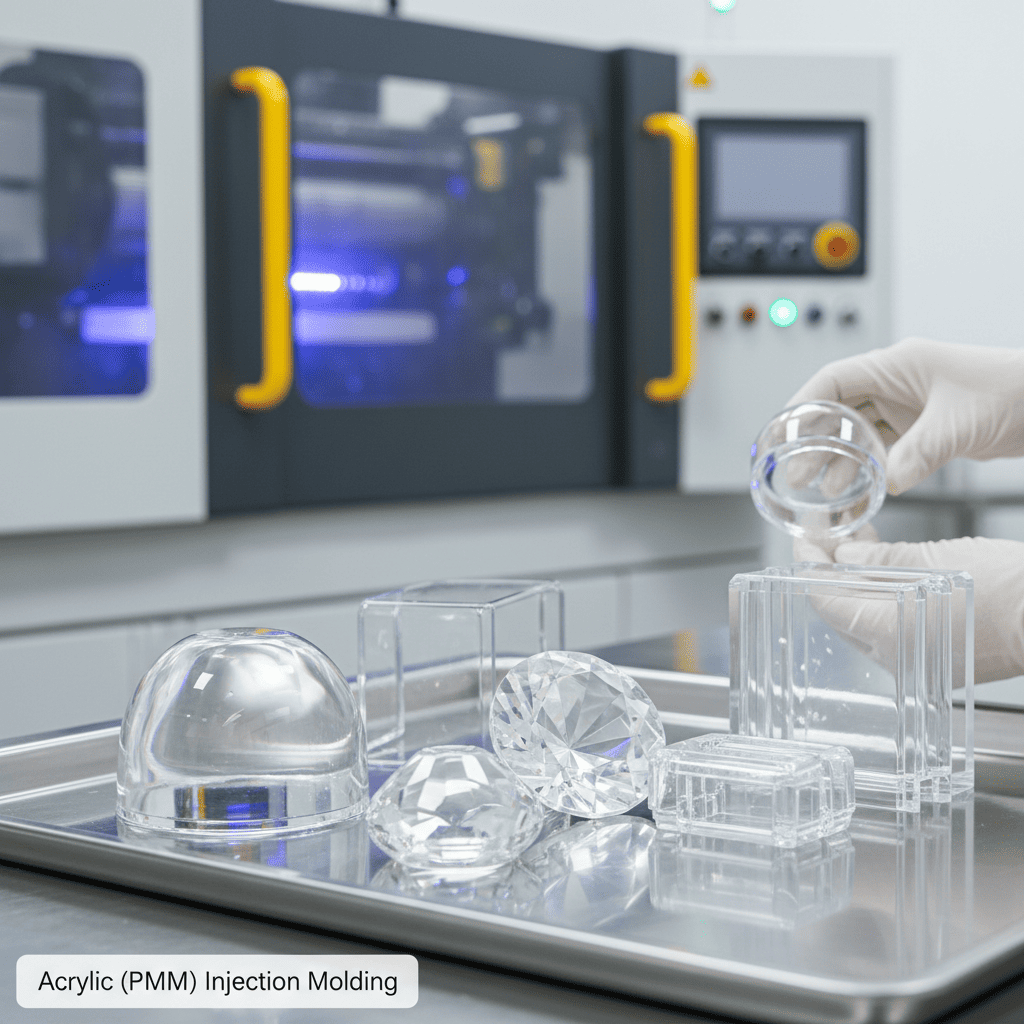
We worked with a cosmetics brand that was developing a new line of luxury packaging. They wanted the jars and caps to have the look and feel of glass but without the weight and fragility. PMMA was the obvious choice. Its optical clarity is fantastic, allowing the color and texture of the cream inside to shine through beautifully. The material's high surface hardness also meant the packaging would resist minor scuffs and scratches during shipping and on store shelves, keeping that premium look for longer. The finished product felt substantial and looked flawless. Our client was thrilled because the PMMA parts elevated their brand image, giving them a competitive edge in a crowded market. This is where PMMA truly excels: when your product needs to look its absolute best.
PMMA: The Clear Winner for Aesthetics
PMMA, also known as acrylic, is prized for its visual properties. It’s the material you choose when you want to make a statement.
Key Strengths of PMMA
- Optical Clarity: It transmits more light than PC and even glass. This makes it perfect for lenses, light guides, and high-end displays.
- UV Stability: PMMA resists yellowing when exposed to sunlight over long periods, making it a great choice for outdoor applications or products that sit under retail lighting.
- Scratch Resistance: Compared to other transparent plastics like PC or GPPS, PMMA has a much harder surface, similar to aluminum. This helps it maintain a pristine, glossy finish.
- Chemical Resistance: It holds up well against many common chemicals, but can be damaged by strong solvents.
However, PMMA is not as tough as PC. It is more brittle and can crack under sharp impact. For the cosmetics packaging, this wasn't an issue. The product wasn't meant to be dropped. The trade-off of lower impact strength for superior aesthetics was one they were happy to make.
Is General Purpose Polystyrene (GPPS)5 a good choice for low-cost clear products?
Working with a tight budget? Need to produce a high volume of clear, disposable items quickly? GPPS might be the cost-effective6 material you need to consider.
Yes, General Purpose Polystyrene (GPPS) is an excellent choice for low-cost, disposable products where high impact strength and heat resistance are not required. It offers great clarity at a very low price point.
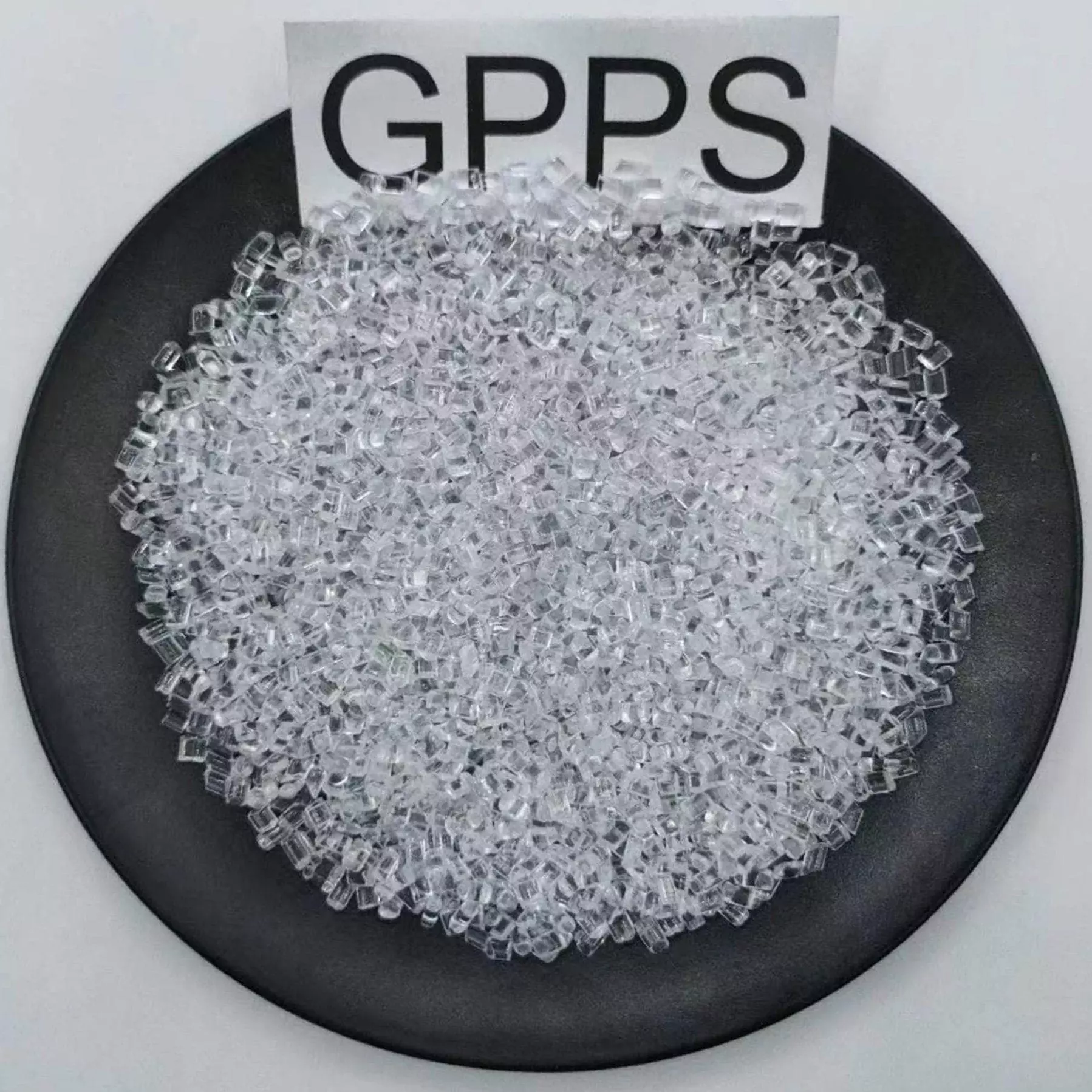
I recall a project for a client in the food service industry. They needed to produce millions of clear lids for disposable cups. Cost was the number one factor. The lids needed to be transparent and fit securely, but they were designed for single use. Durability was not a major concern. We recommended GPPS. It's an easy material to process, which means faster cycle times and lower manufacturing costs7. We were able to produce the parts very efficiently, meeting their tight budget and aggressive delivery schedule. The material's clarity was more than enough for customers to see the contents of the cup. While GPPS is brittle—we all know the sound of a CD case cracking—it was perfectly suited for this high-volume, low-cost application.
Understanding the Role of GPPS
GPPS, often just called polystyrene, has a very specific place in the world of transparent plastics. It's all about balancing cost and performance.
When to Use GPPS
You should consider GPPS when the following factors are your top priority:
- Low Material Cost: It is one of the cheapest transparent polymers available.
- High Volume Production: It flows easily during molding, allowing for rapid production cycles.
- Good Clarity: It provides a clear, glass-like appearance for non-demanding applications.
- Rigidity: The material is stiff, which is good for items that need to hold their shape, like containers or trays.
The main drawback is its brittleness. GPPS will crack easily if dropped or bent. It also has poor resistance to heat and chemicals. You wouldn't use it for a reusable water bottle or a durable electronic housing. But for things like petri dishes, disposable cutlery, or retail packaging inserts, its low cost makes it an unbeatable option.
What makes PETG a top choice for clear packaging and containers?
Need a material that’s clear, tough, and safe for contact with food or cosmetics? Looking for something that is easier to process than PC? PETG provides a versatile solution.
PETG is a top choice because it combines the clarity of acrylic, better impact strength than PMMA, and excellent chemical resistance8. It is also FDA-compliant, making it ideal for food and medical packaging.
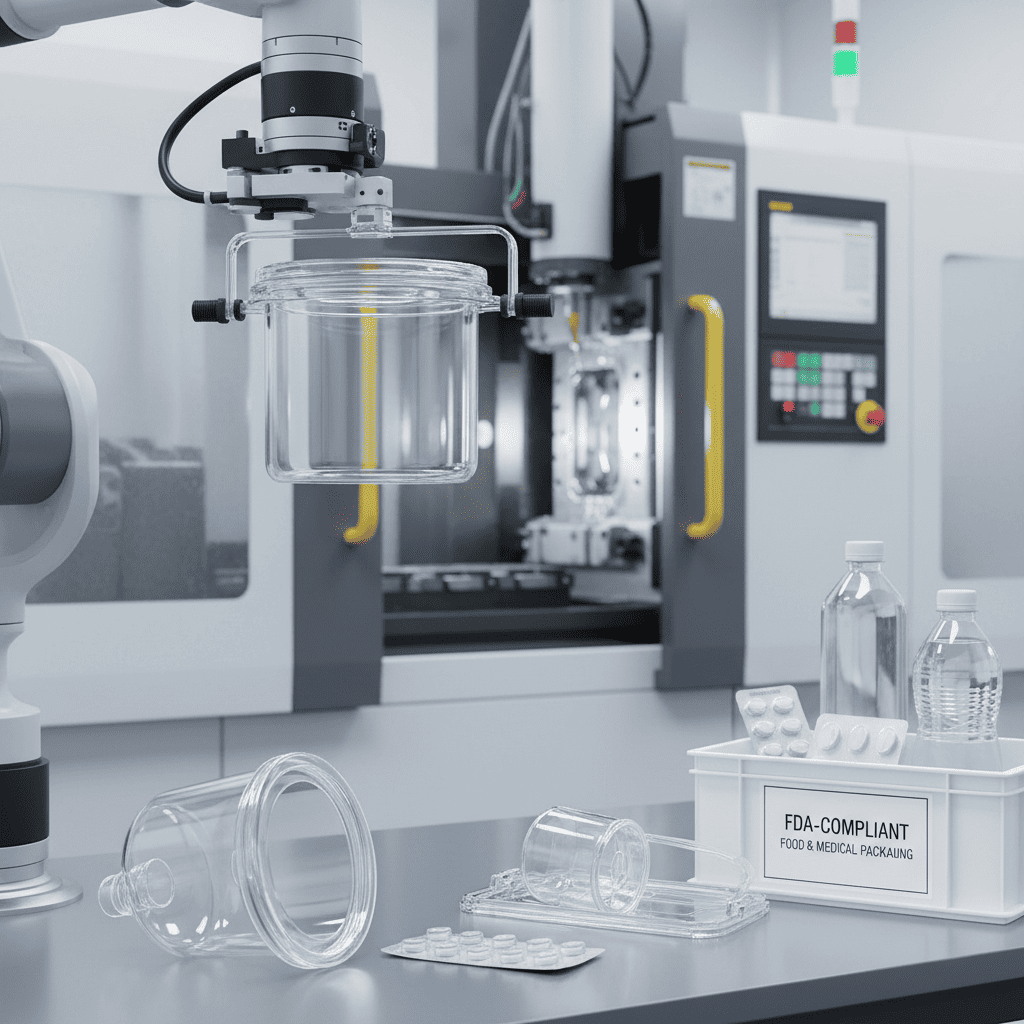
We recently helped a toy company develop a line of STEM learning kits. The kits included various small, intricate parts that needed to be housed in a durable, transparent case. The case had to withstand being handled by children and allow them to see all the components inside. They also needed it to be safe. We guided them to PETG. Its excellent impact resistance meant the case wouldn't shatter if dropped, which was a critical safety requirement. Its glass-like clarity showcased the colorful components inside, making the product more appealing on the shelf. Because PETG is great for creating complex shapes, we were able to design a case with internal compartments that held every piece perfectly. The client was very pleased with the final product, as it was both functional and safe.
The Balanced Performance of PETG
PETG is a modified version of PET (the plastic used for soda bottles). This modification gives it improved properties that make it a fantastic all-around choice.
| Property | PETG's Advantage | Common Applications |
|---|---|---|
| Toughness & Impact | Significantly more durable than GPPS and PMMA. Resists cracking. | Toy packaging, medical trays, electronic enclosures |
| Clarity | Excellent, glass-like transparency that showcases the product. | Cosmetic containers, food and beverage bottles |
| Chemical Resistance | Stands up well to oils, acids, and other chemicals. | Medical device components, cleaning product bottles |
| Ease of Processing | Easier to thermoform and injection mold than PC without pre-drying. | Prototyping, complex container shapes |
PETG hits a sweet spot. It offers a great blend of cost, performance, and safety. While it might not be as strong as PC or as scratch-resistant as PMMA, its versatility makes it one of the most popular choices for a huge range of consumer products. It’s a reliable workhorse material that we recommend often.
Conclusion
Choosing the right transparent plastic depends on your product's needs. From tough PC to crystal-clear PMMA, each material offers a unique balance of strength, clarity, and cost.
Explore the advantages of PC for impact strength and heat resistance in various applications. ↩
Learn how PMMA offers superior light transmission and scratch resistance for high-end applications. ↩
Find out how PETG combines clarity, toughness, and safety for food and medical applications. ↩
Find out how scratch resistance impacts the durability and aesthetics of transparent products. ↩
Discover why GPPS is a cost-effective choice for low-demand, clear products. ↩
Explore how cost-effective materials can enhance production efficiency and profitability. ↩
Find strategies to optimize manufacturing costs while maintaining product quality. ↩
Understand the importance of chemical resistance in selecting materials for specific applications. ↩