
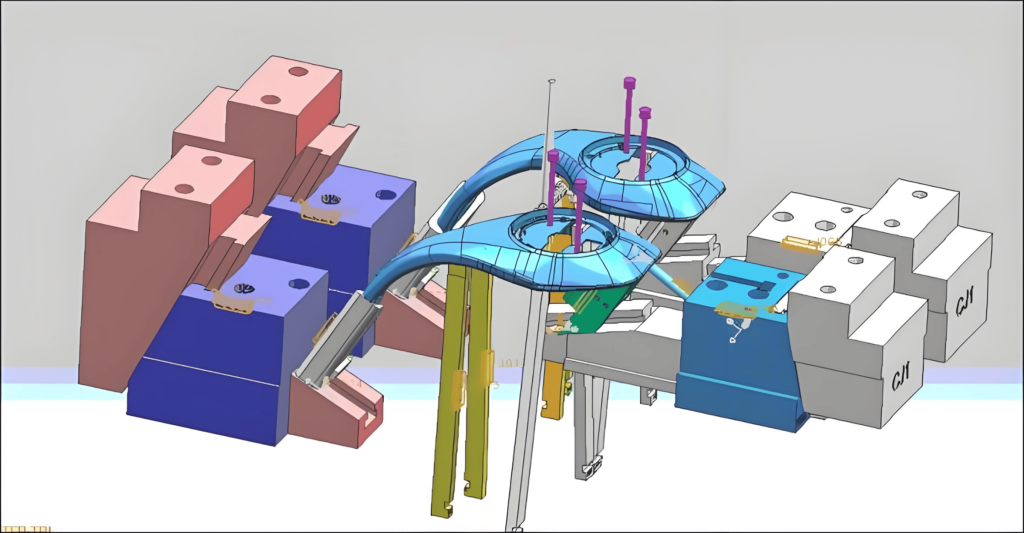
Struggling with complex plastic parts that get stuck in the mold? These undercuts1 can ruin production and cause costly defects. There must be a smarter way to eject them cleanly.
A lifter2 is a component in an injection mold designed to release parts with undercuts or side features. It moves at an angle during mold opening, creating the clearance needed to eject the part cleanly without causing any damage.
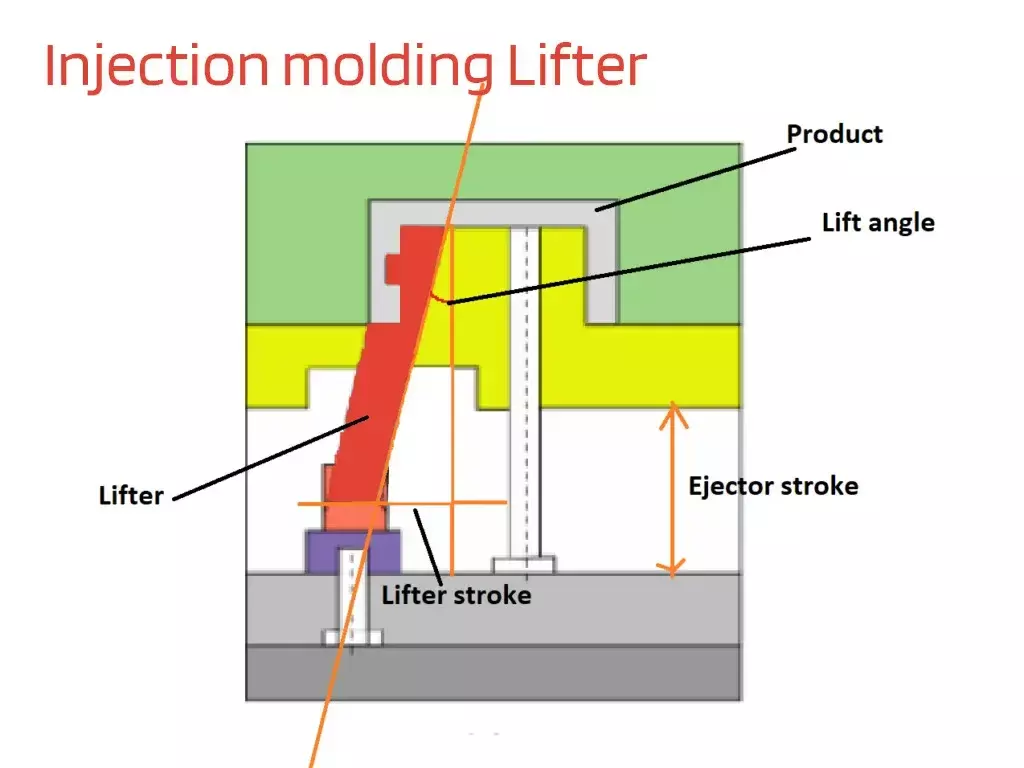

Understanding the basic definition is just the start. To really see how lifters can make or break a project, we need to look closer at how they actually work inside the mold. Let's dive into the mechanics and see what makes them so essential for complex designs, especially for the high-quality products our clients expect.
How do lifters actually work inside the mold?
Confused about how a part with a deep clip feature comes out of a solid steel mold? It seems impossible, right? But a clever mechanism makes it happen smoothly every single time.
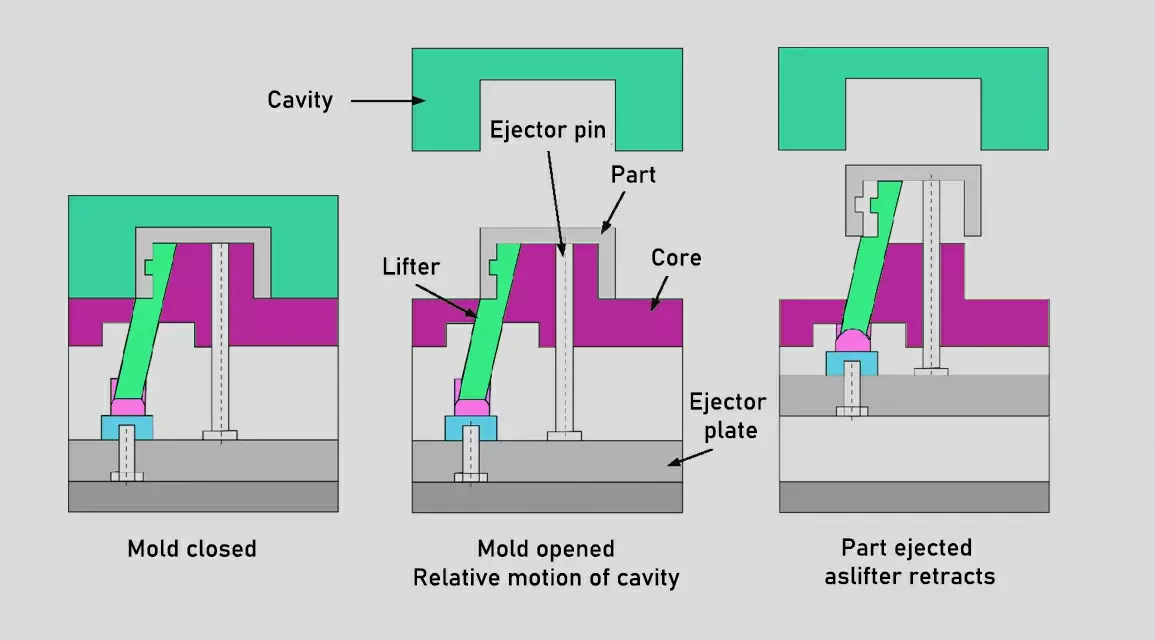
Lifters work by converting the vertical opening motion of the mold into an angled movement. As the mold opens, the ejector system3 pushes the lifter, causing it to slide up and outwards. This dual motion pulls the lifter away from the part's undercut feature, allowing for clean ejection.

I remember a project we did for a client developing STEM educational toys. They designed an amazing building block with a very specific internal snap-fit feature. A straight ejection would have completely sheared off that tiny, critical clip. This is exactly where a lifter shines. Its movement is like a carefully choreographed dance. For that toy project, we had to ensure the lifter moved just enough to clear the clip but not so much that it would stress the part. It's a game of micrometers.
The Lifter's Mechanical Ballet
The magic happens in a sequence of precise movements. The lifter doesn’t just pop up; it travels along a very specific angled path to get out of the way.
- Mold Closed & Injection: The mold is closed, and the lifter is perfectly seated in place. It acts as a part of the core, forming the shape of the internal undercut as hot plastic is injected around it.
- Cooling & Mold Opening: After the plastic part has cooled and solidified, the mold begins to open.
- Ejector System Activation: The machine's ejector system pushes the ejector plates forward. Since the lifter is mounted to these plates, it begins to move vertically with them.
- Angled Movement: Here’s the key part. The lifter sits in an angled guide slot in the mold core. As it moves vertically, this slot forces it to also travel horizontally, away from the center of the part. This combined vertical and horizontal motion creates the angled path that pulls it cleanly out of the undercut.
- Part Ejection: With the lifter now completely clear of the undercut, the rest of the ejector pins can safely push the part out of the mold cavity without any damage.
This entire sequence relies on extreme precision. The angles, the smoothness of the steel surfaces, and the perfect alignment are critical. A tiny error, and the lifter could bind, score the mold, or break off the feature it was designed to protect. That’s why we machine these components to a tolerance4 of ±0.05mm.
When should you choose a lifter for your product design?
Worried your new product design is too complex for injection molding? Those internal clips and recessed features can seem impossible to manufacture. But there's a specific tool for that job.
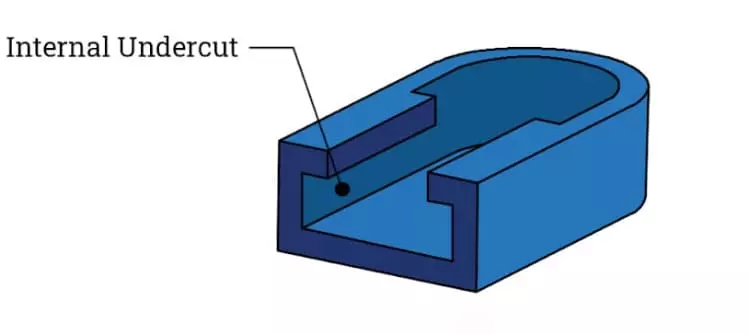
Choose a lifter when your plastic part has internal undercuts, clips, or features that prevent it from being ejected in a straight line. They are ideal for creating complex geometries inside a part, where an external slide mechanism cannot reach.

Deciding between a lifter and another mechanism, like a slide, is a critical step in Design for Manufacturability (DFM)5. We recently worked with a purchasing manager for an automotive supplier. Their design for a new interior trim piece had a hidden clip on the inside. A slide would have required a huge, complex action on the side of the mold, increasing the tool size and cost. By analyzing the design, we proposed a lifter solution. It kept the mold footprint compact and the cycle time efficient. The manager was relieved because it saved them both money and potential production headaches. This is a common situation where a lifter is the most elegant and cost-effective solution.
Making the Right Call: Lifters vs. Sliders
While both lifters and sliders solve the problem of undercuts, they are not interchangeable. The choice depends on the specific geometry of your part. We use our 15 years of experience to guide clients, but here’s a breakdown to help you understand the decision-making process.
Key Decision Factors
- Location of the Undercut: Is the feature inside the part or on the outside? Lifters are the go-to solution for internal features. Sliders, which move horizontally, are perfect for external features like side holes or large clips on the part's exterior.
- Space and Mold Design: Lifters are integrated into the ejector system and are relatively compact. Sliders require space on the mold's parting line for their mechanical action, which can sometimes make the overall mold larger and more complex.
- Direction of Release: A lifter releases the undercut with an angled motion. A slider releases it with a straight, perpendicular motion relative to the mold's opening direction. The shape and angle of your feature will dictate which movement is more effective.
To make it clearer, here is a simple comparison table:
| Feature | Lifter | Slider (or Slide) |
|---|---|---|
| Best For | Internal undercuts, clips, snap-fits | External undercuts, side holes, threads, large clips |
| Movement | Angled (Vertical + Horizontal) | Horizontal (Perpendicular to mold open/close) |
| Activation | Ejector system during part ejection | Angle pins or hydraulic cylinders during mold opening |
| Design Impact | More complex to design; requires precise guides | Requires more space on the mold exterior |
| Example Part | Housing for electronics with internal tabs | Bottle cap with a threaded side |
Ultimately, choosing a lifter is about enabling design freedom. It allows you to create products with sophisticated locking features and internal details that would otherwise be impossible.
Conclusion
Lifters are essential, precise mechanisms that release complex internal features in plastic parts, turning challenging designs into high-quality, mass-produced realities without compromising on function.
Discover the challenges posed by undercuts in injection molding and how to overcome them effectively. ↩
Explore this link to understand the crucial role lifters play in injection molding and how they enhance production efficiency. ↩
Find out how ejector systems function and their importance in the injection molding process. ↩
Understand the significance of tolerance in manufacturing precision parts. ↩
Explore DFM principles to enhance your product design and manufacturing efficiency. ↩