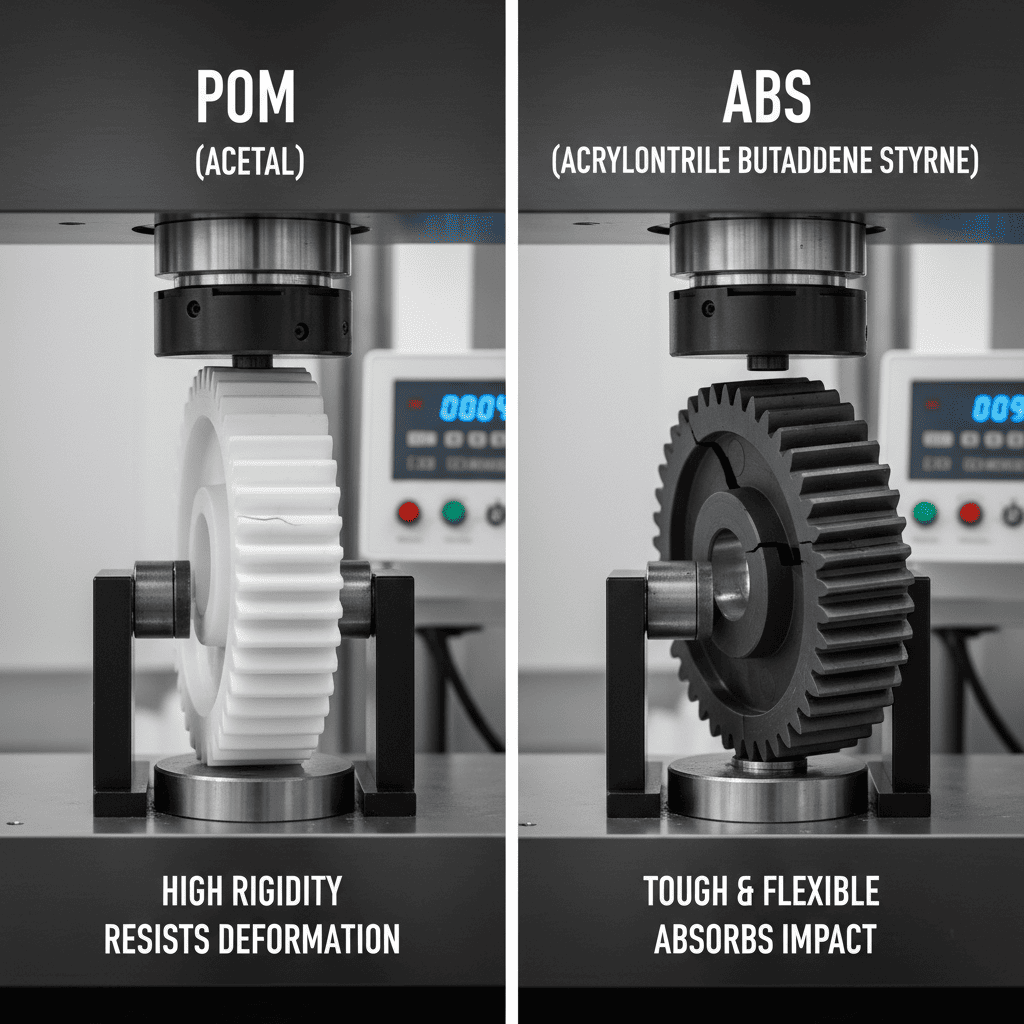
Choosing the wrong plastic can doom a project. A part that breaks or warps means wasted money and unhappy customers. Let's break down POM and ABS to find the best fit.
POM1 is stronger in rigidity, hardness, and wear resistance2, making it ideal for gears. However, ABS is tougher and more impact-resistant, perfect for items like helmets that need to absorb shock. The "stronger" material truly depends on your product's specific needs.
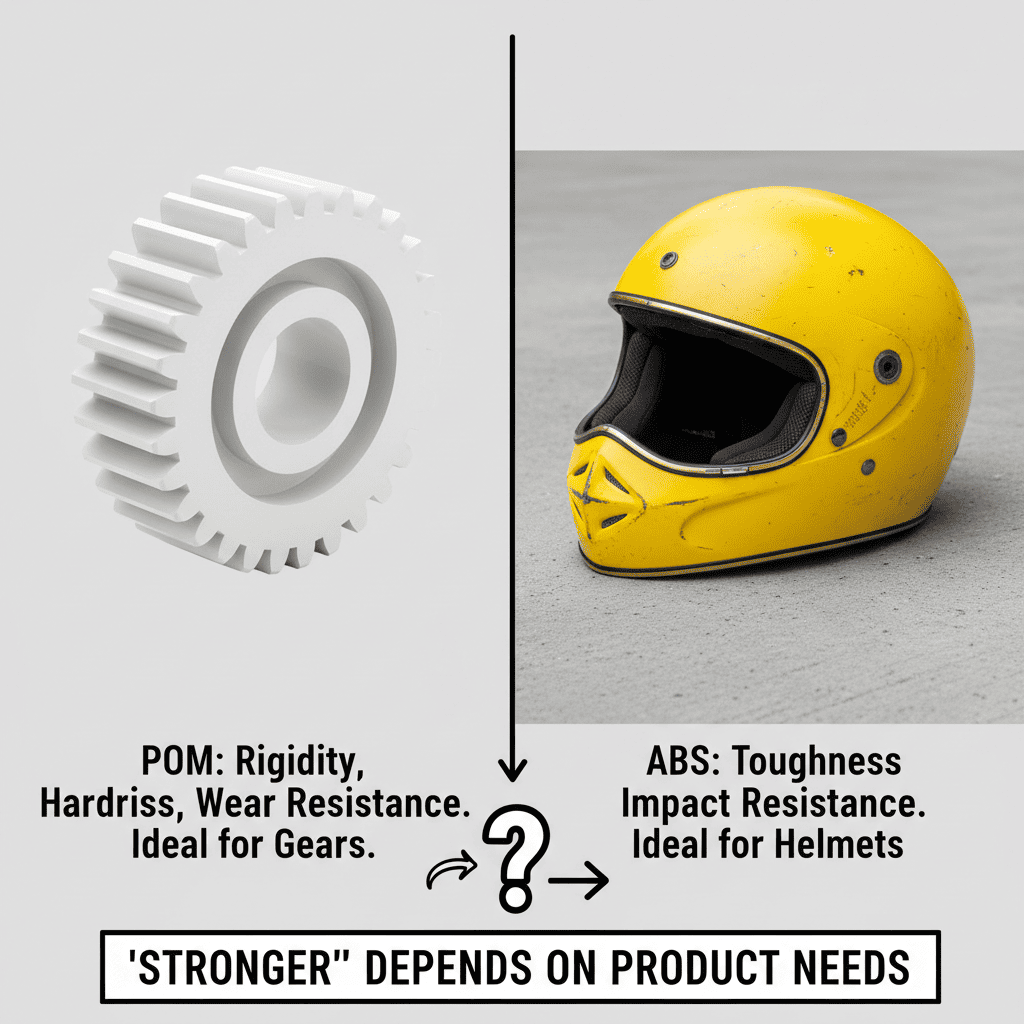
So, we know there's no simple "yes" or "no" answer. It's not about which plastic is better overall, but which one is better for your specific part. Let's dig deeper into the types of strength to help you make a confident and cost-effective choice for your next project.
When does POM's rigidity outperform ABS3?
Need parts that won't bend under pressure? Flexible materials cause misalignment and failure. POM's superior rigidity ensures your components maintain their precise shape and function perfectly over time.
POM is the clear winner for rigidity. Its higher tensile strength4 and stiffness make it perfect for precision parts like gears, bearings, and structural components that demand stability and cannot deform under load. ABS, while tough, is simply more flexible in comparison.
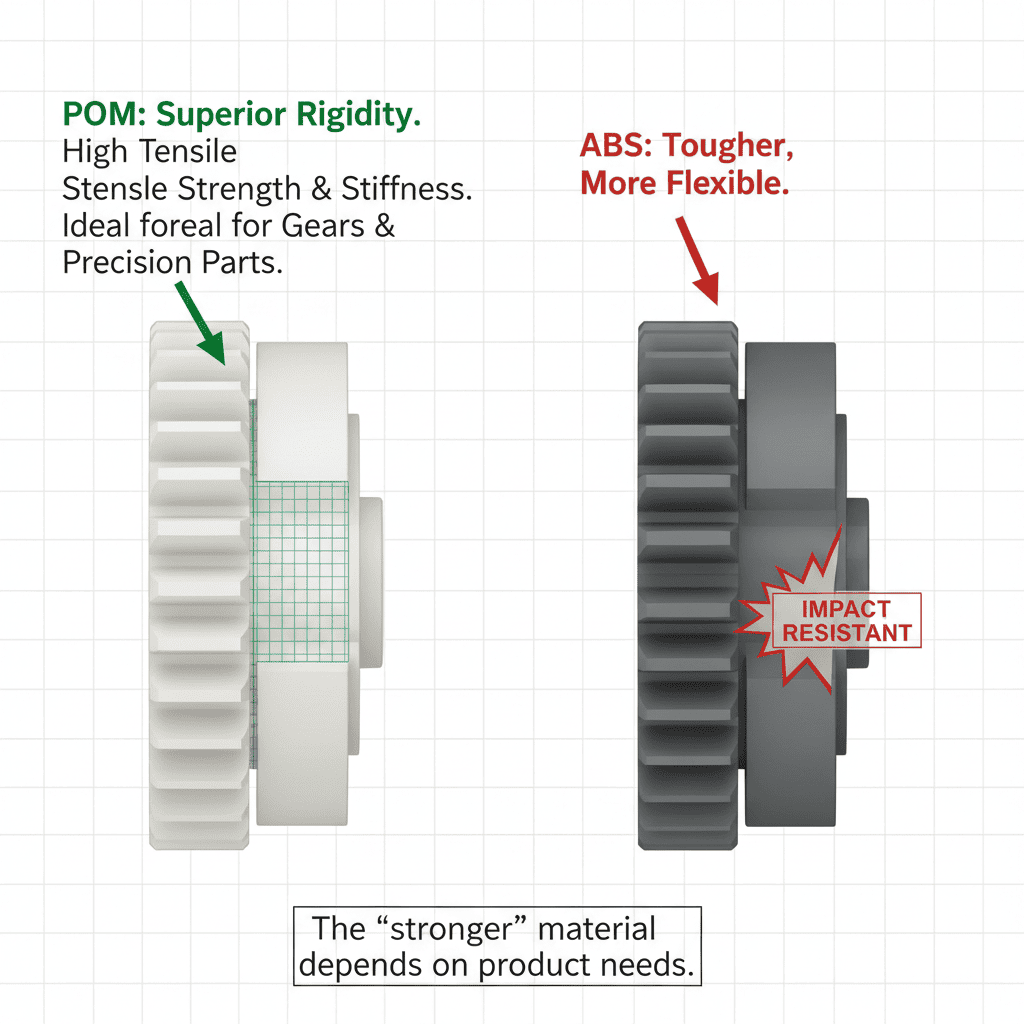
When we talk about rigidity, we're talking about a material's resistance to bending or flexing when a force is applied. Think of it like the difference between a metal ruler and a rubber one. The metal ruler is rigid; it keeps its shape. This property is absolutely critical for mechanical parts5 that need to transfer force accurately. At Ambition Industrial, we often recommend POM for internal components in electronics and automotive assemblies. I remember a client developing an educational robot; their initial ABS gears would slightly deform under torque, causing inaccurate movements. Switching to POM solved the issue immediately because the parts held their precise dimensions, ensuring the robot's movements were always perfect. This is why POM is the king for applications where dimensional stability is non-negotiable.
Key Rigidity Metrics: POM vs. ABS
| Property | POM (Polyoxymethylene) | ABS (Acrylonitrile Butadiene Styrene) | Winner |
|---|---|---|---|
| Tensile Strength | High (60-70 MPa) | Moderate (40-50 MPa) | POM |
| Flexural Modulus | High (2.5-3.0 GPa) | Moderate (2.0-2.5 GPa) | POM |
| Application Focus | Gears, Bearings, Clips | Housings, Covers, Toys | - |
Why is ABS the go-to for impact resistance6?
Worried your product will shatter if it's dropped? Brittle plastics lead to costly returns and a damaged brand reputation. ABS provides the toughness needed to withstand real-world accidents.
ABS excels in toughness and impact resistance. Its rubber-like butadiene component allows it to absorb significant energy before fracturing. This makes it ideal for consumer products like LEGO bricks, safety helmets, and electronic housings that must endure drops and rough handling.
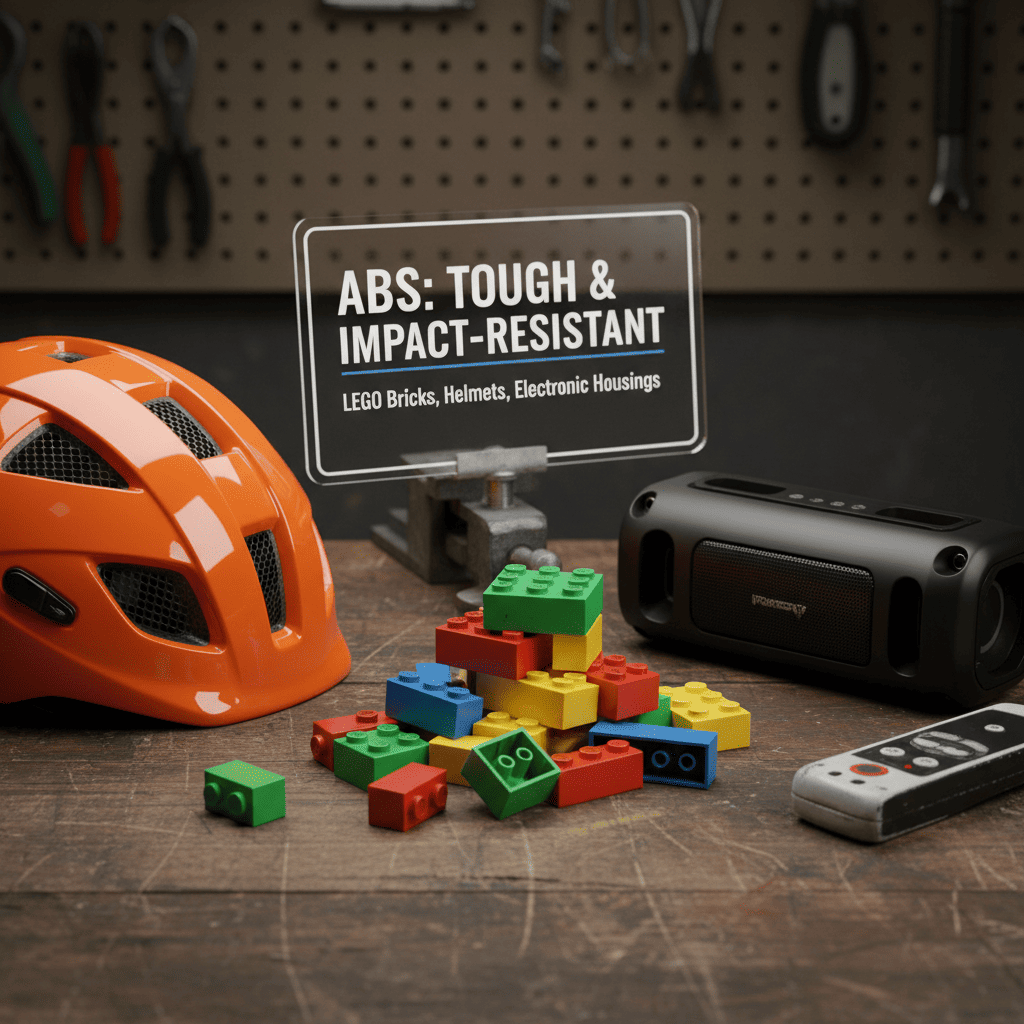
Toughness, or impact strength, is a material's ability to absorb energy and deform without breaking. Imagine dropping a glass plate versus a rubber mat. The glass (like a very rigid but brittle plastic) shatters, while the rubber mat (like ABS) absorbs the impact. This is the superpower of ABS. Its chemical makeup includes butadiene, which acts like microscopic bits of rubber spread throughout the material. This is why it's the material of choice for so many consumer products. For instance, we work with a company that develops STEM toys for kids. They exclusively use ABS for the main structural parts because they know the toys will be dropped, thrown, and stepped on. Using a more rigid but brittle material like POM would result in cracked parts and unhappy parents. ABS ensures the product can survive the rough-and-tumble reality of its environment.
Understanding Impact Performance
| Feature | POM (Polyoxymethylene) | ABS (Acrylonitrile Butadiene Styrene) | Winner |
|---|---|---|---|
| Izod Impact Strength | Lower | Much Higher | ABS |
| Failure Mode | Brittle Fracture (Snaps) | Ductile Failure (Bends/Dents) | ABS |
| Best For | Stable, low-impact environments | Products prone to drops and collisions | - |
Which material is better for wear and friction7?
Do your parts slide or rotate against each other? High friction causes wear, generates heat, and can lead to premature failure. You need a material with a naturally slippery surface.
POM is the clear champion for low friction and high wear resistance. Its crystalline structure gives it a naturally slick, self-lubricating8 surface. This makes it the perfect choice for sliding or rotating components like bushings, conveyor belt parts, and rollers.
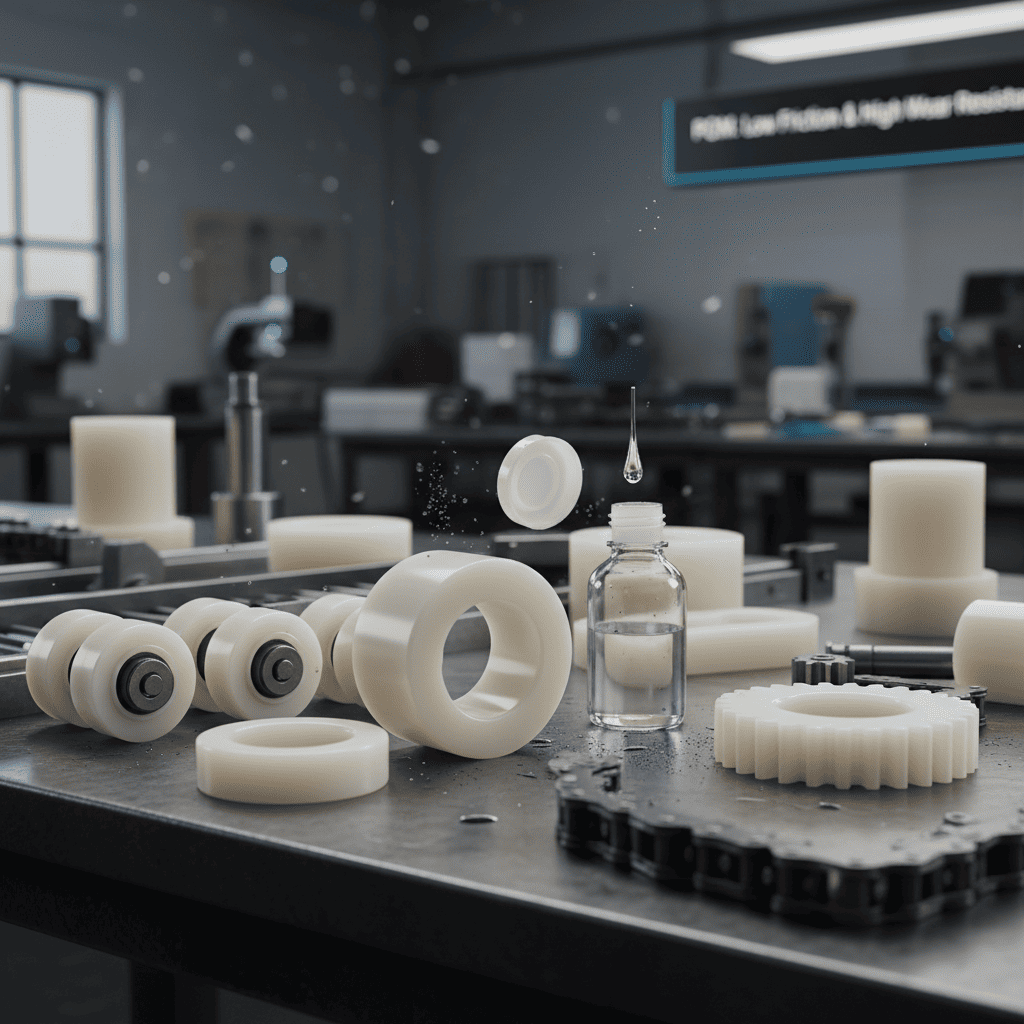
Wear resistance is a material's ability to resist being worn away by friction. POM has a very low coefficient of friction, meaning things slide across its surface very easily without grabbing or wearing it down. It’s like trying to slide on ice versus sliding on sandpaper. POM is the ice. This self-lubricating property is a huge advantage because it means you don't need to add external lubricants like grease, which can be messy and attract dirt. I recall a project with a cosmetics packaging manufacturer for a high-end lipstick tube. The twisting mechanism needed to feel smooth and luxurious for thousands of uses. ABS was too "grippy" and would wear down over time, creating a gritty feel. We switched the internal mechanism to POM, and the result was a silky-smooth, reliable action that elevated the product's perceived quality. This is a perfect example of choosing a material for its functional feel, not just its strength.
Friction and Wear Characteristics
| Characteristic | POM (Polyoxymethylene) | ABS (Acrylonitrile Butadiene Styrene) | Winner |
|---|---|---|---|
| Coefficient of Friction | Very Low | Moderate to High | POM |
| Wear Resistance | Excellent | Fair | POM |
| Self-Lubricating | Yes | No | POM |
| Ideal Use Case | Sliding parts, Bearings | Static parts, Housings | - |
Conclusion
Choosing between POM and ABS depends entirely on your product's needs. POM is stronger for rigid, low-friction parts, while ABS is stronger for absorbing impacts and preventing breakage.
Explore the unique properties of POM plastic, including its rigidity and wear resistance, to see if it's right for your project. ↩
Explore wear resistance to understand how it affects the longevity and performance of mechanical components. ↩
Learn about ABS plastic's toughness and impact resistance, making it ideal for consumer products that need durability. ↩
Discover the significance of tensile strength in material selection and how it impacts the performance of your products. ↩
Learn about the critical factors in material selection for mechanical parts to enhance performance and reliability. ↩
Learn about impact resistance and why it's crucial for products that may experience drops or collisions. ↩
Understanding friction can help you select materials that minimize wear and enhance the functionality of your designs. ↩
Find out how self-lubricating materials can reduce maintenance and improve efficiency in mechanical systems. ↩