
Struggling with maintenance costs eating into your profits? Unexpected downtime and repair bills can derail production schedules and budgets. But what if you could proactively slash these expenses?
To reduce mold maintenance costs, focus on proactive strategies. This includes maintenance-friendly design, optimized production processes, predictive maintenance technology, and smart management of spare parts. This shifts focus from reactive repairs to preventing failures before they happen, saving both time and money.
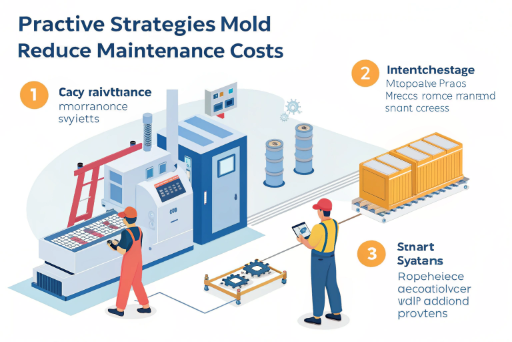

This sounds good in theory, but where do you actually start? For over 15 years at Ambition Industrial, I've learned that the foundation of low-cost maintenance isn't built on the factory floor; it begins much, much earlier. We need to look at the entire lifecycle of the mold, from the first sketch to its final day of service. Let's dive into how you can bake cost savings right into your process from the very beginning.
Can you design your molds to be cheaper to maintain from day one?
Frustrated by molds that are a nightmare to repair? Complex designs with hard-to-reach parts often lead to long, costly downtimes. Let's build molds that are designed for easy maintenance.
Yes. By focusing on a "maintenance-friendly" design philosophy. Use modular and standard parts for quick swaps, select materials and coatings matched to the job to extend life, and design to distribute stress, preventing cracks and fatigue. This front-loads your savings before production even starts.
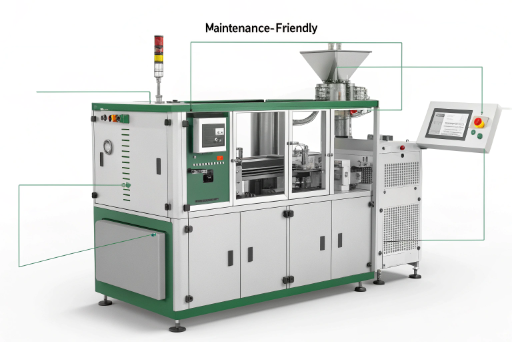
I remember a client who came to us with a complex mold for an automotive part. The maintenance was a disaster because a single worn-out insert required a full teardown. We started over. The key is to think about future repairs during the design phase. It's not just about making a part; it's about making a tool that can run for millions of cycles efficiently.
Design with Maintenance in Mind
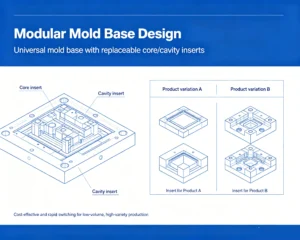
We begin by making wear parts, or wearable parts, modular. This means designing things like cavities, ejector pins, and guide pillars as separate, standardized blocks. If a pin breaks, you just swap the module. You don't have to take the whole mold apart. This approach also lets you keep a smaller, more manageable inventory of spare parts.
Choose Materials Wisely
Next, we look at materials. It’s tempting to just use the most expensive steel, but that’s not always the best choice. We match the mold steel and coatings to the production material. For a product using plastic with high glass fiber content, we might use a tougher steel like H13. For critical surfaces, a DLC (Diamond-Like Carbon) coating1 can extend the life of a component by up to 50%, drastically reducing how often it needs replacement.
Design for Durability
Finally, we use CAE simulation2 to see where the stress points are. This helps us optimize wall thickness and add smooth transitions to avoid stress concentration, which is a major cause of cracks. By designing for durability from the start, we prevent many common failures from ever happening.
Are your production settings silently destroying your molds?
Pushing for maximum output can be tempting. But running machines too fast or too hot puts extreme stress on your molds. This hidden wear and tear leads to surprise breakdowns.
Absolutely. Operating outside of optimal parameters is a primary cause of premature mold failure. Pushing for higher output by increasing temperature or pressure can shorten a mold's lifespan by over 50%. Strict process control is essential for longevity and reduced maintenance costs.
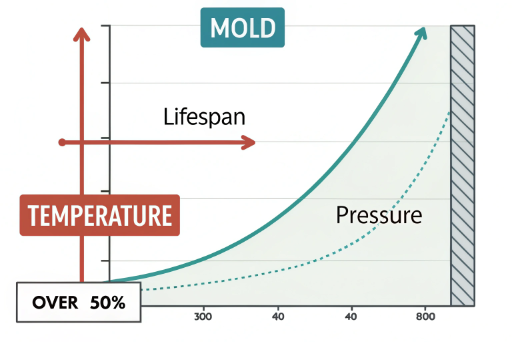
We once had a project manager for a toy company who couldn't understand why their molds were failing so quickly. I visited their factory and saw operators cranking up the injection pressure to meet a tight deadline. They were hitting their numbers, but they were also destroying their molds in the process. We helped them establish a system that links mold condition to production parameters3, which stopped the problem. The core idea is to reduce "unnecessary" wear by working smarter, not harder.
Link Parameters to Mold Health
Your production settings should not be static. We implement systems with sensors to monitor the mold's temperature and pressure in real time. If the temperature fluctuates more than ±5°C, the system can automatically adjust the cooling water flow to stabilize it. This closed-loop control prevents the mold from running under excessive stress, which is a major cause of wear.
Keep Your Materials Clean
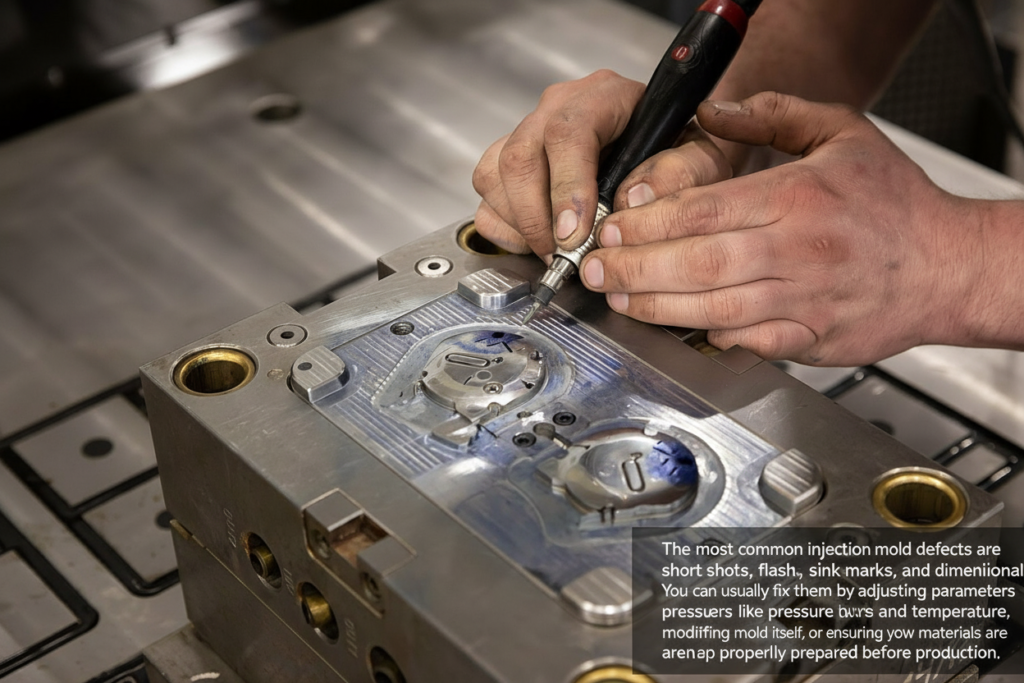
It sounds simple, but you would be surprised how often material contamination4 damages a mold. We always stress the importance of pre-treating raw materials. For plastics, this means ensuring the moisture content is correct. For metal stamping, it means no rust. A tiny, hard impurity can get into the mold cavity and cause scratches or dents that require expensive polishing or repair. We even advise adding extra filters at the material inlet.
Practice Smart, Lean Maintenance
| Maintenance shouldn't be "one size fits all." A high-volume, critical mold needs a different plan than a low-volume one. | Maintenance Type | Suited For | Frequency | Benefit |
|---|---|---|---|---|
| Predictive Check & Regular Care | Core, high-value molds | Based on production cycles | Maximizes uptime, prevents failures. | |
| Condition-Based Maintenance | Non-core, lower-use molds | When data shows a need | Avoids unnecessary maintenance work. |
This data-driven approach stops both over-maintenance (which can wear parts down) and under-maintenance (which leads to failures). We focus on cleaning key areas like gates and vents daily, not a full teardown.
Could technology predict mold failures before they happen?
Your production line suddenly stops. A mold has failed unexpectedly, and now you are facing hours of downtime and lost revenue. This reactive cycle feels endless and expensive.
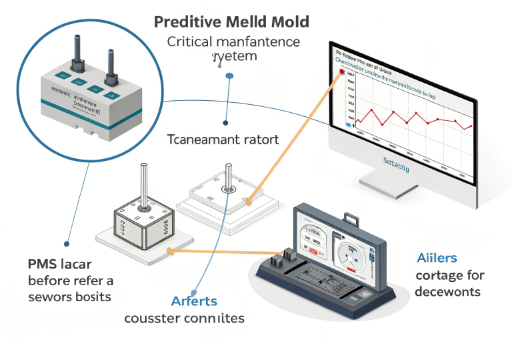
Yes, it can. By installing sensors on critical mold components and using predictive maintenance systems (PMS)5, you can analyze data trends. This technology allows you to forecast potential failures, like wear or cracking, turning "after-the-fact" repairs into "before-the-fact" alerts and preventing costly stops.
For a major cosmetics packaging client, unscheduled downtime was their biggest headache. One hour of a stopped line cost them thousands of dollars. We helped them deploy a predictive maintenance system on their highest-volume molds. We installed vibration and temperature sensors on key areas. Within three months, the system flagged an unusual vibration pattern in a guide pillar. A check revealed early-stage wear. A simple, planned replacement during a scheduled stop saved them from a catastrophic failure and a full day of lost production. This is the power of turning data into actionable insights.
Use Sensors for Early Warnings
The core of predictive maintenance is data. We install sensors for temperature, vibration, and displacement in critical areas of the mold. These can be on the cavity surface, guide pillars, or hydraulic systems. An AI algorithm then learns the mold's normal operating signature. When it detects a deviation—like a gradual increase in vibration—it sends an alert. This is your early warning that a component is starting to fail, giving you time to plan the repair instead of reacting to a breakdown.
Create a Digital Twin for Virtual Repairs
Another powerful tool is the "digital twin." This is a highly detailed 3D virtual model of your physical mold. Before a technician even touches the real tool, they can practice the entire maintenance procedure on the digital twin. They can see the exact sequence for disassembly, identify the right lubrication points, and find the best way to replace a part. This drastically reduces the risk of human error, which can cause secondary damage, and it makes the entire maintenance process faster and more efficient.
Automate Repetitive Tasks
Finally, we look at automating high-frequency maintenance tasks. Think about things like lubrication and cleaning. We can install automated lubrication pumps that deliver the precise amount of grease at the right intervals. We can also use high-pressure cleaning robots6 for hard-to-reach areas. Automation ensures consistency—no more missed spots or forgotten tasks. It also improves safety by keeping people away from hot and high-pressure equipment, all while reducing labor costs.
Is your maintenance management strategy hiding unnecessary costs?
You track repair bills, but do you know the true cost of maintenance? Hidden expenses in spare parts inventory, team inefficiencies, and repeated failures often fly under the radar.
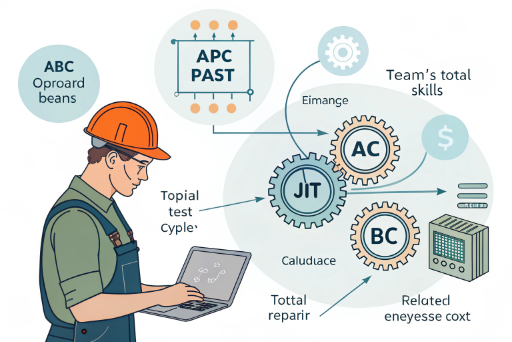
Most likely, yes. True cost reduction requires a lean, closed-loop management system. This involves optimizing spare parts with JIT and ABC classification, empowering your team with data skills, and calculating the mold's total life cycle cost (LCC), not just isolated repair expenses.
I once audited a factory for a developer of electronic products. Their storeroom was overflowing with mold parts, tying up a huge amount of cash. Yet, when a critical mold failed, they still had to wait two weeks for a specific custom cavity to arrive. They had the wrong parts in stock. This is a classic management problem. It’s not just about fixing things; it’s about having a smart system that supports your maintenance goals without wasting money.
Manage Spare Parts with Precision
We use a strategy that combines ABC classification with Just-in-Time (JIT) principles.
- A-Class Parts: These are your critical, high-cost, but less frequently replaced items, like a main cavity. We keep a minimal safety stock.
- B-Class Parts: These are common wear parts like guide pillars or standard inserts. We keep a reasonable stock.
- C-Class Parts: These are low-cost, high-volume items like seals and screws. We use a JIT approach, ordering them as needed to reduce inventory. This system ensures you have the critical parts on hand without tying up capital in parts you rarely use. We also set up emergency supply agreements with key suppliers.
Empower Your Team with Skills and Data
A maintenance technician's job is changing. It's no longer just about mechanical skill. At Ambition Industrial, we train our teams to be "cross-skilled." They can perform the physical repair, but they can also read and interpret the data from the predictive maintenance sensors. This creates a powerful feedback loop. The person who fixes the problem also understands why it happened. We also build a digital knowledge base, logging every failure, its cause, and the solution. This prevents the team from solving the same problem over and over again.
Calculate the Full Life Cycle Cost (LCC)
To truly understand your costs, you have to look beyond the immediate repair bill. We use Life Cycle Cost (LCC) analysis. This method calculates all costs associated with a mold from start to finish: design, manufacturing, operation, maintenance, and even disposal. This bigger picture helps identify which molds are truly "high-cost," even if their individual repair bills seem low. This data then feeds back into our design process, helping us avoid making the same costly design mistakes in the future.
Conclusion
Reducing mold maintenance costs is a shift from reactive repairs to proactive, full-process management. It starts with smart design and ends with strategic, data-driven decisions on the factory floor.
Explore the advantages of DLC coating in extending the life of molds and reducing maintenance. ↩
Learn how CAE simulation can optimize mold design for durability and cost savings. ↩
Discover how maintaining optimal production parameters can prevent premature mold failure. ↩
Understand the impact of material contamination on mold maintenance and how to prevent it. ↩
Learn about predictive maintenance systems and their effectiveness in reducing downtime. ↩
Explore the benefits of using high-pressure cleaning robots for efficient mold maintenance. ↩