Struggling with PVC defects? Yellowing parts, bubbles, and inconsistent results can halt production and inflate costs, damaging your brand's reputation and bottom line.
To overcome PVC molding issues, focus on three key areas. First, manage the material's heat sensitivity and moisture. Second, optimize your mold design and processing parameters. Finally, implement strict quality control throughout production to ensure consistency and compliance with standards like RoHS and REACH.
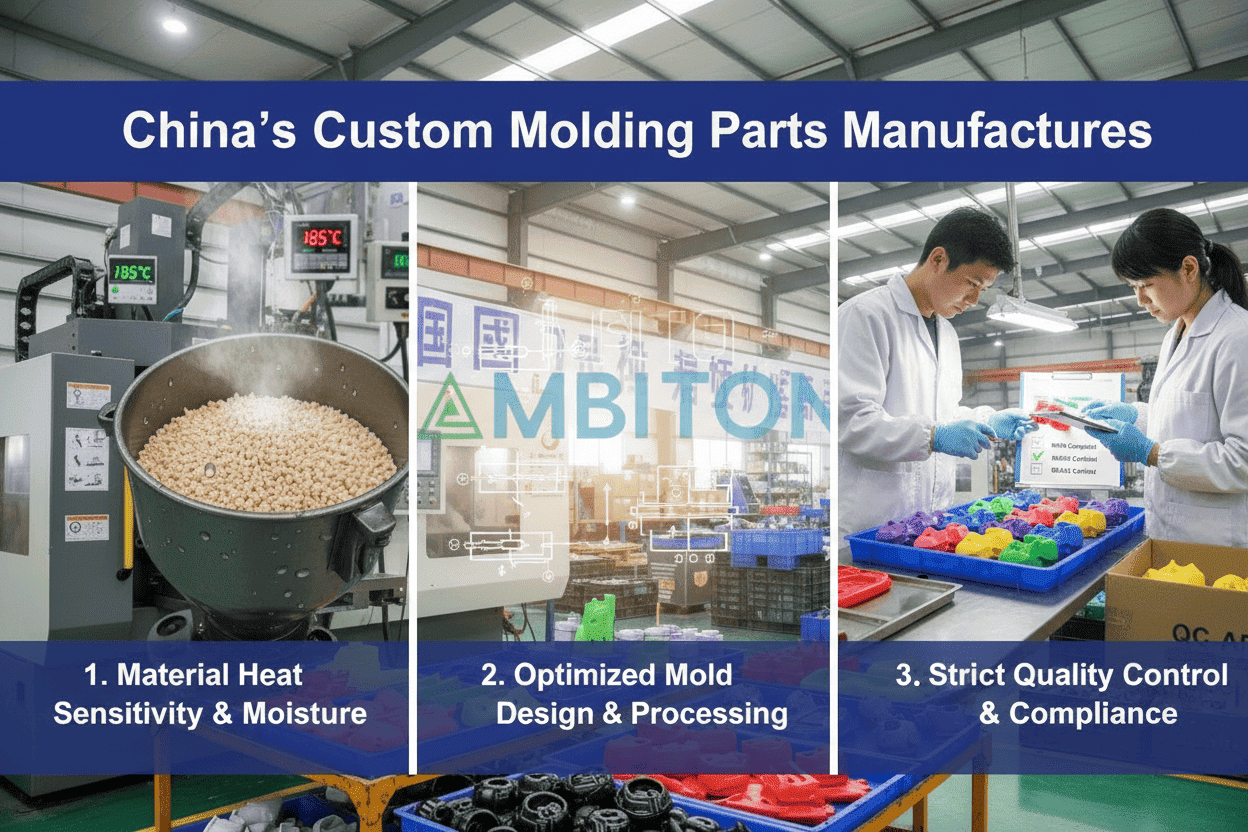
These problems are common, but they are not unbeatable. I've spent over 15 years in the custom mold industry at Ambition Industrial, helping clients navigate these exact challenges. We've seen it all, from educational toy developers to automotive parts distributors. The key is to understand the root cause of the problem, not just treat the symptom. Let's break down these issues one by one, so you can turn your production frustration into predictable, high-quality success.
Why Do My PVC Parts Turn Yellow or Have Bubbles?
Are yellow streaks or tiny bubbles ruining your PVC parts? These defects point directly to core material issues, making your products look cheap and unprofessional. It's time to fix this.
Yellowing is often caused by thermal degradation because PVC is extremely heat-sensitive. Bubbles and silver streaks are usually due to excess moisture in the raw material. Proper material drying and using the right heat stabilizers in your PVC formula are essential to prevent these common defects.
PVC is a fantastic material, but it's also famously tricky to work with. Unlike more forgiving plastics like PP or ABS, PVC has a very narrow processing window. I've seen many companies struggle because they treat PVC like any other polymer. The secret is to respect its unique properties. Based on my experience helping clients fine-tune their production, the problems almost always trace back to heat, moisture, or flow.
The Root of Yellowing: Thermal Degradation
PVC is thermally unstable. When it gets too hot, it starts to break down, releasing hydrochloric acid (HCl) gas. This chemical reaction is what causes the material to change color, leading to yellow or brown streaks. The solution lies in your material formulation. I once worked with a client making high-end cosmetic packaging. Their PVC components kept yellowing randomly. After a review, we found their heat stabilizer package was not robust enough for their processing temperatures. By working with their material supplier to add a more effective stabilizer, the yellowing problem disappeared completely. It’s crucial that your heat stabilizer is matched to your specific processing temperature and cycle time to prevent degradation.
The Cause of Bubbles: Trapped Moisture
PVC is hygroscopic, which means it absorbs moisture from the air. If you mold wet PVC, the water turns to steam inside the hot barrel. This steam gets trapped in the plastic, creating bubbles or splay marks (silver streaks) on your part's surface. To prevent this, your raw material must be thoroughly dried. As a rule of thumb, the moisture content should be below 0.2% before it enters the machine. We always advise our clients to invest in a good dehumidifying dryer and to verify the moisture content. It’s a simple step that prevents a major headache.
The Challenge of Flow: Short Shots and Weld Lines
PVC's flowability is very sensitive to temperature. If the melt is too cold, it will be too thick to fill the entire mold cavity, resulting in a "short shot." If it's too hot, it can degrade. This narrow window also makes weld lines—the visible lines where two plastic fronts meet—more pronounced. The key is precise temperature control across the barrel, creating a gradient that heats the material just enough to flow properly without causing it to burn.
Is Your Mold Design Sabotaging Your PVC Molding Process?
Is your production line constantly fighting short shots, sink marks, and other defects? The problem might not be the material or the machine, but your mold design itself.
An optimized PVC mold design is crucial. Use wide, smooth gates like fan gates to improve flow and avoid sharp corners that degrade material. A well-designed cooling system is also vital to manage PVC's poor heat conductivity, preventing warps and reducing cycle times.
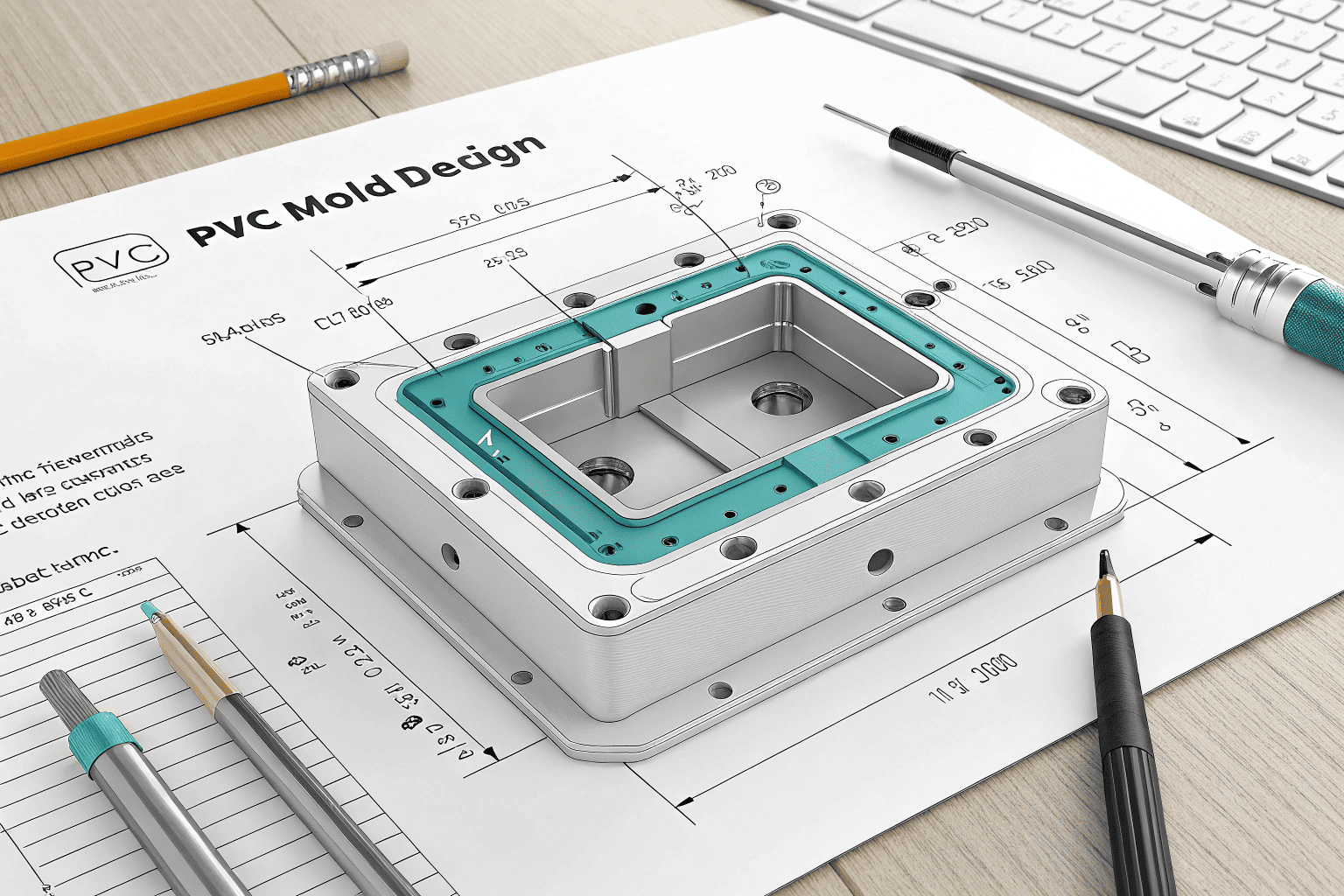
A mold is not just a cavity; it's a precision instrument that dictates how the plastic behaves. For a challenging material like PVC, a generic mold design is a recipe for failure. At Ambition Industrial, we've learned that building a successful PVC mold means designing for the material's specific weaknesses, particularly its sensitivity to shear heat and its poor thermal conductivity. Many of the projects we rescue from other manufacturers fail because the initial mold design was simply not suitable for PVC.
Choosing the Right Gate and Runner
The gate is where the molten plastic enters the part cavity, and for PVC, its design is critical. A small, restrictive gate, like a pin-point gate, forces the material through a tiny opening at high speed. This creates immense friction and shear heat, which can instantly burn and degrade the PVC before it even forms the part. We almost always recommend larger, smoother gates for PVC, such as fan gates or direct sprue gates. These allow the material to flow into the mold gently, minimizing shear and preserving the material's integrity. The runner system leading to the gate should also be designed to be as smooth and short as possible, with no sharp turns.
Optimizing the Cooling System
PVC is a poor conductor of heat. This means that once it's hot, it takes a long time to cool down. If your mold's cooling is inefficient or uneven, some parts of the component will cool faster than others. This causes internal stresses that lead to warping, sink marks, and dimensional instability. For every PVC mold we design, we run a comprehensive mold flow analysis. This simulation shows us exactly where heat will accumulate. We then design the cooling channels to run close to these "hot spots," ensuring uniform and efficient cooling across the entire part. This not only guarantees part quality but also helps shorten the cycle time, improving overall productivity.
Using a Dedicated PVC Screw and Barrel
The plasticating screw is what melts and mixes the plastic. A standard, general-purpose screw is not ideal for PVC. The high compression and shear can easily overheat the material. That's why dedicated PVC screws are a must. These screws have a lower compression ratio, are made from corrosion-resistant steel (to handle the HCl gas), and are often chrome-plated for a smooth, low-friction surface. Using the right screw ensures the PVC is melted gently and homogeneously, providing a stable melt for the injection phase.
How Can You Maintain Consistent Quality in Long-Term PVC Production?
Your first batch of PVC parts was perfect, but now quality is dropping. Inconsistent results are frustrating and costly, leading to customer complaints and high scrap rates.
For consistent quality, focus on systematic control. Regularly inspect your screw and barrel for wear. Strictly manage your workshop's humidity and limit the use of recycled material to 20-30%. Finally, create a troubleshooting guide and document your optimal process parameters to ensure repeatability.
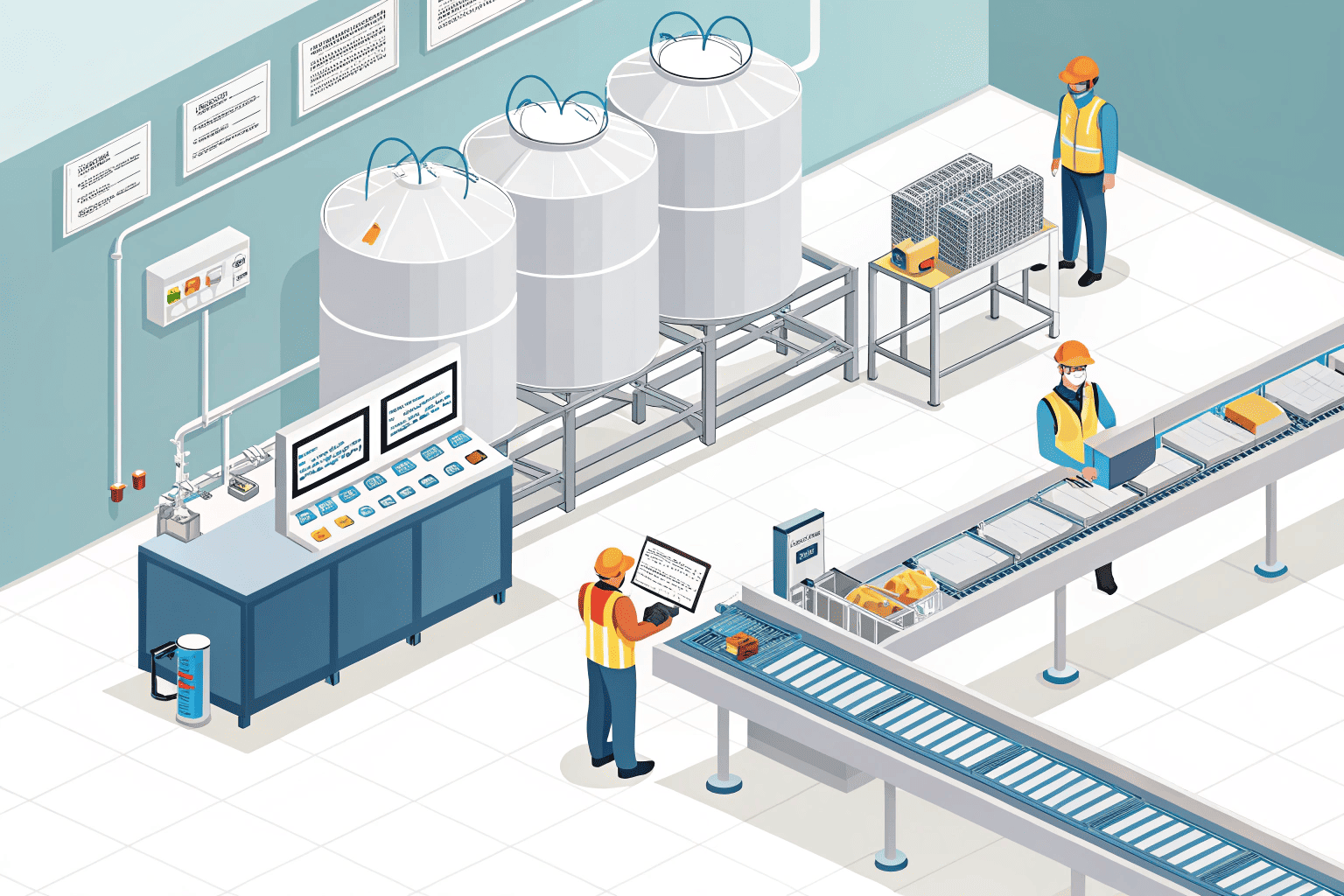
Achieving a good PVC part once is an achievement. Repeating that success 100,000 times is manufacturing. Consistency is the name of the game, especially for our clients who are project managers or purchasing managers for large brands. Their reputation depends on every single product meeting the standard. Building a robust system around your production process is the only way to guarantee long-term quality and avoid the slow decline of standards. It's about proactive maintenance, strict controls, and good documentation.
Proactive Equipment Maintenance
The corrosive nature of PVC and the potential for abrasion from fillers mean that your injection molding machine's screw and barrel will wear down over time. As they wear, the gap between them increases. This reduces the screw's ability to melt and mix the plastic uniformly, leading to unmelted particles, black specks, and inconsistent shot sizes. I remember a project with an automotive parts distributor where black specks started appearing after 50,000 shots. A quick check revealed significant screw wear. We replaced it, and the quality was instantly restored. Don't wait for defects to appear. Implement a schedule to measure your screw and barrel for wear every few months.
Strict Material and Environmental Control
We've already discussed drying material, but this discipline must be maintained every day. Your workshop's ambient humidity can affect the raw material before it even gets to the dryer. Furthermore, be very careful with recycled material (regrind). Each time PVC is heated, it degrades slightly. Using too much regrind introduces unstable material into your process, making results unpredictable. We advise our clients to limit regrind to a maximum of 30%, and to ensure it is mixed homogeneously with virgin material.
Quick Troubleshooting and Process Documentation
Even with the best systems, issues can arise. The key is to respond quickly and effectively. We help our clients create a simple troubleshooting guide that links common defects to process parameter adjustments. This empowers operators to make informed decisions on the factory floor.
| Defect | Potential Cause | Quick Solution |
|---|---|---|
| Yellowing/Burns | Material overheating / degradation | Lower barrel temperature; increase stabilizer |
| Sink Marks | Insufficient packing pressure/cooling | Increase holding pressure/time; lower mold temperature |
| Flash/Burrs | Injection speed too high / clamp low | Reduce injection speed; increase clamp tonnage |
| Short Shot | Incomplete mold filling | Increase injection pressure/speed; check for vents |
Once you find the "sweet spot" for your process parameters—the temperatures, pressures, and speeds that produce a perfect part—document them! This "golden process" sheet becomes your recipe for success, ensuring that every production run is set up exactly the same way.
Are Your PVC Products Ready for the Global Market?
You've made a great PVC product, but will it get rejected at the border or fail a customer's quality audit? International markets have strict rules, and failure can be disastrous.
To succeed globally, your PVC products must meet environmental standards like RoHS and REACH, which restrict heavy metals and certain plasticizers. You also need tight dimensional tolerances and consistent quality across all batches, which requires precise mold making and a documented, stable process.
In today's global economy, making a good part is only half the battle. As a manufacturer for clients in the EU, North America, and beyond, we know that compliance and quality assurance are non-negotiable. For a purchasing manager at a large company, the risk of a product batch being seized by customs or failing a safety test is a nightmare. It can lead to massive financial losses and irreparable brand damage. That's why we build compliance and export-grade quality into our process from day one.
These European regulations have become the de facto global standard. RoHS (Restriction of Hazardous Substances) restricts the use of specific hazardous materials, including lead and cadmium, which were historically used in PVC heat stabilizers. REACH (Registration, Evaluation, Authorisation and Restriction of Chemicals) is even broader, covering many chemicals, including certain phthalate plasticizers used to make PVC flexible. The only way to be sure your product is compliant is to have full control of your supply chain. We demand material data sheets and compliance certificates from all our raw material suppliers. This documentation is critical for our clients to prove due diligence and ensure their products have unrestricted market access.
Achieving High Precision and Stability for Export
International clients, especially in sectors like electronics, automotive, and high-end consumer goods, expect extremely tight tolerances. Our clients' products often require precision of ±0.05mm. Achieving this with PVC, which can shrink and warp, requires an exceptionally well-made mold. This is where advanced tools like Mold Flow Analysis become invaluable. Before we cut any steel, we can simulate the molding process to predict how the part will behave, allowing us to proactively adjust the mold design to compensate for shrinkage or warpage. This ensures the final physical parts match the client's CAD drawings perfectly, a requirement for any serious exporter.
Ensuring Batch-to-Batch Consistency
When a client orders one million parts, the millionth part must be identical to the first. This is the ultimate test of a manufacturer's capability. The key to this level of consistency is establishing a robust and repeatable process. We create a detailed Process Parameter Database for every project. Once we dial in the optimal settings—barrel temperatures, injection pressures, holding times, cooling times—we lock them in. These parameters are documented and used as the master setting for every future production run. This data-driven approach removes guesswork and guarantees that no matter when an order is placed, the quality will be exactly the same.
Conclusion
Overcoming PVC molding challenges requires a holistic approach. By mastering your material, optimizing your mold and process, and ensuring global compliance, you can achieve consistent, high-quality production.