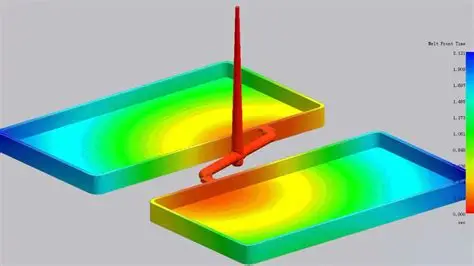
Struggling with endless injection molding delays and budget overruns? These issues push back your project timelines and eat into your profits, creating a cycle of frustration for your team.
Mold flow analysis boosts efficiency by simulating the plastic injection process before the mold is even built. This digital preview allows us to optimize the mold design, pinpoint exact processing parameters, and predict defects. This foresight drastically reduces physical trial-and-error, saving both time and money.
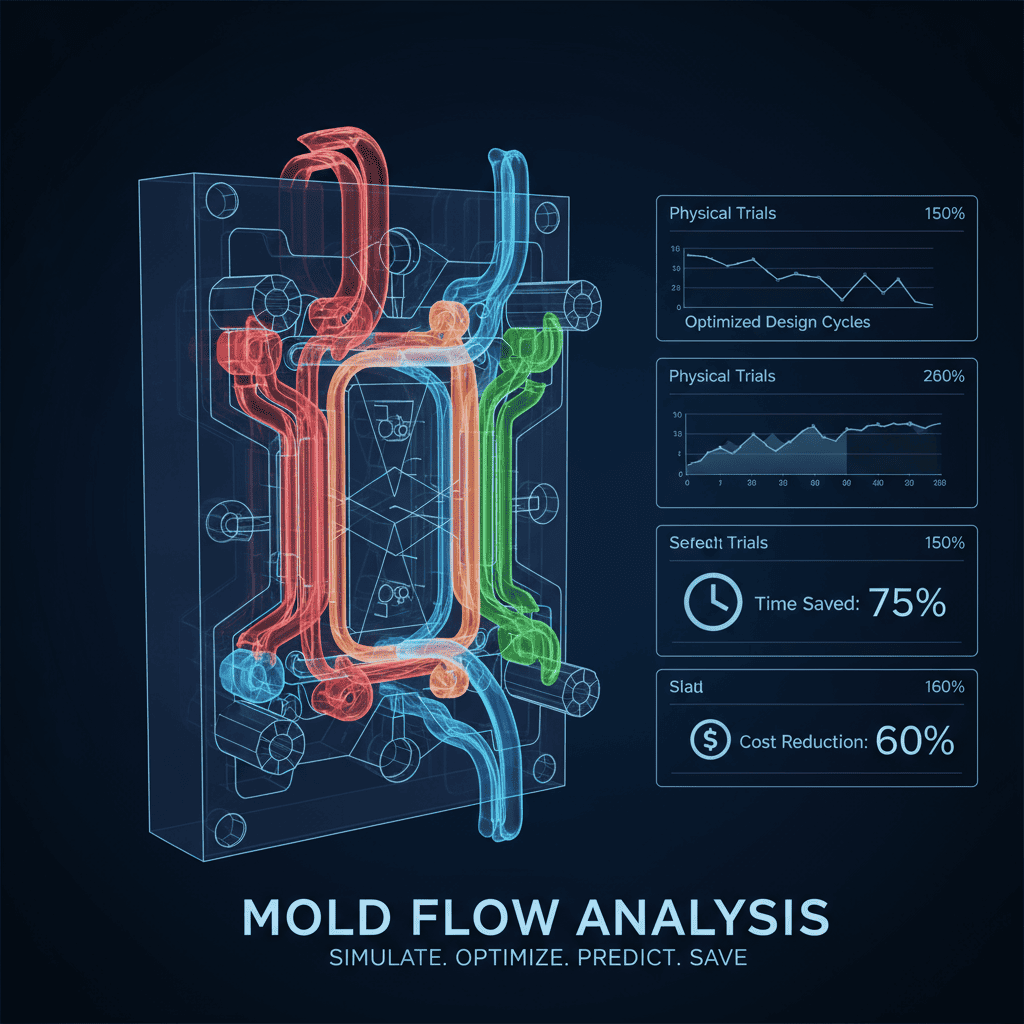
When I first started in this industry 15 years ago, getting a new mold right felt like a mix of science and guesswork. We leaned heavily on the experience of our engineers, but even the best experts can’t see how molten plastic will behave under immense pressure inside a steel block. We often faced a long cycle of testing, modifying, and re-testing. It was the standard way of doing things, but it was slow and expensive. Then, mold flow analysis changed everything. It gave us a way to look into the future and see problems before they happened.
This technology isn't just a minor improvement; it fundamentally changes how we approach manufacturing. It replaces assumptions with data, turning a complex art form into a predictable science. For anyone looking to launch a product efficiently, understanding how this works is key. Let's dive into the specific ways this powerful tool can make your project a success.
Can you really perfect a mold design before cutting any steel?
Are you tired of the endless back-and-forth on mold design revisions? Each change request adds weeks to your schedule and complexity to your budget, delaying your product launch.
While a single "perfect" design is the goal, mold flow analysis gets us remarkably close on the very first attempt. By digitally simulating the entire injection process, we can identify and fix potential issues like uneven filling or air traps, ensuring the physical mold requires minimal, if any, modifications.
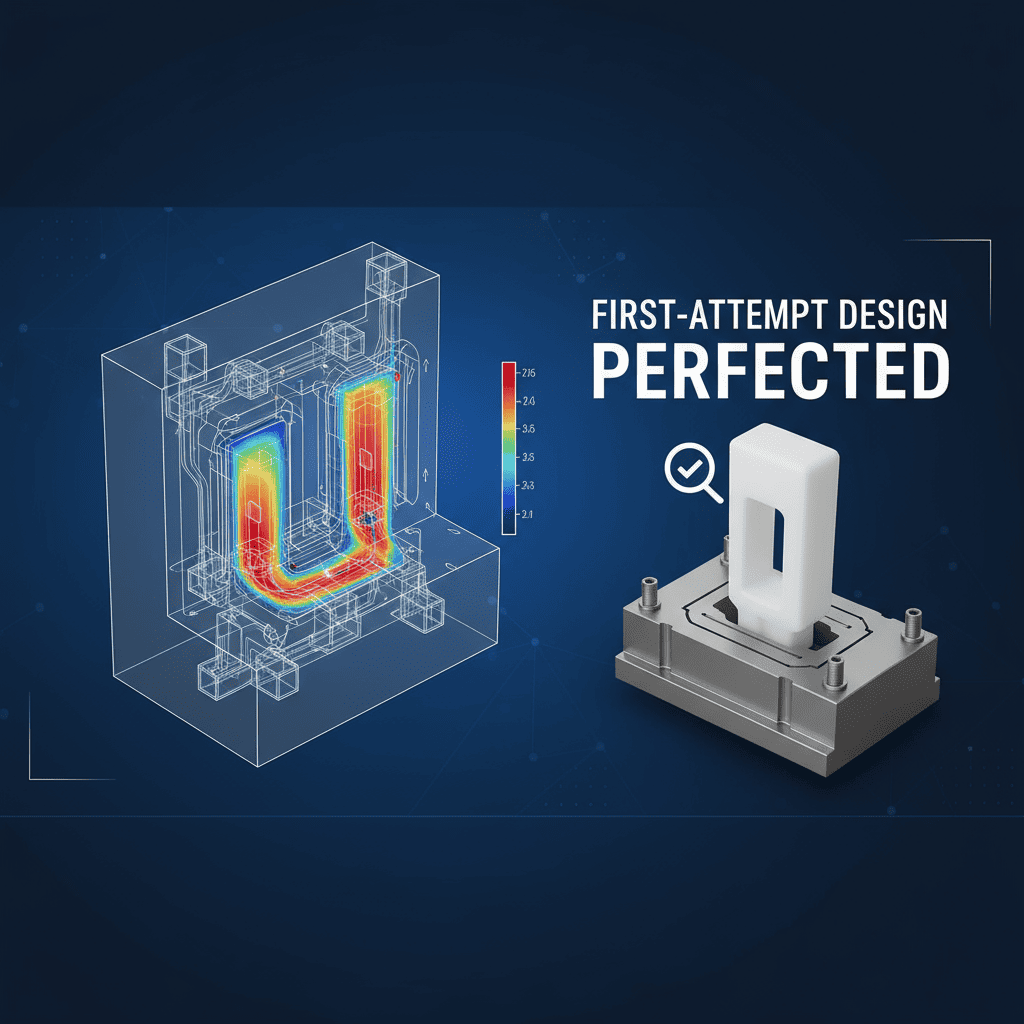
I remember working on a complex housing for an electronic device a few years ago. The client’s design had thin walls and intricate features. In the past, we would have made our best-educated guess on gate locations and runner design, then hoped for the best during the first trial. More often than not, we’d find short shots or cosmetic flaws, leading to weeks of expensive mold adjustments.
For that electronics project, we ran a mold flow analysis first. The simulation immediately showed that our initial gate plan would cause hesitation, where the plastic flow would stall and cool prematurely, creating a weak weld line right on a visible surface. The software allowed us to test three different gating strategies virtually. We found the optimal position that ensured a smooth, even fill. This process took about two days in the digital world. In the physical world, it would have taken at least two weeks and thousands of dollars in re-machining. It transforms mold making from a reactive process to a proactive one.
From Guesswork to Data-Driven Design
Mold flow analysis provides a detailed roadmap for success by optimizing critical design elements before they are set in stone.
| Feature | Traditional Method (Experience-Based) | Mold Flow Analysis Method (Data-Driven) |
|---|---|---|
| Gate Location | Placed based on past projects and intuition. Prone to creating cosmetic flaws like jetting or weld lines. | The software simulates flow from various points to find the ideal location for balanced filling and minimal defects. |
| Runner System | Designed to be functional but not always efficient. Can lead to unbalanced flow and wasted material. | The system is optimized to deliver plastic to all cavities at the same time and pressure, reducing cycle time and scrap. |
| Wall Thickness | Assessed manually, making it hard to spot areas that are too thin (risk of short shots) or too thick (risk of sink marks). | The analysis provides a color map of wall thickness, instantly highlighting problem areas that need adjustment in the CAD file. |
This shift means we aren't just relying on experience; we are enhancing it with hard data. This predictive power allows us to confidently move into manufacturing, knowing the design is already validated.
How can you reduce material waste and predict part defects?
Are you watching valuable raw material turn into a pile of scrap parts? Every rejected part represents wasted money, machine time, and labor, directly impacting your bottom line.
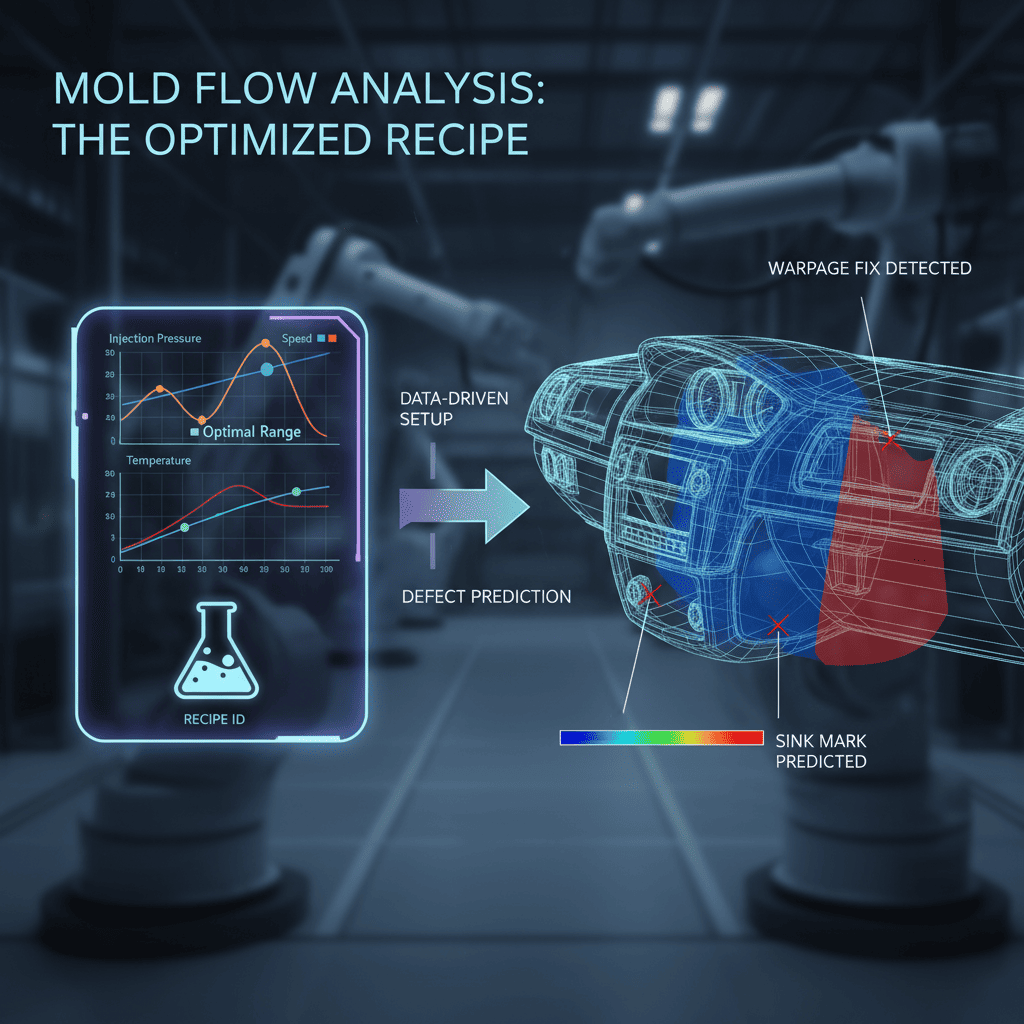
Mold flow analysis helps by providing a precise "recipe" of processing parameters like injection pressure, speed, and temperature. This data-driven setup minimizes trial runs and wasted material. It also simulates how the plastic will behave, predicting defects like warpage or sink marks so we can fix them in the design phase.
Before we heavily integrated mold flow analysis, setting up a new mold on the injection machine was a bit of an art. Our technicians would start with a baseline set of parameters and then tweak them based on the results of each shot. "A little more pressure here, a bit less temperature there." This process, while effective in the end, would often generate a significant amount of scrap before we produced a single good part. For a project using an expensive material like PEEK, this was incredibly costly.
Now, our process is completely different. The mold flow report gives the technicians a highly accurate starting point. It might tell us, "Use an injection pressure of 90 MPa and a melt temperature of 245°C." We plug in these numbers, and often, the first parts that come out are already within specification. It also helps us solve problems before they happen. The analysis might show that a flat part is likely to warp because of uneven cooling. Armed with this knowledge, we can adjust the cooling channel layout in the mold design to counteract that effect, ensuring the final parts come out flat and true. This isn't just about efficiency; it's about building quality into the process from the very beginning.
Proactively Eliminating Common Defects
Mold flow analysis acts like an early warning system, allowing us to identify and solve some of the most common and costly injection molding defects during the design phase.
- Warpage: The simulation predicts how the part will shrink as it cools. If one area cools faster than another, it can cause the part to bend or twist. We can see this in the simulation and adjust the cooling line layout or part geometry to ensure uniform cooling, resulting in a flat, stable part.
- Sink Marks: These are small depressions on the surface of a part, often caused by thick sections that don't cool properly. The analysis highlights areas with excessive mass. We can then work with the client to core out these sections, maintaining strength while ensuring a flawless surface finish.
- Weld Lines: These occur where two or more plastic flow fronts meet. If the fronts have cooled too much, they don't merge properly, creating a weak and often visible line. The simulation shows exactly where weld lines will form, allowing us to move a gate or add an overflow tab to push the weld line to a non-critical or non-visible area of the part.
By addressing these issues in software, we prevent the costly cycle of physical mold adjustments and production halts.
Conclusion
Ultimately, mold flow analysis transforms injection molding from a trial-and-error process into a precise science, drastically improving efficiency, reducing costs, and ensuring higher quality products from the very first shot.