跳到内容
跳到内容 

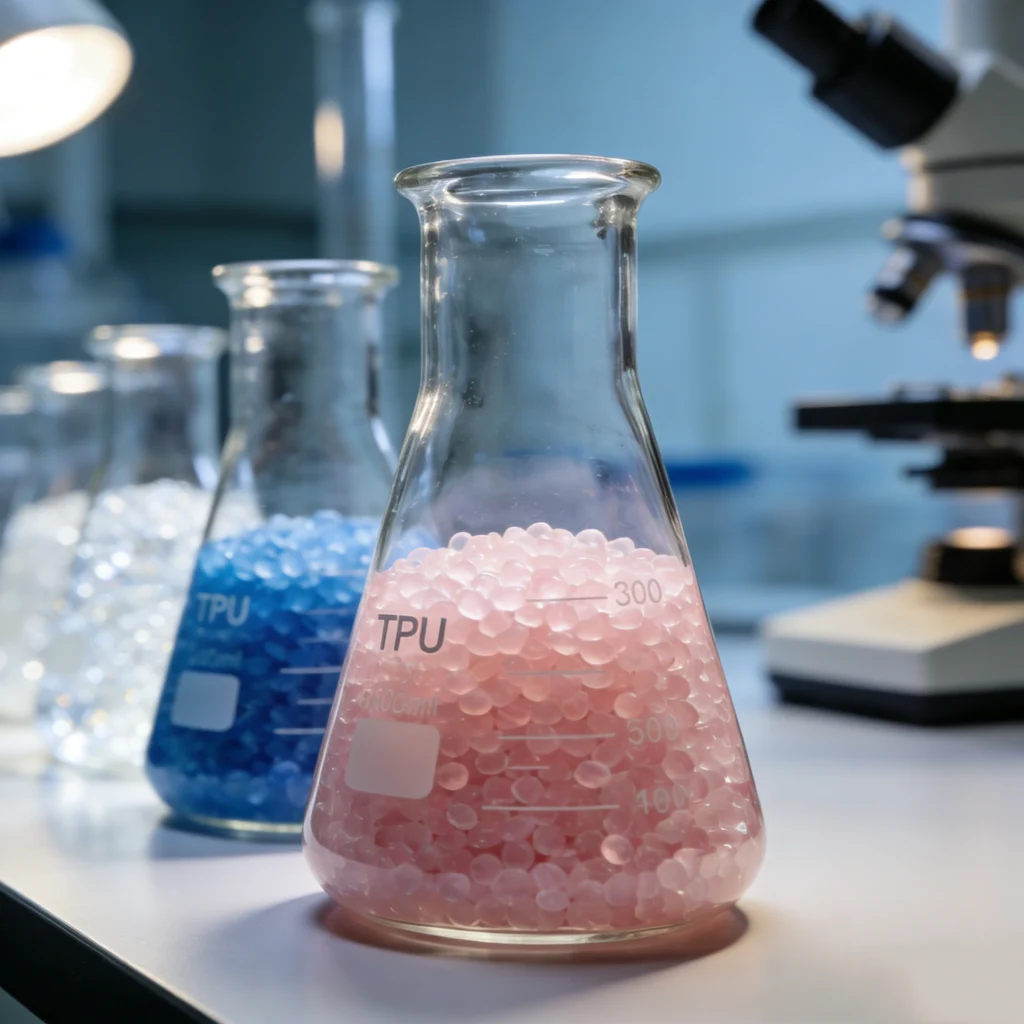
You chose Thermoplastic Polyurethane (TPU) for its strength and flexibility. But are you aware of the hidden challenges that can derail your project and inflate your budget?
TPU's primary disadvantages are its high cost, poor resistance to heat and UV light, and limited chemical tolerance. Its processing is also highly sensitive, requiring specialized equipment and expertise to avoid defects, which can increase manufacturing complexity and expenses compared to other elastomers.

Those points give a quick overview, but the real story is in the details that can make or break your product's success. As a manufacturer with over 15 years of experience in custom molding, we've seen firsthand how these issues play out in real-world applications. It’s not just about knowing the problems; it’s about understanding how they impact your bottom line and product quality. Let's break down each of these challenges so you can make a truly informed decision for your next project.
Is the high cost of TPU always justified?
You need a high-performance material, but the budget is tight. The premium price of TPU makes you hesitate, wondering if the investment will pay off or just shrink your profit margins.
TPU's high cost isn't always justified, especially for projects where a more common material would suffice. Its price is driven by volatile raw materials and energy-intensive processing, making it 30-50% more expensive than alternatives like TPE. This makes it less competitive for many consumer products.

At Ambition Industrial, we always start a project by looking at the total cost of ownership, not just the raw material price. The cost of TPU is a two-part problem. First, the raw materials themselves are expensive. The key ingredients, polyols and isocyanates, are tied to the volatile crude oil market. This means prices can fluctuate unpredictably. High-end grades of TPU can cost more than 1.5 times what you'd pay for a standard elastomer.
Second, processing TPU adds another layer of expense. It requires high temperatures (180-250°C) and high injection pressures, which consumes more energy. This harsh processing environment also causes more wear and tear on our molds, leading to higher maintenance costs over time. When you combine these factors, the final part cost can be significantly higher than other options.
TPU vs. TPE: A Cost Breakdown
| Cost Factor | Thermoplastic Polyurethane (TPU) | Thermoplastic Elastomer (TPE) | Impact on Your Project |
|---|---|---|---|
| Raw Material Cost | High and volatile (linked to oil prices) | Moderate and more stable | TPU introduces budget uncertainty and higher upfront costs. |
| Processing Energy | High (180-250°C) | Lower (150-200°C) | Higher energy bills directly increase the cost per part. |
| Mold Wear | Significant | Minimal | Increased tooling maintenance and potential for replacement costs. |
| Overall Cost | 30-50% higher than TPE | Baseline | Can make the final product too expensive for its target market. |
I remember a client who was developing a new line of electronic device cases. They were initially set on TPU for its premium feel and durability. However, once we presented the cost analysis, they realized it would push their retail price outside the competitive range. We worked with them to select a high-grade TPE that offered 90% of the performance at a 40% lower cost. This decision saved their profit margin and made the product viable.
How does TPU hold up in harsh environments?
Your product will be used outdoors or in demanding industrial settings. You can't risk it yellowing, cracking, or failing after just a few months of real-world use.
TPU's durability has clear limits in harsh environments. Standard grades soften in temperatures above 100°C, can become brittle when exposed to humidity over time, and will yellow and lose strength under direct UV radiation, making them a poor choice for long-term outdoor applications.

While TPU is known for its toughness, its structural stability is not universal across all conditions. There are two main types of TPU, and each has its own environmental weakness. Polyester-based TPU is vulnerable to hydrolysis. This means that in humid or wet environments, the molecular chains in the material slowly break down. Over time, the part becomes brittle and can crack under stress. I've seen this happen with components used in marine applications where, after a year, a once-flexible part became as fragile as old plastic.
Aromatic TPU, on the other hand, struggles with UV light. The benzene rings in its molecular structure are highly susceptible to oxidation when exposed to sunlight. This results in two problems: severe yellowing, which ruins the product's appearance, and a dramatic loss of physical properties. We've run tests where a TPU part lost over 50% of its tensile strength after just three months of outdoor exposure. Even with UV stabilizers, degradation is a matter of when, not if. Lastly, heat is a major concern. Most TPU grades have a continuous use temperature between 70-120°C, but polyether types can soften and deform at temperatures as low as 100°C. This makes TPU unsuitable for parts near engines or other heat sources.
TPU Environmental Performance Limits
| Environment | Polyester TPU | Polyether TPU | Impact on Your Product |
|---|---|---|---|
| High Humidity | Prone to hydrolysis, becomes brittle | More resistant | Risk of premature failure in wet or tropical climates. |
| UV Exposure (Sunlight) | Yellows and degrades severely | Yellows and degrades severely | Not suitable for outdoor products without costly additives or coatings. |
| High Heat (>100°C) | Can withstand up to 120°C (short-term) | Softens and deforms | Limited use in automotive engine bays or industrial machinery. |
Does TPU have any chemical vulnerabilities?
Your product might come into contact with oils, solvents, or cleaning agents. You need to be certain that the material won't swell, dissolve, or degrade, which could lead to catastrophic failure.
Yes, TPU has significant chemical vulnerabilities. It is highly susceptible to strong polar solvents like ketones and chloroform, as well as strong acids and bases. Certain types are not oil-resistant, limiting their use in industrial and automotive applications where such contact is common.

One of TPU's most overlooked weaknesses is its performance blind spots against certain chemicals. While it resists some substances well, it can fail quickly when exposed to others. The main culprits are strong polar solvents. Chemicals like acetone, methyl ethyl ketone (MEK), chloroform, and DMF can cause TPU to swell up and lose all its structural integrity, sometimes even at room temperature. This makes it a risky choice for components in laboratory equipment or manufacturing environments where these solvents are used.
Furthermore, not all TPUs are created equal when it comes to oil resistance. This is a common point of confusion. Polyester-based TPU generally has good resistance to oils and hydrocarbons. However, polyether-based TPU, which is often chosen for its flexibility at low temperatures and resistance to microbial growth, does not handle oil well. It can swell and deform upon contact. We once had a project for a gasket that needed to be flexible in cold weather but was also exposed to machine oil. The initial choice of a standard polyether TPU failed during testing. We had to switch to a much more expensive, specially formulated grade to meet both requirements, which impacted the project's budget. Even the best TPU grades struggle with long-term exposure to strong oxidizing agents or concentrated acids and alkalis, which limits their role in heavy chemical processing industries.
Why is TPU so difficult to process correctly?
You’ve heard TPU can be tricky to manufacture. You're worried about production defects like bubbles or weak spots that could lead to high scrap rates and inconsistent quality.
TPU is difficult to process due to its high moisture absorption and sensitivity to temperature and pressure. If not dried properly, it will produce parts with bubbles and streaks. Its high viscosity requires high-pressure injection, and improper settings can easily break its molecular chains, ruining its properties.

From a manufacturer's perspective, TPU is one of the most demanding materials to work with. It has a very low tolerance for error. The first and most critical step is drying. TPU is highly hygroscopic, meaning it acts like a sponge and absorbs moisture from the air. Even a tiny amount of moisture (its absorption rate can be up to 0.5%) will turn into steam at the high processing temperatures, causing bubbles, silver streaks, and splay marks on the part's surface. To prevent this, the raw material must be dried for 3 to 6 hours at 80-100°C right before molding. Skipping or shortening this step guarantees a high defect rate.
Once in the injection molding machine, TPU's sensitivity continues. It has a high melt viscosity, so it requires extremely high injection pressures (80-150 MPa) to force the material into the mold cavity. At the same time, it's very sensitive to shear stress. If the screw speed is too high, the friction can literally tear the long molecular chains apart. This permanently damages the material, reducing its strength and elasticity, even if the final part looks visually perfect. Mold design is also crucial. Because of the high pressure and viscosity, improper gate locations or runner designs can easily lead to weld lines or sink marks, which are both cosmetic and structural weak points. It requires expertise and precise control over every variable—something we've perfected over thousands of production runs.
Conclusion
While TPU offers great flexibility and toughness, its disadvantages in cost, environmental stability, chemical resistance, and complex processing make it a highly specialized material that isn't right for every project.