跳到内容
跳到内容 

Struggling with inconsistent plastic finishes? Describing "glossy" or "matte" often leads to errors. You need a universal language to ensure your parts look and feel exactly as intended.
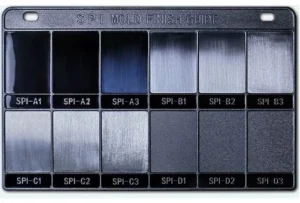
The SPI (Society of the Plastics Industry) standard is a classification system that defines the surface finish1 of a plastic part. It categorizes finishes into 12 grades, from high-gloss2 mirror polishes (A-1) to rough textures (D-3), providing a clear communication tool for designers and manufacturers.

Understanding this standard is crucial. I've been working with custom molds for over 15 years at Ambition Industrial, and I've seen firsthand how a simple misunderstanding of surface finish can derail a project. It’s a common issue for our clients, from automotive parts3 distributors to electronics developers. Let's break down what really matters. This knowledge will help you avoid costly mistakes and get the exact product you envisioned.
Why is SPI more than just a surface texture guide?
Are your design ideas getting lost in translation? Vague terms like "high gloss" cause production mistakes. You need a system that aligns everyone's expectations from the start.
The SPI standard is a powerful efficiency tool. It creates a shared language that connects the manufacturing process, like diamond polishing4, to the final surface result and the product's functional needs. This avoids guesswork and ensures everyone, from designers to mold makers, is on the same page.

I remember a project with an educational toy developer. They wanted a "shiny" case for a new STEM kit. But "shiny" meant different things to their designer in Europe and our mold engineer in Dongguan. The first sample came out with a nice sheen, but it wasn't the near-mirror reflection the designer had in his head. This caused a two-week delay for re-polishing the mold. This is where the SPI standard becomes a project saver. It’s not just about looks; it’s a communication framework that links a specific mold-making process5 to a guaranteed outcome. Think of it as a clear recipe for the factory.
This recipe prevents confusion. The designer can simply specify "SPI A-3," and the mold factory knows exactly what level of diamond polishing is needed.
Process, Grade, and Application Alignment
| SPI Grade | Typical Mold Process | Common Use Case |
|---|---|---|
| A-1 | #3 Diamond Buff | Optical lenses, mirrors |
| B-2 | 600 Grit Paper | High-end electronic housings |
| C-1 | 600 Grit Stone | Automotive interior panels |
| D-3 | #240 Oxide Dry Blast | Industrial housings, tool grips |
By using this structured language, we align expectations across the entire supply chain. It makes the whole process smoother for clients like you and ensures the final product is exactly what you paid for.
Why does your plastic material limit your surface finish options?
Did you specify a mirror finish but get a dull part? The problem might not be the mold, but the plastic itself. Choosing the wrong material can make your desired finish impossible.
The type of plastic you choose directly impacts the achievable SPI finish. Amorphous plastics like PC and acrylic can replicate high-gloss mold surfaces perfectly. Crystalline plastics like PP and HDPE have a molecular structure that makes achieving a perfect A-grade mirror finish extremely difficult and prone to defects.

Your choice of SPI finish isn't just about what you want; it's about what the plastic material can actually do. This is a technical point that many project managers, even experienced ones, can miss. We always discuss this early in the design review process. Plastics fall into two main families, and they behave very differently in the mold.
Amorphous vs. Crystalline Plastics
Amorphous Plastics (like PC, ABS, Acrylic): Imagine a messy pile of cooked spaghetti. The long-chain molecules are all jumbled up with no order. When this type of plastic is injected into the mold and cools, it shrinks uniformly. This even shrinkage allows it to copy the mold surface with incredible accuracy. This is why you can get a beautiful, glass-like SPI A-1 mirror finish with these materials. They are perfect for optical parts or premium cosmetic packaging.
Crystalline Plastics (like PP, PE, Nylon): Now, think of a stack of neatly arranged logs. The molecules in these plastics form organized, crystal-like structures as they cool. This process causes them to shrink in a less uniform way. This differential shrinkage can create microscopic imperfections, sink marks, and warpage, preventing the plastic from perfectly replicating a highly polished mold surface. Forcing a high-gloss finish on PP often leads to visual defects and frustration. We've seen clients try this, and the result is almost always a high scrap rate.
We often guide clients to the right choice. If a cosmetics brand needs a premium, glass-like jar, we suggest PC or PMMA. If an automotive client must use PP for its chemical resistance, we help them select a C or D-grade textured finish. This not only looks great but also helps hide potential molding issues, giving them a better, more consistent final product.
Is the SPI standard better than the VDI 34006 standard?
Confused between SPI and VDI standards? Choosing the wrong one for your supply chain can create communication problems. You need to know which standard aligns with your manufacturing partners.
Neither standard is inherently "better." The choice depends on your supply chain. The US-centric SPI standard specifies the process (e.g., use 600 grit paper). The German VDI 3400 standard specifies the result (e.g., achieve a specific Ra value), making it more common in Europe.

At Ambition Industrial, we serve a global clientele, so we are experts in both SPI and VDI. I see this question come up all the time. A purchasing manager from an American company might send us a drawing with VDI specs, or a German brand manager will ask for an SPI finish. The key difference is philosophy.
The SPI standard is process-driven. It tells the mold maker exactly what tool to use to get the finish. For example, an SPI-C1 finish requires a 600-grit stone. This approach is very common in American supply chains where controlling the manufacturing process is a top priority. It leaves very little room for interpretation.
The VDI 3400 standard is results-driven. It defines the finish based on a measured surface roughness7 (Ra) value, which is achieved through spark erosion (EDM). For example, VDI 27 has a target Ra of 2.24 µm. This gives the mold maker more freedom in how they achieve that final texture, as long as it meets the specification. This is preferred in many European supply chains that trust their partners to deliver a specific, measurable result.
So, which one should you use? It's about matching the standard to your partners. If you are working primarily with North American suppliers, stick with SPI. If your partners are in Germany or Europe, VDI is often the default language. As a Chinese manufacturer serving both, we simply ask our clients which system they use. We then work to that standard to ensure there is no confusion. It’s about choosing the right language for your specific project ecosystem.
How does the right SPI finish improve your product's performance?
Thinking a surface finish is just for looks? This mistake can compromise your product's function and durability. A specific SPI grade is often a critical performance feature in disguise.
The functional value of an SPI finish often outweighs its appearance. A high-gloss A-1 finish on medical parts reduces bacterial growth. A rough D-3 texture on a tool handle improves grip and paint adhesion. A C-2 matte finish8 hides molding flaws on car interiors.

The appearance of a finish is often just a side effect of its real job. I learned this lesson early in my career while working on a project for a medical device9 company. They specified an SPI A-1 finish, our highest grade of diamond polish, for a small diagnostic lens. I thought it was just for clarity. But the project manager explained the real reason: an ultra-smooth surface with no microscopic grooves makes it much harder for bacteria to cling to the part and easier to sterilize. The optical clarity was a secondary benefit.
This principle applies across all the grades. That textured finish on your power drill isn't just for show.
The Hidden Function of Each Finish
- High-Gloss (A Grades): Beyond looks, these finishes are for function. An A-1 finish creates a hygienic, easy-to-clean surface. It’s also required for optical parts or surfaces that need a perfect seal with a gasket.
- Matte Finishes (C Grades): These are workhorses in the automotive industry. A C-1 or C-2 finish creates a low-glare surface, which is important for dashboards to prevent distracting reflections. This light texture also does a fantastic job of hiding minor molding imperfections like flow lines or sink marks, leading to higher-quality yields.
- Textured Finishes (D Grades): A rougher D-grade finish is all about performance. On heavy equipment panels, a D-3 finish provides an excellent surface for paint and coatings to adhere to. On a handle or grip, it increases the friction coefficient, making the product safer and easier to hold.
When you choose an SPI finish, you are engineering a specific functional property into your part. The look is just the visible outcome.
How are eco-friendly trends changing plastic surface finish standards?
Is your product's finish holding back your sustainability goals? Old-school polishing methods and complex textures can increase your carbon footprint and make recycling harder. The industry is adapting.
Sustainability is driving new approaches to SPI finishes. Manufacturers are adopting low-energy processes like plasma polishing to achieve high-gloss finishes. At the same time, simpler textures like a D-1 glass bead blast are favored because they make plastic parts easier to recycle.

As a manufacturer, we see these changes firsthand. Our clients are increasingly asking not just for a specific finish, but for a finish that aligns with their corporate sustainability goals. The SPI standard itself isn't changing, but how we achieve those grades is evolving rapidly. The focus is shifting towards processes that are both efficient and environmentally friendly. This is a big topic with our clients who are leaders in their industries, like SETM toy developers and cosmetic brands.
Traditionally, achieving a top-tier SPI A-1 finish required hours of manual labor and energy-intensive diamond polishing. Today, we are exploring and using new technologies. For example, plasma polishing can create a high-gloss surface using an electrochemical process that consumes less energy and eliminates the need for abrasive materials. This helps us deliver a premium finish with a lower carbon footprint.
On the other end of the spectrum, texture design is also changing. Very complex or deep textures can trap contaminants and make it difficult to separate different materials during the recycling process. We now work with product designers to select textures, like a light D-1 grade achieved with glass bead blasting, that provide the desired feel and grip but don't hinder future recyclability. The goal is to create products that look and perform great today and can be efficiently repurposed tomorrow. The SPI standard remains our guide, but we are applying it with a smarter, more sustainable mindset.
Conclusion
Choosing the right SPI finish is a critical decision. It aligns your team, respects material limits, and adds hidden function, ensuring your final product succeeds both functionally and aesthetically.
Learn about various surface finishes to choose the right one for your plastic parts, enhancing both aesthetics and functionality. ↩
Discover the benefits of high-gloss finishes and how they can improve the appearance and performance of your products. ↩
Learn about the specific surface finishes required for automotive parts and their importance. ↩
Find out how diamond polishing techniques can achieve superior surface finishes for your plastic components. ↩
Learn about the mold-making process and how it relates to achieving specific SPI surface finishes. ↩
Explore the VDI 3400 standard to see how it compares to SPI and its relevance in European manufacturing. ↩
Learn about surface roughness measurements and their importance in achieving desired finishes. ↩
Understand the applications of matte finishes in plastic parts and how they can enhance product quality. ↩
Understand the importance of surface finishes in medical devices for hygiene and performance. ↩