
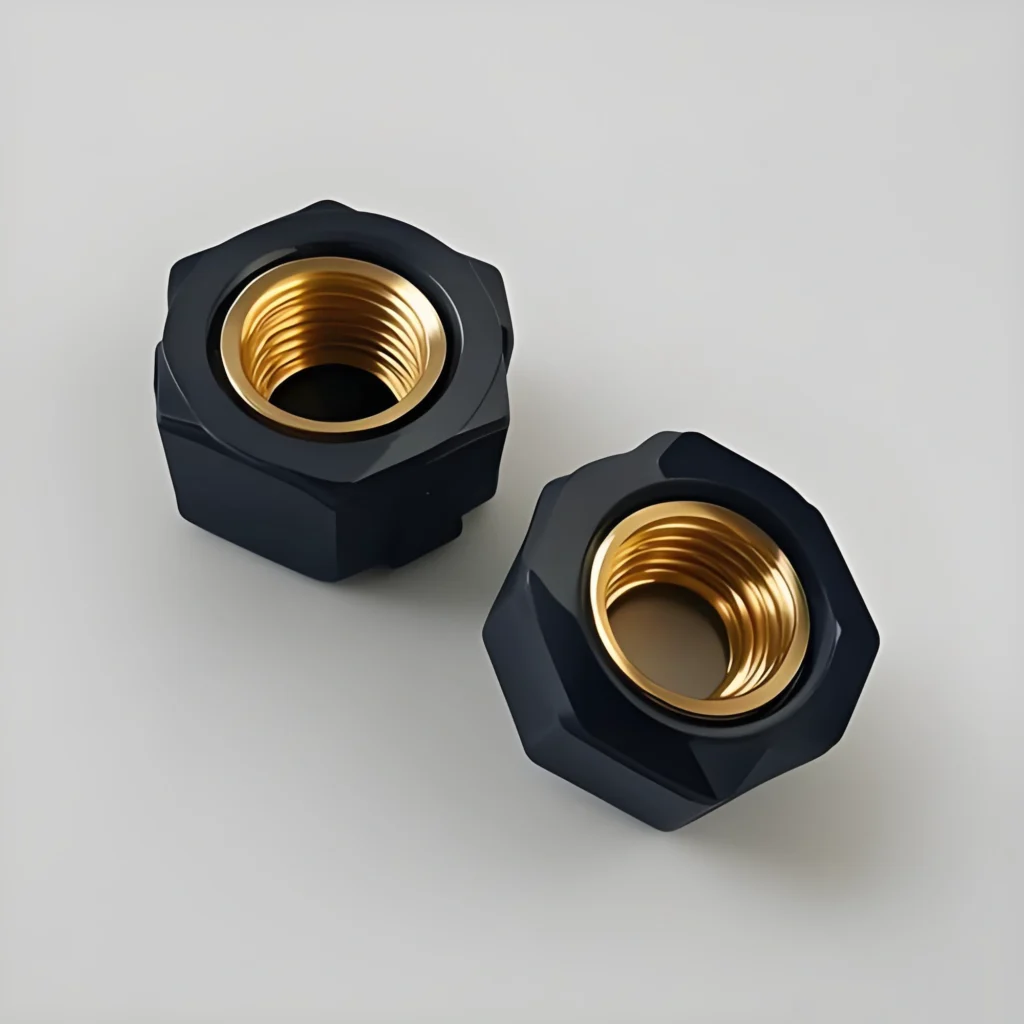
Assembling multiple small parts is slow and creates weak points. This increases costs and hurts reliability. Insert molding solves this by creating one solid, multi-material component from the start.
Insert injection molding is a process where a pre-made part1, often metal or another plastic, is placed into a mold. Molten plastic is then injected around it. This creates a single, solid piece, securely bonding the insert and the plastic together into an integrated component.

This technique sounds simple, but it opens up a world of possibilities for product design. It's how you get those strong, reliable parts that seamlessly combine metal and plastic. I've seen it transform countless projects here at Ambition Industrial, from intricate electronic components to rugged automotive parts. But how exactly does it benefit your bottom line and product quality? Let's break it down further.
What Are the Key Benefits of Insert Injection Molding?
Are high assembly costs2 and production delays3 hurting your business? Every manual step adds time and potential for error. Insert molding cuts down on assembly, saving you money and improving quality.
The main benefits are improved product strength4 and reliability by creating a solid bond between materials. It also reduces assembly steps, which lowers labor costs and production time. This leads to higher precision, smaller part sizes, and greater design flexibility5 for complex components.
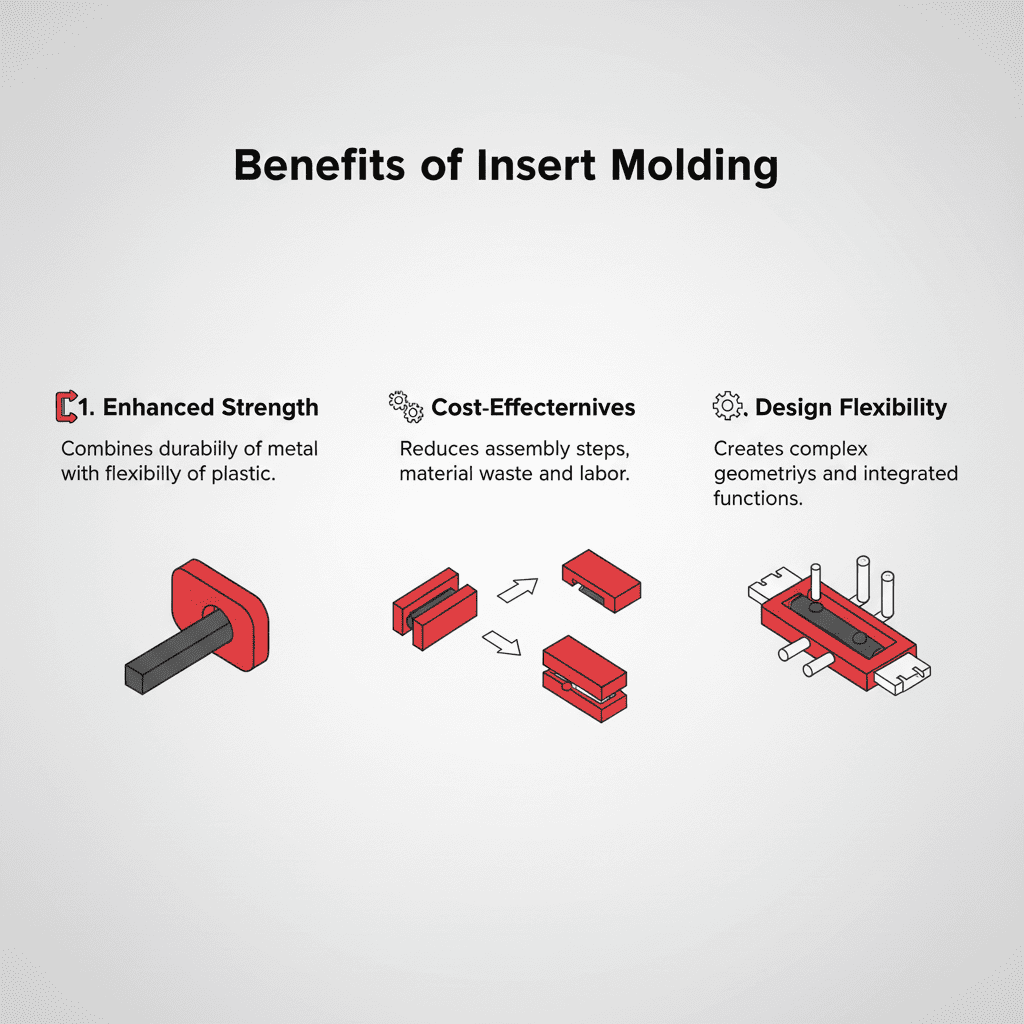
Let’s dive deeper into why this process is so valuable, especially for our clients in the automotive, electronics6, and educational toy industries. The advantages go beyond just combining two parts into one.
Enhanced Strength and Reliability
When plastic is molded around an insert, it creates a powerful mechanical bond7. This is much stronger than using screws, adhesives, or snap-fits. The plastic flows into every tiny groove and feature of the insert, locking it in place. This prevents parts from loosening due to vibration or wear, which is critical for automotive and electronic applications. I remember a project for a toy developer where we used insert molding to secure a metal axle inside a plastic gear. This single change dramatically increased the toy's lifespan and durability, delighting our client.
Cost and Time Savings
Eliminating secondary assembly is a huge win. You no longer need to pay for the labor, machinery, and time associated with putting parts together manually. This simplifies the supply chain8 and speeds up production.
| Factor | Traditional Assembly | Insert Molding |
|---|---|---|
| Labor Costs | High (manual assembly) | Low (automated process) |
| Production Time | Longer (multiple steps) | Shorter (one integrated step) |
| Error Rate | Higher (human error) | Lower (machine precision) |
| Part Count | Higher | Lower |
This table clearly shows how insert molding streamlines manufacturing, directly impacting your bottom line.
Where is Insert Injection Molding Commonly Used?
Are you wondering if this advanced process is right for your product? Many industries face challenges with integrating different materials. They need solutions that are both durable and suitable for mass production.
Insert molding is widely used in electronics for connectors and sensor housings, in the automotive industry9 for gears and brackets, and in medical devices10 for surgical instruments11. Its ability to create strong, integrated, high-precision parts makes it ideal for these demanding fields.
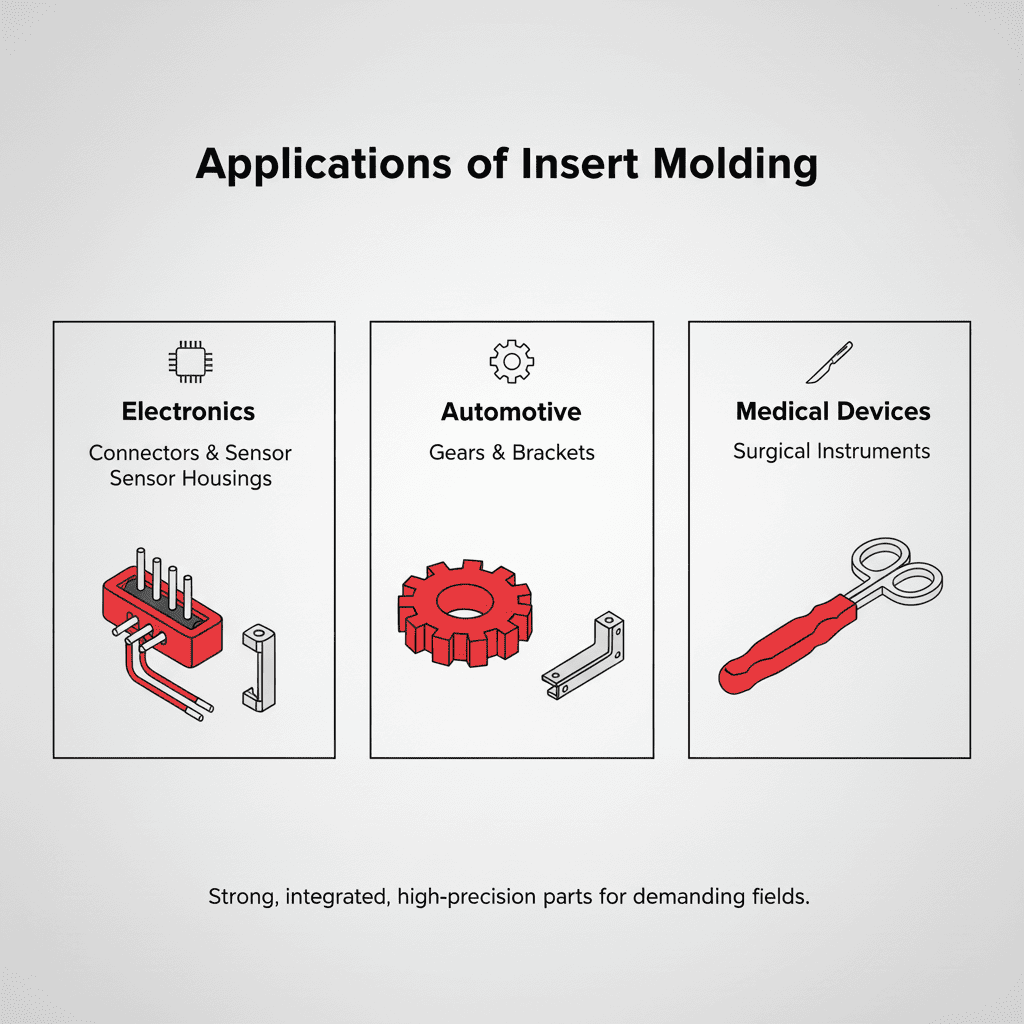
The versatility of insert molding is one of its greatest strengths. At Ambition Industrial, we've produced insert-molded components for a huge range of products. Each application leverages the unique benefits of this process to solve specific design challenges. Let's look at some common examples.
Electronics and Connectors
Think about the USB ports on your computer or the charging port on your phone. These often use insert molding. Metal pins (the inserts) are precisely positioned in the mold, and a plastic housing is injected around them. This ensures the pins are perfectly aligned, insulated, and held securely in place. The process is perfect for creating complex, compact, and reliable connectors that need to withstand thousands of plug-in cycles.
Automotive Components
The automotive industry relies heavily on insert molding to create robust and lightweight parts. For example, a metal bracket might be insert-molded with a plastic overmold. The metal provides the core strength needed to mount the part to the car's frame, while the plastic creates a complex shape, reduces weight, and can include features like clips or channels. We often produce gears with metal hubs or shafts, combining the wear resistance of metal with the quiet operation and low cost of plastic teeth.
Medical and Consumer Goods
In the medical field, precision and hygiene are key. Surgical tools often feature metal handles insert-molded with a plastic grip. This creates a seamless, easy-to-clean surface with no gaps where bacteria can hide. Similarly, in consumer goods, you'll find insert molding in everything from screwdriver handles (metal shank, plastic grip) to kitchen utensils. It provides a superior feel and durability compared to simple assembly.
How Does the Insert Injection Molding Process Work?
You see the benefits, but how do we actually make these integrated parts? The process seems complex, involving precise machinery and careful planning. You might worry about inserts shifting or parts not fitting together perfectly.
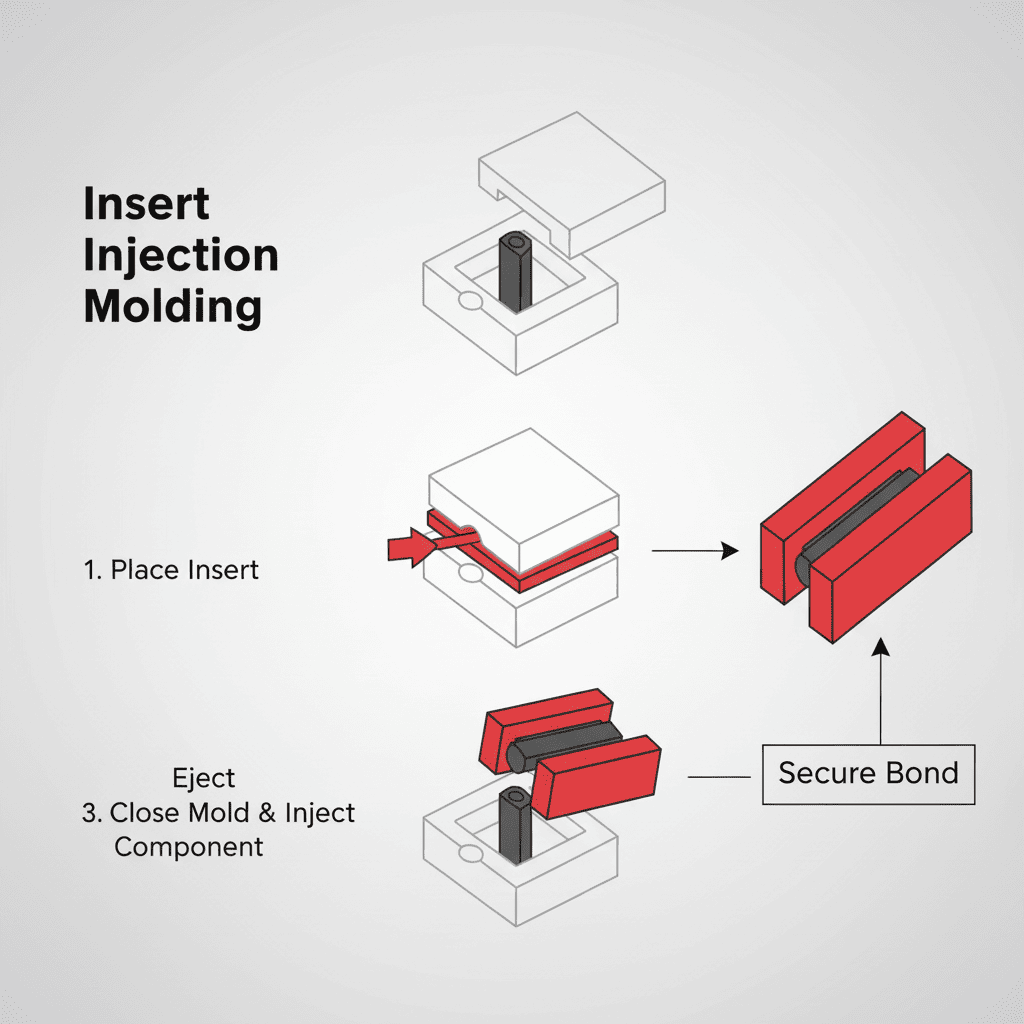
The process begins with placing a pre-fabricated insert into the open mold cavity, either by hand or with a robot. The mold then closes, and molten plastic12 is injected, flowing around the insert. After a cooling period13, the mold opens and the finished, single-component part is ejected.
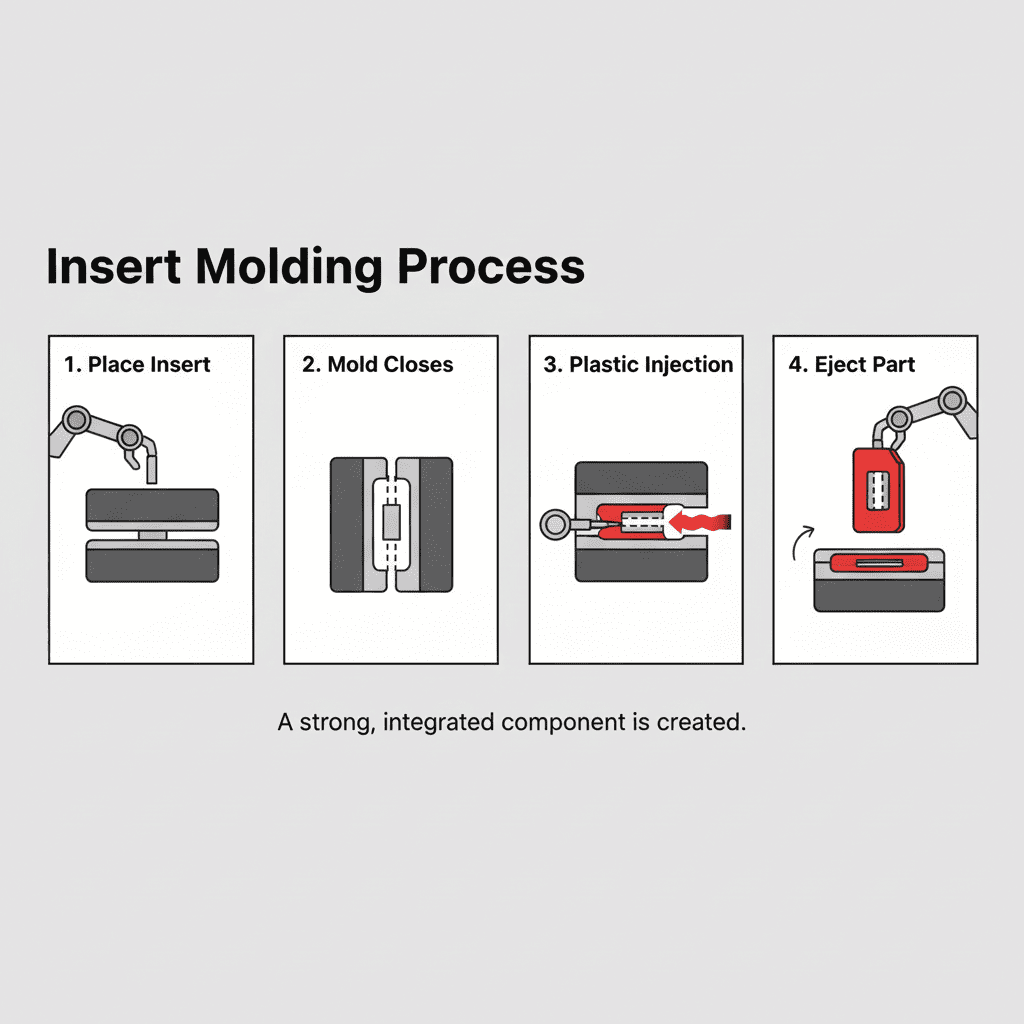
Getting this process right requires deep expertise in both mold design14 and injection molding parameters. It's a delicate balance of precision, temperature, and pressure. Over our 15 years in business, we have perfected this process for clients around the globe. Here’s a more detailed breakdown of the critical steps.
Step 1: Insert Placement
This is the foundational step. The insert—be it a metal screw, a ceramic pin, or another plastic component—must be placed into the mold cavity with extreme precision. For high-volume production, we use robotic arms15 to ensure speed and consistency. For smaller runs or complex placements, this might be done by a skilled operator. The mold is designed with specific features, like pins or magnets, to hold the insert securely in place and prevent it from moving during injection.
Step 2: Mold Clamping and Injection
Once the insert is secure, the two halves of the mold close. A powerful clamping system holds them together against the immense pressure of the injection process. Then, a screw inside the injection molding machine pushes molten plastic12 resin into the mold through a system of channels called runners. The plastic flows into the empty spaces of the cavity, completely surrounding the insert. Key technical considerations here are:
- Mold Venting: We must design vents to allow trapped air to escape as the plastic fills the cavity. Poor venting can lead to incomplete parts or air bubbles.
- Material Compatibility: The plastic and insert materials must be compatible. We consider factors like thermal expansion to prevent cracking or stress as the part cools.
Step 3: Cooling and Ejection
After the cavity is filled, the part must cool and solidify. The cooling time depends on the plastic material and the thickness of the part. Once it's solid, the mold opens. Ejector pins then push the finished part out of the mold. The result is a single, fully integrated component where the plastic and insert are permanently bonded. This single part is now ready for use or for the next stage of production, with no further assembly needed.
Conclusion
Insert injection molding combines materials like metal and plastic into one strong part. It cuts costs, improves quality, and is perfect for making complex components in many industries.
Learn about the types of pre-made parts that enhance the insert injection molding process. ↩
Find out how this process can save money by minimizing assembly steps. ↩
Explore the effects of production delays and how insert molding can mitigate them. ↩
Learn how this technique enhances the durability and reliability of products. ↩
Discover the creative possibilities that insert molding provides for complex designs. ↩
Learn how this process is essential for producing reliable electronic components. ↩
Understand the significance of mechanical bonds in ensuring product reliability. ↩
Learn about the efficiencies gained in the supply chain through insert molding. ↩
Explore the applications of insert molding in creating robust automotive components. ↩
Discover the importance of insert molding in creating precise and hygienic medical tools. ↩
Explore how insert molding enhances the quality and safety of surgical tools. ↩
Discover the role of molten plastic in creating strong, integrated components. ↩
Discover the importance of cooling time in achieving quality molded parts. ↩
Learn about the critical role of mold design in successful insert molding. ↩
Explore the technology behind robotic arms and their impact on production efficiency. ↩