
Are your injection molds wearing out too quickly? Struggling with precision on complex parts? The material you choose for your core and cavity is critical, and technology is moving fast.
The latest innovations include high-performance alloys, advanced composites, and special functional materials. These new options improve durability, precision, and efficiency. They help molds last longer, produce better parts, and even support eco-friendly goals, changing how we approach manufacturing.


Over my 15 years in this industry, I've seen countless projects succeed or fail based on material choice. A mold isn't just a block of steel anymore; it's a highly engineered tool. The right material can be the difference between a profitable production run and a series of costly failures. But keeping up with the latest advancements can feel overwhelming. Let's break down these new materials and see how they can solve real-world manufacturing problems, making your projects more successful and your business more competitive. It's time to explore what's new and what's next.
How Are High-Performance Alloys Upgrading Mold Durability and Precision?
Your mold is wearing down from constant use. You need it to last longer and hold tighter tolerances, but standard tool steels aren't cutting it for high-volume or complex jobs.
New high-performance alloys are the answer. We now use nano-composite steels for extreme wear resistance and custom 3D-printed alloys for complex geometries. These materials significantly extend a mold's lifespan and allow us to achieve precision that was once impossible, solving major production challenges.
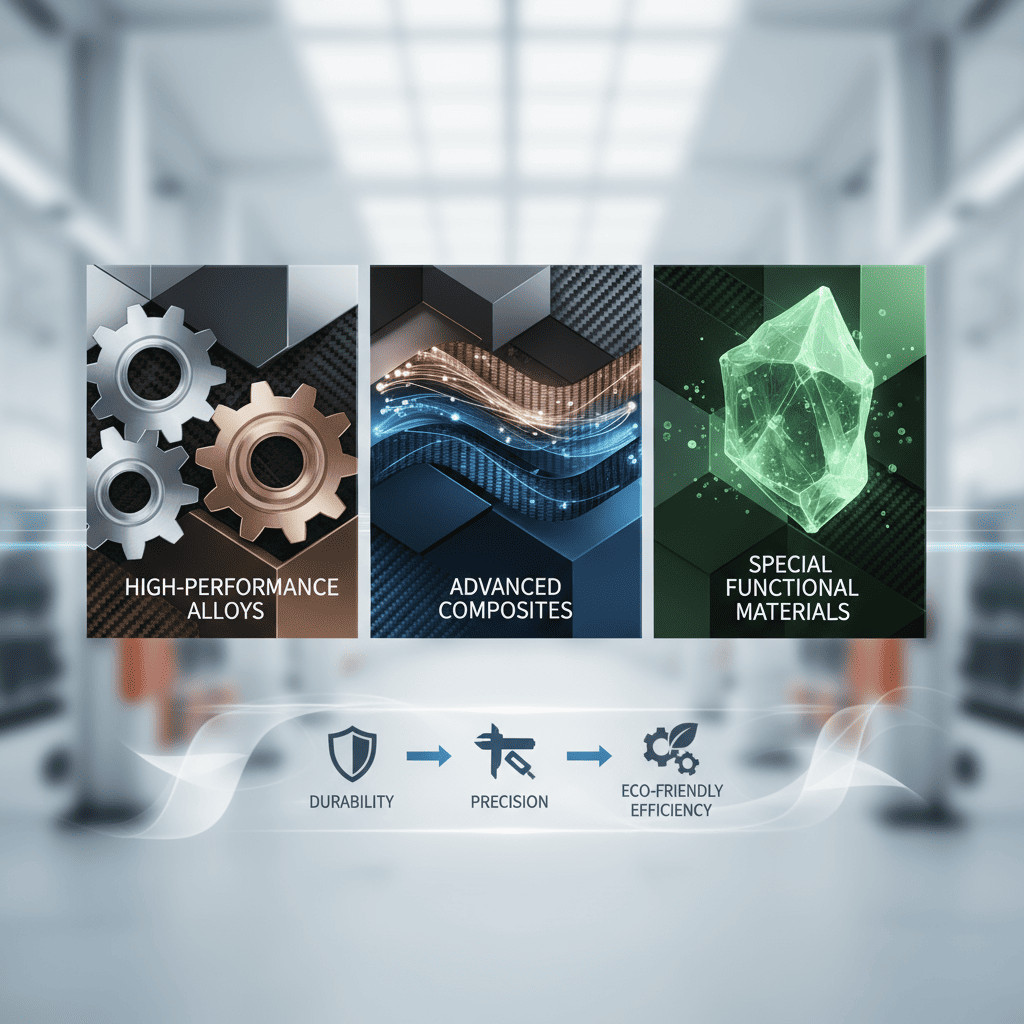
In my experience, the leap forward in alloys has been a game-changer. It’s not just about making steel harder; it’s about making it smarter. These new materials give us specific tools for specific problems. For instance, a client came to us with an aerospace part that had an incredibly complex internal channel. A traditional mold couldn't do it. We turned to a custom, low-melting-point alloy to create a soluble core. This allowed us to mold the part perfectly and then simply melt the core away. It's this kind of problem-solving that new materials enable.
Tailoring Alloys for the Job
The idea of "one-size-fits-all" mold steel is outdated. Today, we customize alloys to meet exact project needs. This specialization is where we see the biggest performance gains.
- Custom Low-Melting-Point Alloys: These are designed for creating complex hollow parts. We can control the melting point precisely, often between 150-180°C. The alloy is strong enough for molding but melts away cleanly afterward. I've used this for high-precision components where mechanical core removal would damage the final product.
- Metal 3D Printing Alloys: Technologies like Direct Metal Laser Sintering (DMLS) let us print cores and cavities from specialized aluminum or tool steel powders. The result is a nearly 100% dense part with complex internal cooling channels, which dramatically cuts cycle times.
The Power of Nanotechnology
Adding tiny particles to traditional steels has unlocked a new level of performance.
| Material Innovation | Key Benefit | Ideal Application |
|---|---|---|
| Nano-Composite Tool Steel | Extreme wear resistance and toughness | High-volume, precision injection molding |
| 3D-Printed Tool Steel | Complex geometries, conformal cooling | Small-batch, intricate parts, fast cycles |
| Low-Melt Soluble Alloys | Creation of complex hollow parts | Aerospace, medical, and automotive parts |
We recently used a nano-composite steel (a modified SKD11 with TiC nanoparticles) for a customer producing millions of small electronic connectors. Their old molds wore out after 300,000 cycles. The new mold is already past one million cycles and still holds the required ±0.05mm tolerance. This is a direct result of choosing a material designed for extreme durability.
Can Advanced Composites Make Molds Lighter and More Precise?
Are heavy steel molds slowing down your setup times and increasing machine wear? Do you struggle with thermal expansion affecting the precision of your plastic parts? This is a common bottleneck.
Yes, advanced composites like carbon fiber and metal-plastic hybrids create molds that are much lighter and more thermally stable. This results in faster cycle times, higher precision, and reduced operational costs. They are a practical solution for modern, high-speed manufacturing environments.
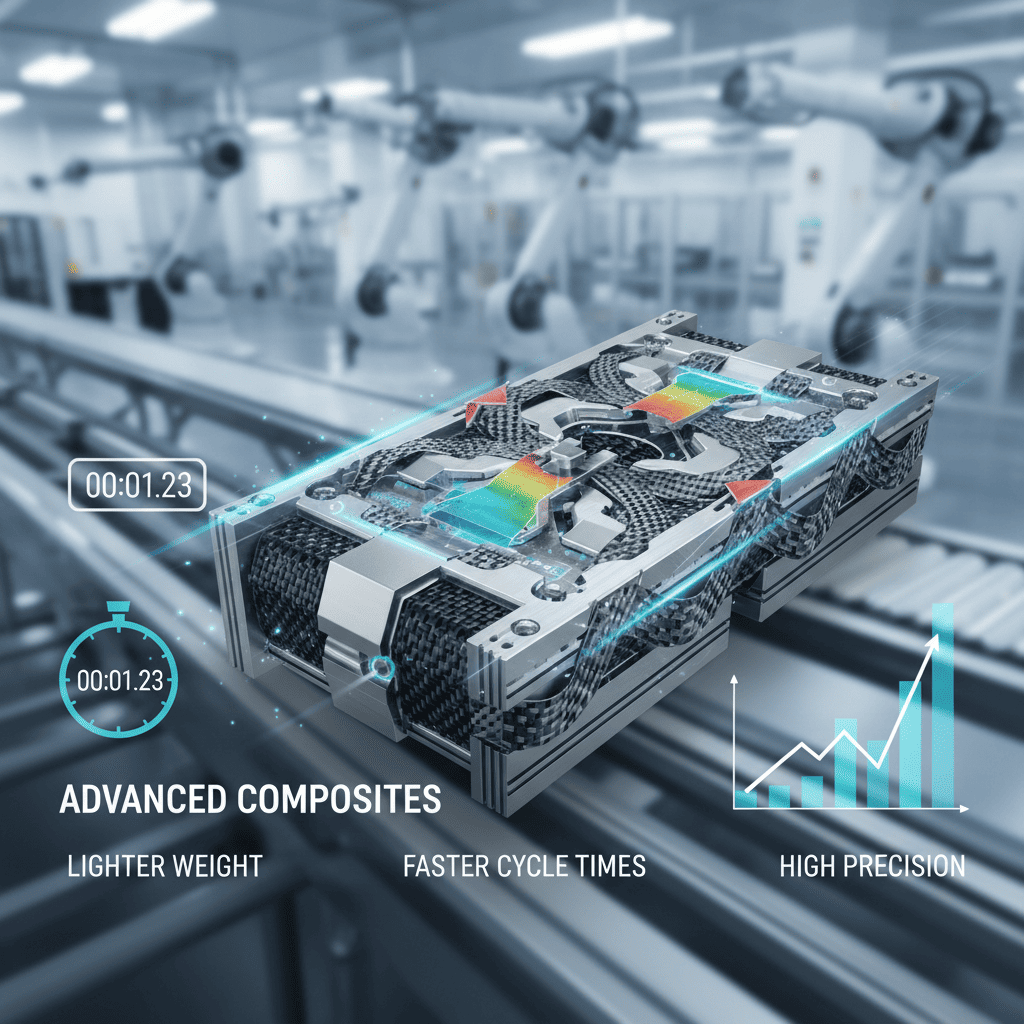
I remember one project for an automotive client who needed to produce large interior panels. The sheer weight of the traditional P20 steel mold was a major issue. It required a large crane for every mold change, leading to significant downtime. We proposed using a core insert made from a carbon fiber reinforced polymer (CFRP). The team was skeptical at first, but the results were undeniable. We reduced the insert's weight by 40%. The mold change time was cut in half, and the lower mass meant the molding machine could run faster cycles without extra stress. It completely changed their production efficiency.
Carbon Fiber for Strength and Stability
Carbon fiber isn't just for race cars anymore. In mold making, it offers an incredible combination of high stiffness and low weight.
- CFRP Inserts: When we use carbon fiber reinforced composites for mold inserts, we can achieve a stiffness of over 2000 MPa. This rigidity is essential for maintaining precision under high injection pressures. For a client making new energy battery casings, we used CFRP inserts to consistently hit a tolerance of ±0.01mm, something their steel molds struggled with.
Hybrid Materials for Thermal Control
Managing heat is one of the biggest challenges in precision molding. Materials that expand and contract with temperature changes can ruin tolerances. This is where hybrid materials excel.
| Composite Material | Primary Advantage | Common Use Case |
|---|---|---|
| Carbon Fiber (CFRP) | High stiffness, 40% lighter than steel | Large molds, high-precision components |
| Metal-Plastic Hybrid (PEEK) | Low thermal expansion, stable dimensions | Molds for optically clear or tight-tolerance parts |
We worked on a medical device that required a lens made from a sensitive polymer. The steel mold's thermal expansion was causing tiny defects. We switched to a hybrid design: a PEEK cavity insert supported by a steel frame. PEEK has a thermal expansion coefficient about a third of steel's. This stabilized the cavity dimensions during temperature cycles, eliminating the defects and delivering a perfect, clear part every time. These materials allow us to solve problems that were once considered unavoidable.
What Are 'Smart' Materials and How Do They Improve Mold Performance?
Are you constantly battling issues like surface wear on one part of your mold while another part needs to resist cracking? Or do you struggle to maintain a perfectly stable temperature for consistent part quality?
'Smart' materials, like functionally graded materials and phase change materials, offer targeted solutions. Graded materials provide a hard surface and tough core in one piece, while phase change materials actively regulate mold temperature. They optimize performance and extend a mold's working life.
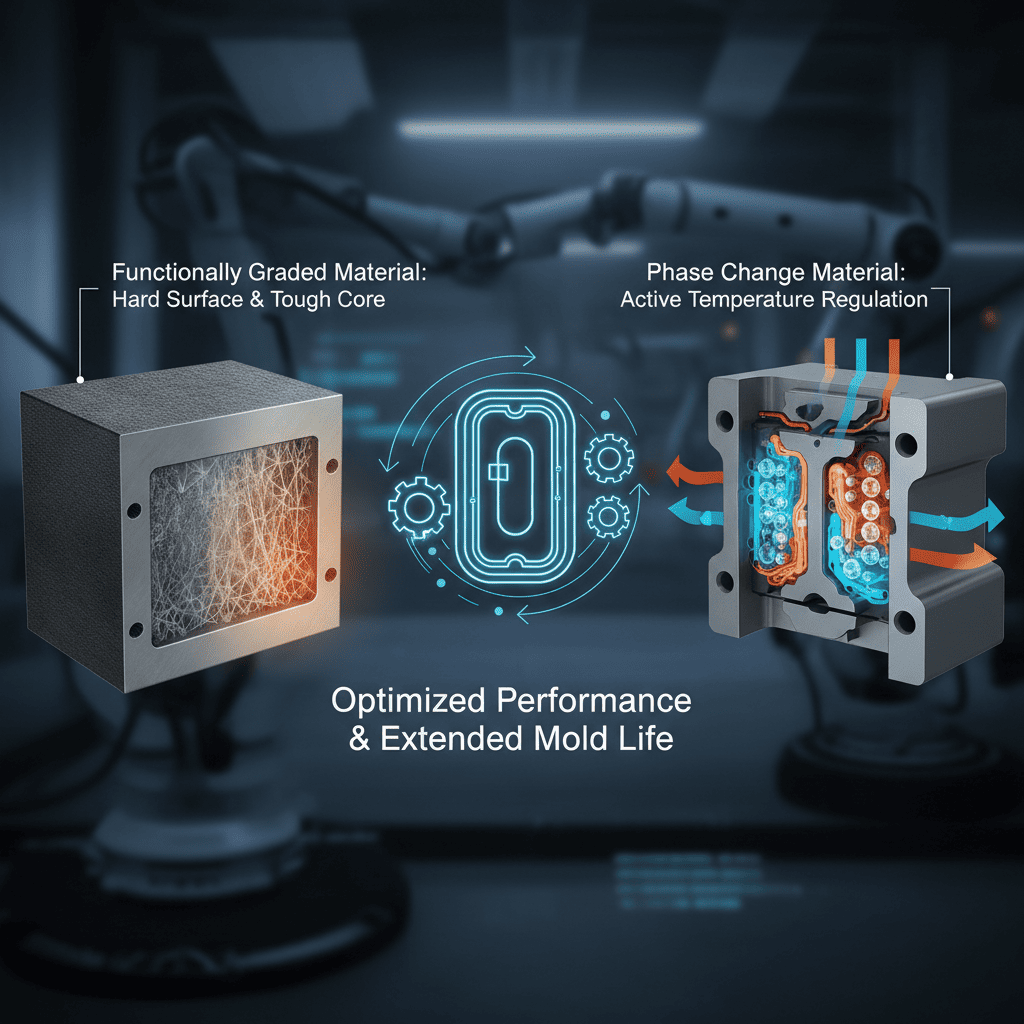
The concept of 'smart' materials sounds futuristic, but we are using them right now to solve very practical problems. I had a client in the consumer goods industry who was molding a product with a textured, high-gloss finish. The sharp edges of the texture were wearing down quickly on their hardened steel mold, but making the whole mold harder made it too brittle and prone to cracking under pressure. We engineered a core using a functionally graded material. The surface was extremely hard (65 HRC) to resist wear, while the interior remained softer and tougher (50 HRC) to absorb impact. Their mold life increased by 1.5 times, and the part quality remained perfect.
Functionally Graded Materials: The Best of Both Worlds
A single material can't always provide every property you need. Functionally graded materials (FGMs) solve this by changing their composition and properties through their thickness.
- Layered Design: Imagine a material where the surface is a hard, wear-resistant ceramic that gradually transitions into a tough, ductile metal core. This is the principle of FGMs.
- Performance Boost: By creating this gradient, we build a mold that resists abrasion on the surface where it contacts the plastic, while the core remains resilient and prevents catastrophic failure from cracking.
Phase Change Materials: Active Temperature Control
Maintaining a stable temperature is key to consistent part quality, especially in long production runs. Phase change materials (PCMs) are a revolutionary way to achieve this.
| Smart Material | Core Function | Impact on Molding |
|---|---|---|
| Functionally Graded Material | Combines hard surface with a tough core | Extends mold life by 1.5x, prevents cracking |
| Phase Change Material (PCM) | Absorbs and releases heat to stabilize temp | Reduces thermal fluctuations by 80%, allows longer runs |
PCMs are substances that absorb or release a large amount of energy when they change state (e.g., from solid to liquid). By integrating a PCM layer into the mold, we can create a thermal buffer. This layer absorbs excess heat during injection and releases it during cooling. For a high-volume job, we used a mold with a PCM layer that stabilized the temperature so effectively that it could run continuously for over eight hours without the typical temperature drift. This drastically improved part consistency and reduced scrap rates. These smart materials aren't just an upgrade; they represent a whole new way of thinking about mold design.
Are There Eco-Friendly Options for Modern Mold Making?
Is your company pushing for more sustainable manufacturing practices? The environmental impact of mold making, from material sourcing to disposal, is a growing concern for many businesses.
Absolutely. We are now using innovative materials like high-performance water-soluble cores and bio-based polymers. These options reduce waste, eliminate harsh chemicals, and lower the carbon footprint of the mold's lifecycle, aligning manufacturing with important environmental goals.
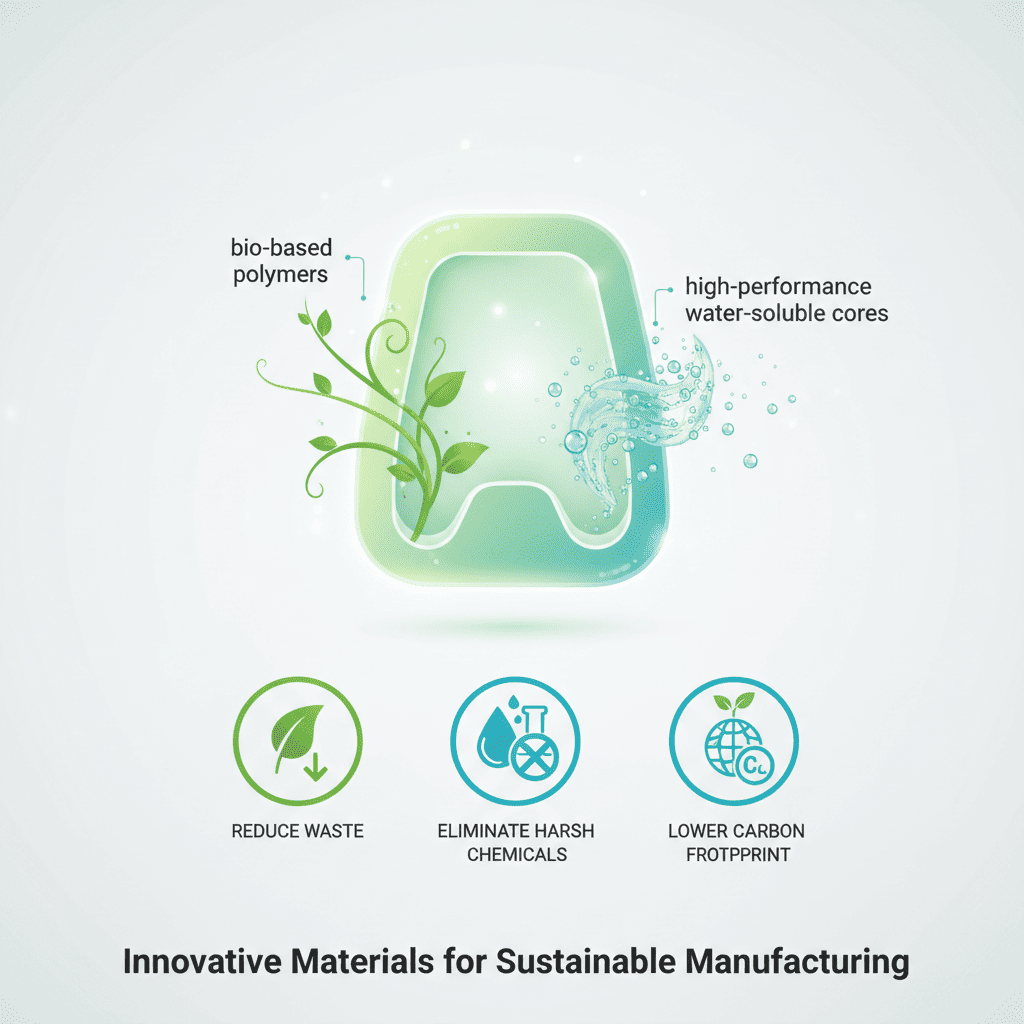
I was particularly excited when we first tested a new generation of water-soluble core materials from Germany. A long-time automotive client needed to produce a complex engine intake manifold. In the past, this required a multi-piece mold with complex mechanical slides or a fusible core that left a residue. With the new material, we molded the part around a single, solid core. After molding, we simply submerged the part in warm water. The core dissolved completely, leaving a perfectly clean internal passage with no damage and no need for chemical solvents. It was a cleaner, faster, and more environmentally friendly process.
Water-Soluble Cores: The Clean Solution
For parts with intricate internal geometries, removing the core after molding can be a major challenge. Water-soluble materials offer an elegant and eco-friendly solution.
- How It Works: These advanced polymers have high mechanical strength during injection but are designed to break down and dissolve in water.
- Key Benefits: This process eliminates the risk of damaging the part during core removal and avoids the use of harsh chemical solvents. It's perfect for manufacturing parts like automotive manifolds or complex medical devices.
Bio-Based Materials: Reducing the Carbon Footprint
Sustainability also means thinking about the entire lifecycle of the mold itself. For certain applications, we can now use materials derived from renewable resources.
| Eco-Friendly Material | Environmental Benefit | Best Application |
|---|---|---|
| Water-Soluble Cores | Eliminates chemical solvents, prevents part damage | Complex hollow parts (e.g., intake manifolds) |
| Bio-Based Polymers (PLA) | Reduces lifecycle carbon emissions by 40% | Short-run molds, prototypes, small plastic parts |
While not suitable for high-volume production, bio-based polymers like Polylactic Acid (PLA) are an excellent choice for creating prototype molds or tools for short production runs. The energy required to process PLA is much lower than steel, and at the end of its life, it is biodegradable. For a startup developing a new consumer gadget, we created a series of PLA molds for their initial test runs. This allowed them to iterate quickly and affordably while keeping their environmental impact low. It's a great example of how we can match the material to the project's scale and sustainability goals.
How Can Surface Coatings Extend the Life of Your Molds?
Are you replacing molds or performing costly maintenance due to wear, corrosion, or plastic sticking to the surface? These issues can bring production to a halt and drive up costs.
Specialized surface coatings, like nano-coatings and ceramic layers, act as a shield for your mold. They dramatically increase hardness, reduce friction, and improve thermal conductivity. This extends the mold's lifespan by thousands of cycles and improves overall part quality and efficiency.
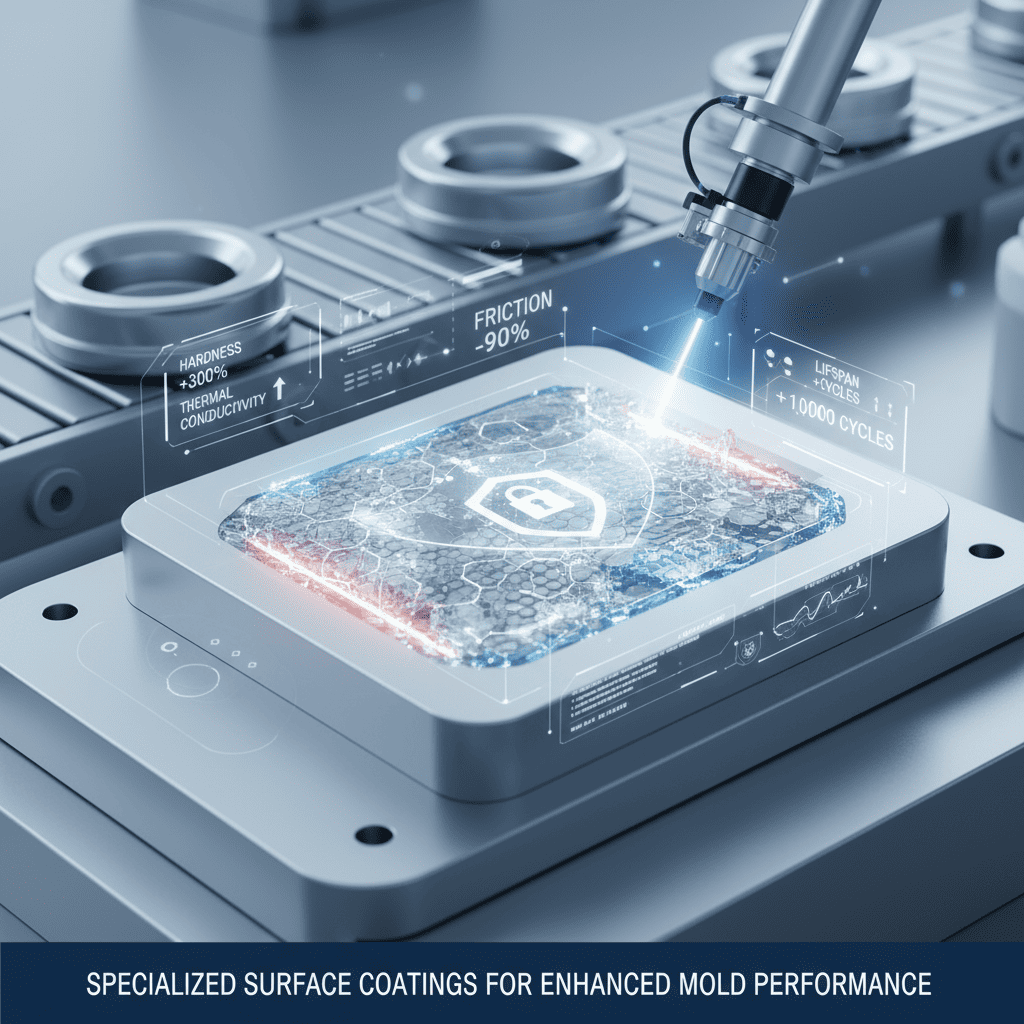
I've seen firsthand how a simple coating can transform a problematic mold into a top performer. We had a project involving a highly abrasive, glass-filled nylon. The customer's existing H13 steel mold was showing significant wear after just 50,000 cycles, causing flash and dimensional issues. Instead of making a new mold from a more expensive steel, we refurbished the existing one and applied a ceramic-based wear-resistant coating. That same mold went on to produce over 500,000 parts with minimal wear. The coating paid for itself many times over by saving the cost of a new tool and reducing maintenance downtime.
Nano-Coatings: A Multifunctional Boost
Think of nano-coatings as a high-tech layer of armor that is only a few microns thick. Materials like graphene or carbon nanotubes (CNTs) offer multiple benefits at once.
- Improved HeatTransfer: These coatings are excellent thermal conductors. They help pull heat away from the plastic part more quickly, which can reduce cycle times.
- Enhanced Durability: They create an incredibly hard and low-friction surface. This prevents abrasive plastics from wearing down the mold steel and helps parts release more easily, reducing the need for mold release agents. In some extreme cases, these coatings have improved performance by up to 40%.
Ceramic Coatings: The Ultimate in Wear Resistance
For the most demanding applications, ceramic-based coatings offer unmatched durability. They are ideal for high-volume production runs with abrasive materials.
| Coating Type | Key Advantage | Performance Metric |
|---|---|---|
| Nano-Coating (Graphene) | Better thermal conductivity, low friction | Can reduce cycle times, enhances part release |
| Ceramic-Based Coating | Extreme hardness and wear resistance | Can extend mold life to 500,000+ cycles |
These coatings create a surface that is significantly harder than the underlying tool steel. By bonding a ceramic layer to the metal structure, we can create a mold cavity that withstands hundreds of thousands of cycles with less than 0.03mm of surface wear. This is especially critical in industries like electronics or automotive, where maintaining tight tolerances over a long production run is non-negotiable. Investing in the right surface coating isn't an expense; it's a strategic decision to maximize the life and productivity of your mold.
Conclusion
Material innovation is key to modern manufacturing. New alloys, composites, and coatings are making molds more durable, precise, and efficient, solving tough challenges and boosting overall performance and sustainability.