
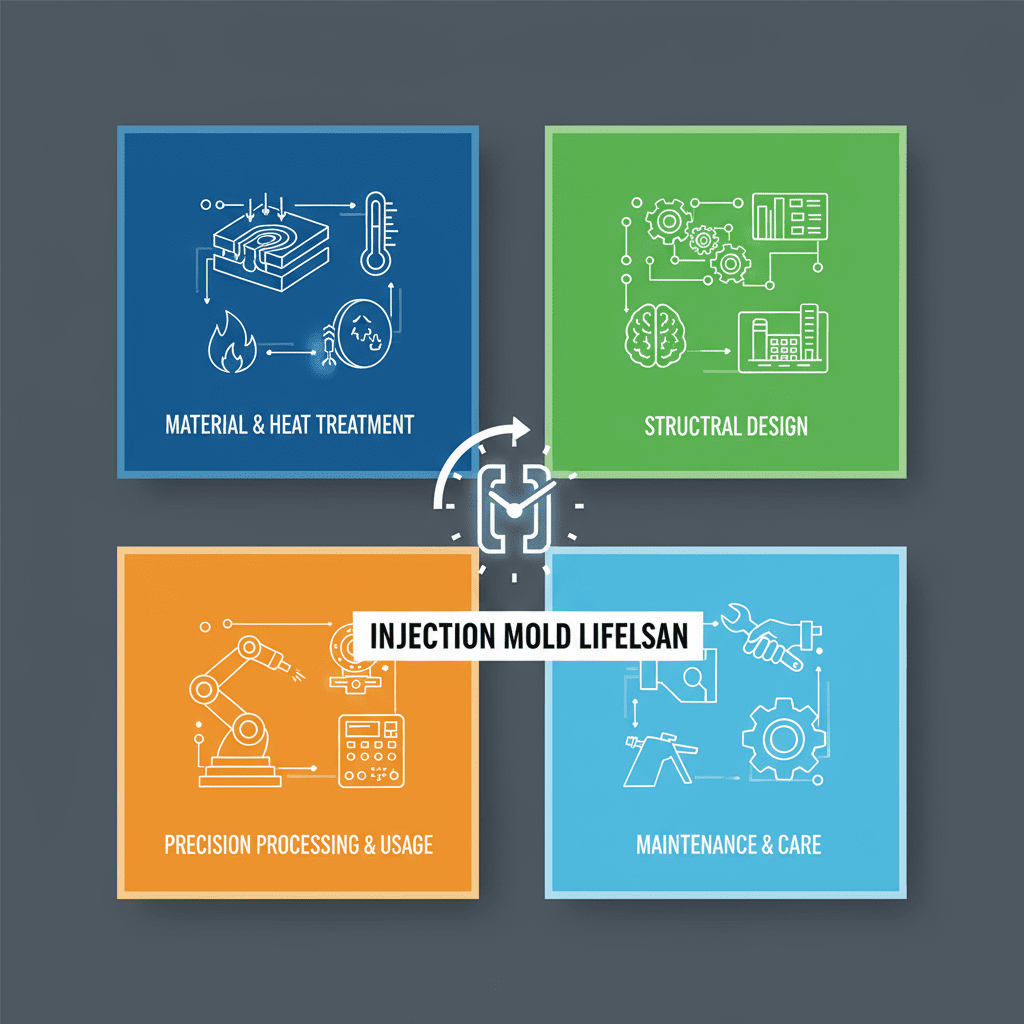
Your molds are wearing out too fast, costing you money and causing delays. Understanding the core factors that affect their lifespan can save you a fortune and keep production on schedule.
The lifespan of an injection mold depends on four main areas: the quality of its material and heat treatment, the intelligence of its structural design1, the precision of its processing and usage, and the consistency of its maintenance and care.
I’ve been in this business for over 15 years, and I’ve seen it all. I remember a client, a project manager for a toy company, who came to us frustrated. Their previous supplier's molds were failing long before the promised shot count. It was a classic case of cutting corners. Their frustration was a powerful reminder that a mold is a long-term investment, not a disposable tool. Protecting that investment starts with understanding what truly makes a mold last. Let's break down these critical factors one by one.
How do mold materials and heat treatment2 affect its durability?
You invested in a new mold, but it cracked or wore down unexpectedly. This failure halts production and questions your investment. The problem often lies in the hidden quality of the steel.
The foundation of a durable mold is high-quality tool steel3, like H13, combined with precise heat treatment. This process establishes the mold's fundamental hardness and toughness, making it resistant to wear, deformation, and cracking from the very first shot. It's the most critical first step.
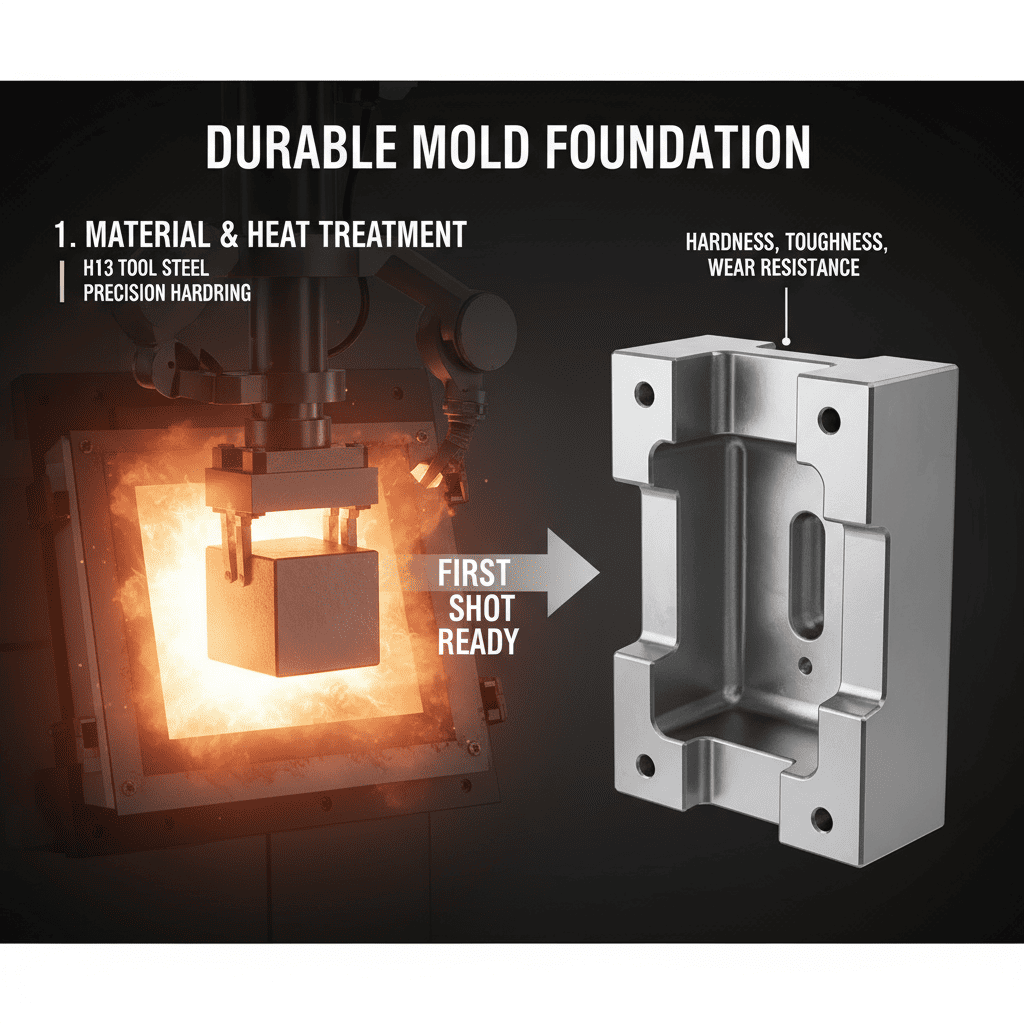

Over my career, we’ve found that you simply can't build a great house on a weak foundation. The same is true for molds. At Ambition Industrial, we start every project by scrutinizing the material specifications. A client might be tempted by a lower-cost steel, but we always explain the long-term consequences. A slightly cheaper material can lead to thousands of dollars in repairs and downtime. It’s about balancing the initial cost with the total cost of ownership. The material and its treatment aren't just line items on a quote; they are the bedrock of your mold's entire service life.
Steel Selection is Non-Negotiable
The type of steel used is the first decision that dictates a mold's potential lifespan. Different materials are suited for different applications. For high-volume, demanding projects, we often recommend alloy tool steels like H13 or Cr12MoV. But it's not just about the name. The purity of the steel and the uniform distribution of carbides within it are just as important. Impurities or uneven structure can create weak points, leading to premature failure.
| Steel Characteristic | Impact on Mold Life |
|---|---|
| Purity | Fewer impurities mean higher toughness and less risk of cracking under pressure. |
| Carbide Uniformity | Evenly distributed carbides ensure consistent wear resistance across the mold surface. |
| Hardness | The ability to resist scratches and wear from abrasive plastic materials. |
| Toughness | The ability to absorb energy and resist chipping or cracking from impacts. |
The Science of Heat Treatment
Once the right steel is chosen, heat treatment is the next critical phase. This isn't just about heating and cooling metal; it's a precise science. Processes like quenching and tempering are used to achieve the desired hardness and toughness. If the quenching temperature is wrong, or if the tempering process is rushed, the steel can end up too brittle or too soft. It can also trap internal stresses, creating a microscopic ticking time bomb that can lead to cracks or warping after only a few thousand cycles. This is why we control our heat treatment processes so carefully, ensuring every mold has the structural integrity to go the distance.
Can poor structural design really shorten a mold's life?
Your mold looks fine, but it keeps failing in the same spot. This frustrating cycle of repairs and downtime points to a deeper issue. The problem isn't wear and tear; it's a flaw in the original design.
Yes, absolutely. A poor structural design is a primary cause of premature mold failure. Features like sharp corners create stress points, while inadequate cooling or venting systems cause heat and pressure buildup. These design flaws subject the mold to unnecessary strain, leading to cracks and accelerated wear.
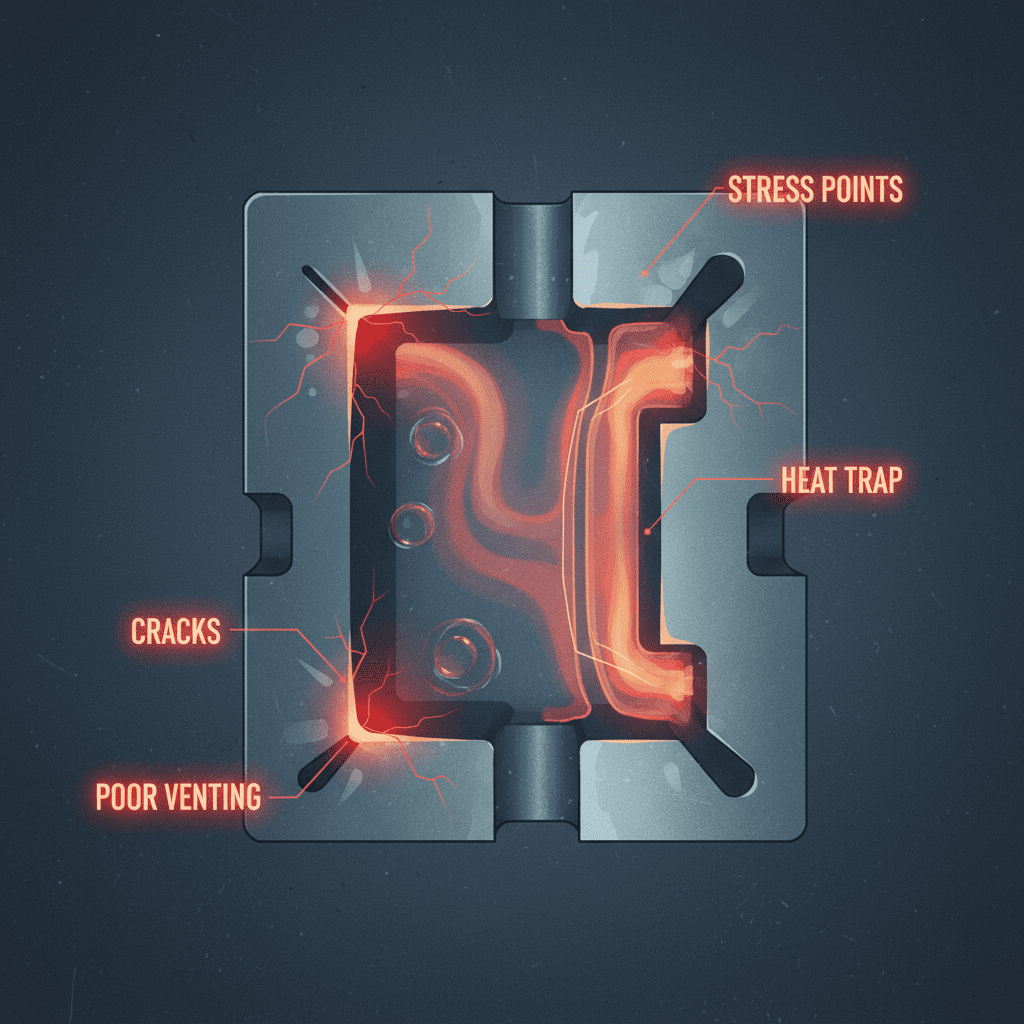
A smart design does more than just create the right shape; it protects the mold itself. We once worked with a developer of electronic enclosures. Their previous mold had a recurring issue with a small core pin breaking. The problem wasn't the material; it was the design. The pin was too long and thin without proper support and cooling. By slightly modifying the part design and improving the mold's cooling channel around that pin, we created a new mold that has now run for over 500,000 cycles without a single failure. It's a perfect example of how intelligent design engineering directly translates to reliability and a longer lifespan.
Stress Concentration: The Silent Killer
The geometry of the mold cavity is incredibly important. Any sharp internal corners or abrupt changes in wall thickness act as stress concentrators. During the high-pressure injection cycle, these points bear a disproportionate amount of force. Over time, this concentrated stress leads to fatigue and, eventually, cracking. A good designer knows how to use generous radii (rounded corners) and smooth transitions to distribute these forces evenly, drastically reducing the risk of fatigue failure.
The Importance of Supporting Systems
A mold is more than just its cavity and core. The supporting systems are just as vital for its longevity.
| System | Function & Impact on Lifespan |
|---|---|
| Guiding System | Precision guide pins and bushings ensure the two halves of the mold align perfectly every time. Misalignment causes friction, wear, and can even lead to a catastrophic collision. |
| Cooling System | Efficient cooling channels prevent the mold from overheating. Poor cooling leads to part defects and subjects the steel to thermal stress, which can cause warping or cracking. |
| Venting System | Tiny vents allow trapped air to escape as plastic is injected. If vents are blocked or too small, the trapped air compresses, creating intense pressure and heat that can burn or erode the mold surface. |
Each of these systems must be designed with longevity in mind. Skimping on the quality of guide pins or rushing the cooling channel layout are common mistakes that will always shorten a mold's effective working life.
What impact does the manufacturing process have on mold lifespan?
You've got a well-designed mold made from great steel, but it's still underperforming. The parts have flaws, and the mold surface is degrading. The culprit may be how the mold is being used.
The manufacturing process has a huge impact. Improper molding parameters, like excessive pressure or temperature, can overstress the mold. Similarly, the type of plastic being injected and the precision of the initial mold machining directly affect how quickly the mold wears down.
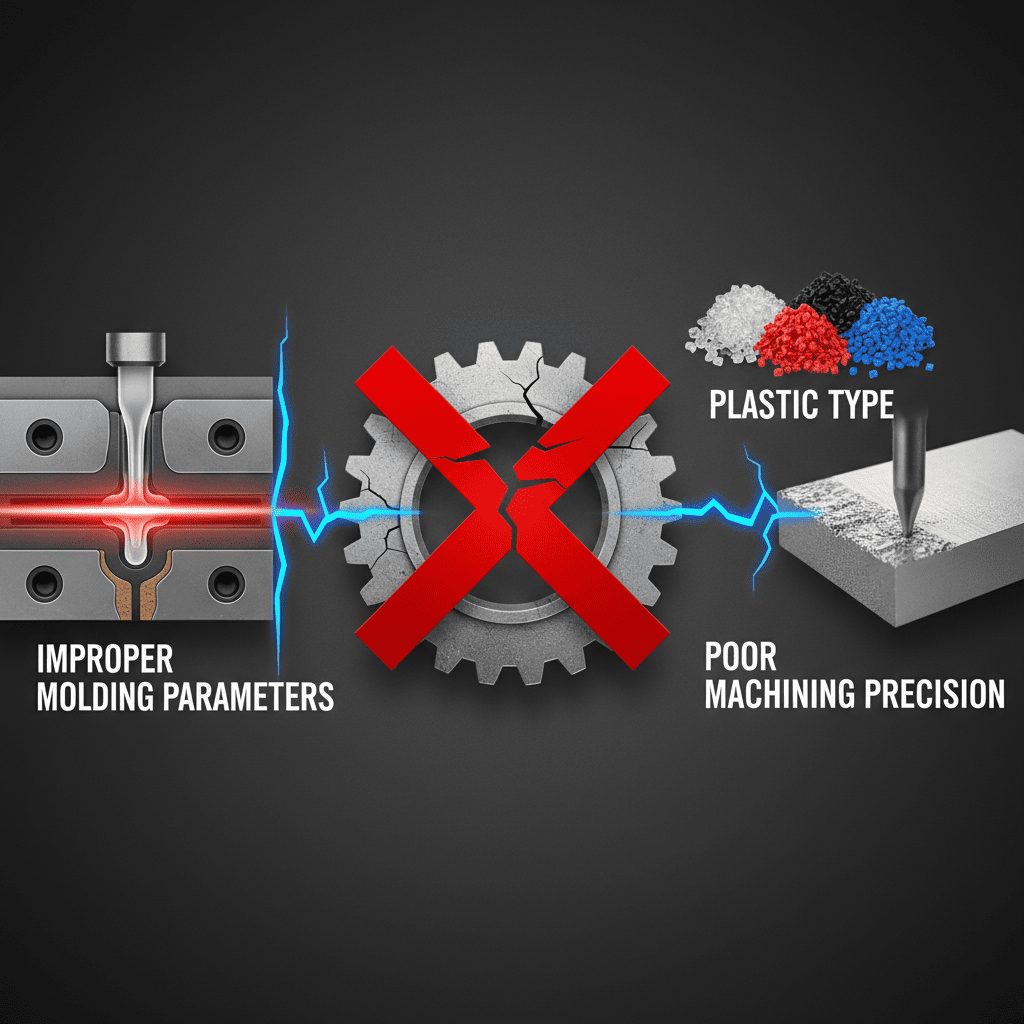
This is where the partnership between the mold maker and the molder is crucial. As a mold manufacturer, our job is to build a tool that can withstand the rigors of production. But we also provide our clients, like the procurement managers at STEM product companies, with clear guidelines for operation. We specify the ideal temperature, pressure, and clamping force ranges. I've seen perfectly good molds get damaged in their first week because an operator, in a rush, cranked up the injection speed too high. This caused flashing and put extreme stress on the parting line, leading to premature wear. Careful processing is key to unlocking the full lifespan we build into our molds.
Precision in Every Cut
The life of a mold begins on the factory floor, long before it sees any plastic. The precision of the machining process is critical. A poorly finished cavity surface, with a high roughness value, will create more friction during plastic injection and ejection. This friction not only damages the surface of the plastic parts but also accelerates the wear and tear on the mold itself. At Ambition Industrial, we machine our core and cavity to micron-level precision. We aim for a mirror-like polish where needed, because we know that a smoother surface means less friction, better part release, and a longer-lasting mold.
Dialing in the Right Parameters
Once the mold is in the press, the molding parameters become the most influential factor. Running a mold outside of its designed process window is a recipe for disaster.
- Temperature: If the plastic melt or the mold itself is too hot, it can degrade the steel's temper over time, making it softer and more prone to wear.
- Pressure: Excessive injection or clamping pressure puts the entire mold structure under immense strain, which can lead to deformation or cracks, especially around stress concentration points.
- Speed: Injecting the plastic too quickly can cause "jetting" and high-friction erosion of the steel, particularly around the gate area.
The material being molded also plays a significant role. Plastics filled with abrasive materials like glass fiber will naturally wear down a mold faster than a simple unfilled polypropylene. For these applications, we must use harder steels or apply special surface coatings to compensate.
Why is proper mold maintenance just as crucial as its creation?
Your production schedule is tight, and there's no time to stop for mold maintenance. But ignoring it leads to breakdowns and even bigger delays. This reactive approach is costly and inefficient.
Proper maintenance is not optional; it is a core part of maximizing a mold's lifespan. Regular cleaning, lubrication, and inspection prevent a buildup of residue, reduce friction in moving parts, and catch small problems before they become catastrophic failures that shut down production.
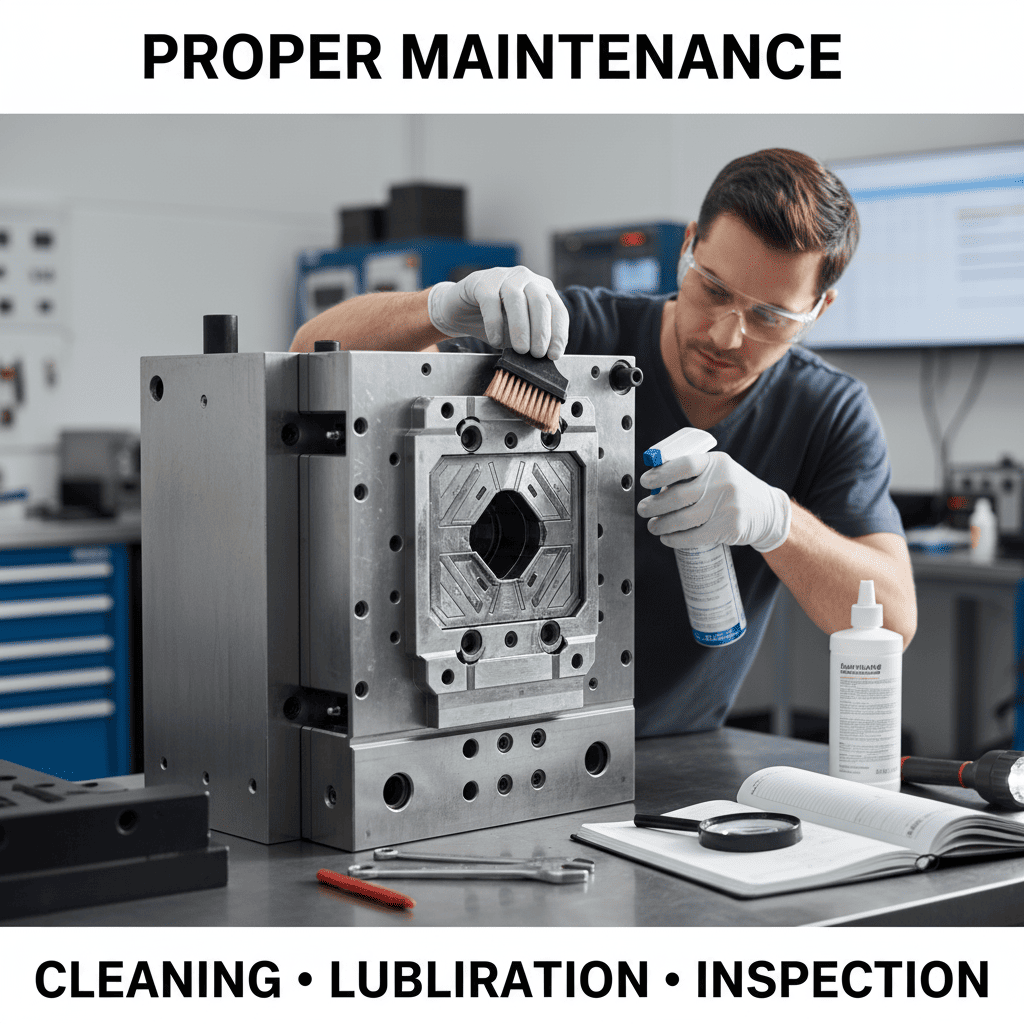
Think of it like owning a high-performance car. You can have the best engine and design in the world, but if you never change the oil or check the tires, it's going to break down. Molds are no different. We train our clients to see maintenance as a productive activity, not a delay. A simple daily wipe-down of the cavity surface to remove residue can prevent corrosion and damage. A weekly check of the ejector pins and slides for proper lubrication can prevent them from seizing up. This proactive mindset transforms a mold from a consumable item into a durable, long-term asset.
The Power of a Proactive Maintenance Schedule
A reactive approach to maintenance—fixing things only when they break—is incredibly inefficient. A well-structured, proactive maintenance plan is essential. This involves scheduling downtime for a mold based on its cycle count or hours of operation.
| Maintenance Task | Frequency | Impact of Neglect |
|---|---|---|
| Cleaning Cavity Surface | Daily/End of Shift | Residue buildup can cause corrosion, staining, and damage to the mold surface. |
| Lubricating Moving Parts | Weekly | Ejector pins, slides, and lifters can seize, gall, or break, causing major damage. |
| Checking Vents | Weekly | Blocked vents cause burns on parts and erosion of the mold steel due to trapped hot gas. |
| Full Disassembly & Inspection | Every 50,000-100,000 cycles | Small cracks or wear patterns can be caught and repaired before they become major failures. |
The Impact of Storage and Repair
A mold’s life doesn't stop when it's taken out of the press. How it's stored is just as important. Storing a mold in a damp or corrosive environment without a proper protective coating will lead to rust, which can permanently damage the finely polished surfaces. When repairs are needed, the quality of the work is paramount. A poor welding job, for example, can alter the properties of the heat-treated steel in that area, creating a new weak point. All repairs should be done by skilled technicians who understand the metallurgy of the mold.
Conclusion
Maximizing your mold's lifespan comes down to four things: starting with the right material and design, using it correctly, and maintaining it diligently. It's a complete lifecycle approach.