跳到内容
跳到内容 

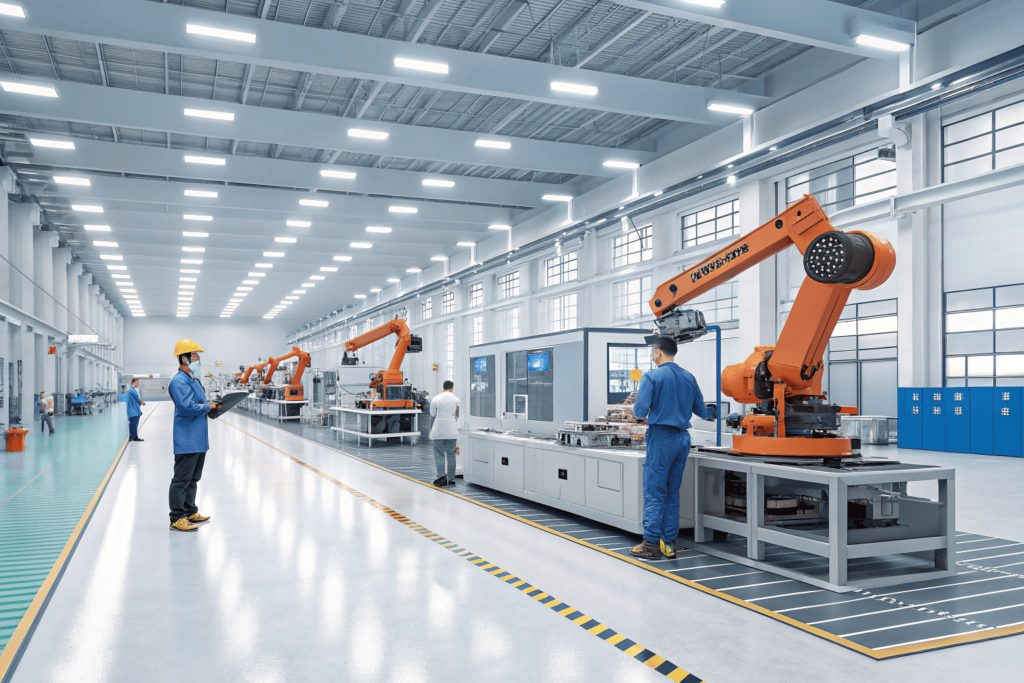
Struggling with slow, expensive manufacturing? Imagine a seamless, efficient process. China's manufacturing ecosystem offers unmatched advantages that can transform your business from the ground up.
The key advantage is a deeply integrated industrial ecosystem. It combines a complete supply chain, high-precision technology1, and flexible production. This results in faster turnaround times, lower costs2, and innovative solutions, giving you a significant competitive edge in the market.

You've probably heard a lot of talk about manufacturing in China. Some of it is good, some bad. But what's the real story from someone on the ground? I've been in the custom mold industry here in Dongguan for 15 years at Ambition Industrial. I want to share what I've seen and why our clients, from automotive parts distributors to educational toy developers, keep coming back. Let's break down the real advantages, piece by piece, so you can see how it directly benefits your projects.
How does China's integrated supply chain boost manufacturing efficiency?
Tired of project delays from disconnected suppliers? Picture a world where everyone works together. China’s linked industry chain makes this a reality, maximizing your project's speed and efficiency.
China’s supply chain is a complete ecosystem where every part works together. From raw materials to final assembly, the process is streamlined. This deep collaboration drastically cuts down development time, often by 30-50%, getting your product to market much faster than elsewhere.

This isn't just about having a lot of factories in one place. It's about a deep, collaborative network that has been built over decades. I see it every day. When a client needs a change, the whole chain responds instantly.
The Speed of Synergy
For example, one of our clients in the automotive industry needed a last-minute change to a complex mold for an interior part. In other countries, this could mean weeks of delay. Here, we were able to coordinate with the mold design team and have the revision done in just 48 hours. This is possible because the mold maker, the material supplier, and our injection molding factory are all connected. The raw material supplier can even adjust the plastic's properties, like its flow and heat resistance, based on our real-time molding parameters. This tight loop is what makes the process so fast.
A Fully Connected Ecosystem
Think of it as a single, well-oiled machine instead of separate, disconnected parts.
| Stage | Traditional Manufacturing | China's Integrated Model |
|---|---|---|
| Material Sourcing | Separate negotiation, long lead times. | Quick supply, custom-tuned materials. |
| Mold Modification | Shipped back to maker, weeks of delay. | On-site changes in 24-48 hours. |
| Testing & Feedback | Slow communication loops. | Real-time feedback and adjustments. |
| Total Cycle Time | 4-6 months | 2-3 months |
This ecosystem cuts the product development cycle by 30% to 50% compared to the global average. For my clients, that means launching their product a season ahead of the competition.
Can you get high-precision molds in China without breaking the bank?
Need top-quality molds but shocked by the high prices you're quoted elsewhere? Think about getting that same precision at a much more affordable cost. China excels at balancing world-class quality with competitive pricing.
Absolutely. Chinese manufacturers have mastered high-precision mold making3, reaching tolerances as fine as 0.005mm, perfect for medical or electronic parts. The key is our ability to balance this quality with cost-effectiveness4. You can get molds that are 50-70% cheaper than in Europe or the US.

Many of my new clients are surprised by this. They assume that "Made in China" means compromising on quality to get a lower price. But in the world of high-end mold making, that's no longer true. We've invested heavily in technology and talent to compete on precision, not just on price.
The Precision-to-Cost Sweet Spot
We've cracked the code on delivering top-tier precision at a fraction of the cost. How do we do it? First, we use the same advanced equipment as our German and Japanese counterparts, like five-axis CNC machines and high-precision EDM spark machines. The scale of China's manufacturing sector means we can spread the high cost of this equipment over many projects, lowering the price for everyone. Second, we have a huge pool of skilled technicians who work with digital manufacturing processes. This combination reduces the number of trial runs needed for a new mold. We average 3-4 trials, while the international standard is often 5-7. Fewer trials mean less waste, less time, and lower costs2.
What This Means for Your Bottom Line
The result is a powerful advantage for our clients.
| Feature | European/US Molds | Chinese Molds |
|---|---|---|
| Price | 100% | 30% - 50% |
| Precision | ±0.005mm | ±0.005mm |
| Lead Time | 10-12 weeks | 7-9 weeks |
| Trial Runs | 5-7 times | 3-4 times |
This isn't a trade-off. It's about getting the same high-precision mold you'd get from a top European firm, but getting it 20% faster and for about half the price. This frees up our clients' budgets and accelerates their product launch schedules.
How does China handle both mass production and custom orders?
Worried your unique, small-batch project will get lost in a system built for huge orders? Imagine a factory that can switch from making a million standard parts to five hundred custom ones seamlessly.
Chinese manufacturers have built highly flexible systems. We use modular mold designs5 and smart, automated injection machines. This allows us to quickly and affordably produce both large-scale orders and small, highly customized batches with the same level of quality and efficiency.

This flexibility is one of the biggest changes I've seen in my 15 years in the industry. In the past, factories were built for one thing: massive volume. Today, the market demands personalization and speed. My clients, especially those developing innovative products like STEM toys or niche electronics, need a partner who can adapt.
The Power of Modular and Smart Systems
Our flexibility comes from two main sources. First, we use modular mold design. Instead of building a completely new mold for every custom part, we use a universal mold base and create smaller, custom inserts for the specific shape (the cavity). This drastically cuts the cost and time for creating custom molds, making small batches financially viable. Second, our factories are equipped with smart injection molding machines. These machines are run by advanced servo motors and connected to a central manufacturing execution system (MES). This allows us to switch molds in as little as three minutes. The system also saves the exact settings for each product, so when we run your order again in six months, the quality will be identical.
Adapting to Your Market Needs
This system is perfectly suited for today's fast-moving consumer markets.
| Market Need | How China's Flexibility Helps | Example |
|---|---|---|
| Personalization | Low-cost custom molds make unique designs affordable. | A cosmetics brand offering custom-colored packaging. |
| Small Batches | Quick mold changes allow for efficient small production runs. | A startup testing a new electronic device with an initial 500-unit run. |
| Fast Iteration | Modular design allows for rapid tweaking and re-testing. | An educational toy company improving a design based on user feedback. |
This adaptable manufacturing approach means we can support a client's journey from a small prototype run all the way to mass production, all within the same ecosystem.
How does Chinese manufacturing add value through innovation?
Think manufacturing in China is just about following instructions and making things cheaply? What if your manufacturer could actually help you improve your product, solve material challenges, and increase its value?
We are not just processors; we are problem-solvers. Chinese manufacturers actively innovate by blending material science with process engineering6. We help clients solve tough challenges, like working with biodegradable plastics7 or creating ultra-thin parts, adding significant value and creating a better final product.

This is where my work gets really exciting. The old model was simple: a client sent us a design, and we made it. The new model is collaborative. Clients come to us with an idea or a problem, and we work with them and our material partners to develop a complete solution.
From Simple Processing to Product Solutions
This collaborative approach leads to real breakthroughs. For instance, a client wanted to create a product line using biodegradable plastics like PLA. These materials are great for the environment but are notoriously difficult to work with—they can be brittle and shrink unpredictably. Instead of just saying "it's too hard," we worked with the material supplier. We then redesigned the mold's cooling system and fine-tuned the injection process. The result? We solved the cracking and shrinking issues, delivering a high-quality, eco-friendly product. Another client needed an extremely thin plastic casing for an electronic device, with a wall thickness of just 0.2mm. By optimizing the mold's flow channels and using precise injection pressure control, we achieved this incredibly thin design with a product success rate of over 99%.
The Value-Add of Integrated Expertise
This deep integration of materials, mold design, and process control is our biggest innovation.
| Challenge | Traditional Approach | China's Innovative Approach |
|---|---|---|
| New Material (e.g., PLA) | High failure rate, blame on material. | Collaborate to adjust mold and process for the material. |
| Complex Design (e.g., Thin Wall) | Manufacturer rejects design as "impossible." | Engineer a solution by optimizing mold and machine settings. |
| Product Improvement | Client is responsible for all R&D. | Manufacturer provides feedback and suggests improvements. |
By being part of the innovation process, we move beyond being a simple supplier. We become a strategic partner who contributes to the product's success and adds measurable value, helping our clients create things that were previously considered too difficult or expensive to make.
Conclusion
Manufacturing in China offers a powerful mix of an integrated supply chain, cost-effective precision, flexible production, and true innovation. This combination provides a decisive competitive advantage for any business.
Discover the role of high-precision technology in achieving superior product quality and efficiency. ↩
Explore strategies for reducing manufacturing costs while maintaining high standards. ↩
Learn about high-precision mold making and its critical role in various industries. ↩
Discover the importance of cost-effectiveness in manufacturing and its influence on business strategies. ↩
Explore the benefits of modular mold designs in reducing costs and improving production flexibility. ↩
Discover the importance of process engineering in optimizing manufacturing operations. ↩
Discover the advantages of using biodegradable plastics in manufacturing and their environmental impact. ↩