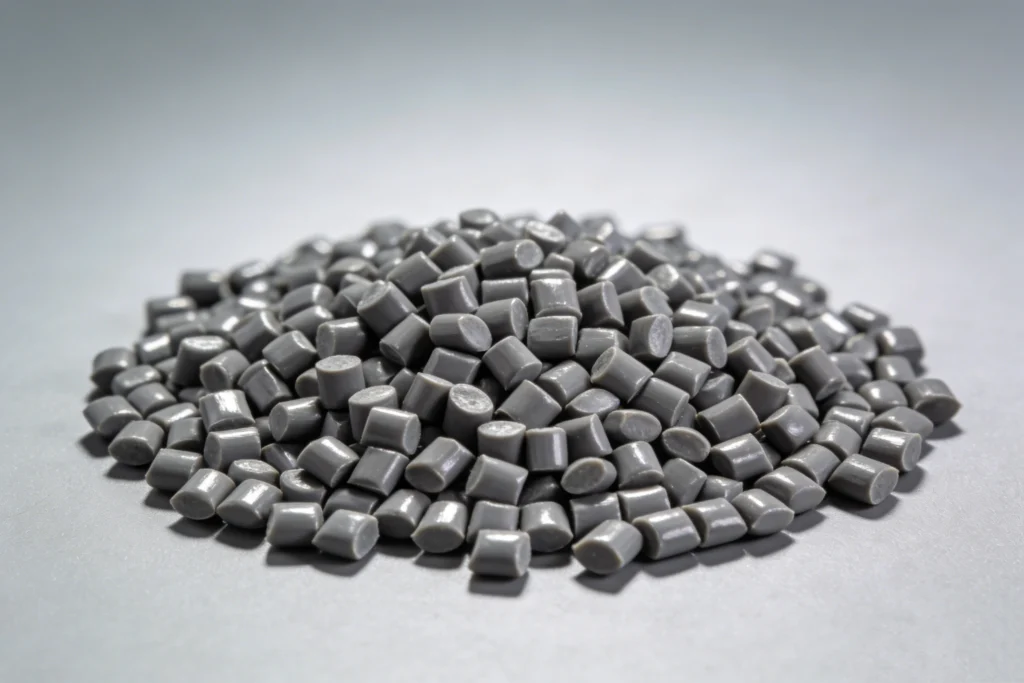
Choosing the wrong plastic can ruin your project. This leads to product failures and wasted investment. Let's see if ABS is the reliable material you have been looking for.
ABS is a strong, versatile, and cost-effective plastic. It is easy to mold and has a great finish. However, it does not handle outdoor use or high heat well and can be damaged by certain chemicals.

Understanding these pros and cons is key. It is the difference between a successful product launch and a costly recall. Let's break down when ABS shines and when you should look for an alternative. This knowledge is crucial for making the right call for your specific needs. It's a conversation I have with clients almost every day at our factory. Making the right material choice at the start saves so much time and money down the road. So, let’s get into the details to help you make an informed decision.
Why is ABS the Go-To Material for So Many Products?
You need a material that is tough, looks good, and does not break the bank. Finding one that ticks all these boxes seems impossible, often forcing you to compromise.
ABS is popular because it offers a fantastic balance of properties. It has high impact strength1, is easy to process, holds its shape well, and is affordable. This combination makes it a reliable choice for a huge range of applications.

Let's dive deeper into why so many of our clients, from toy developers to automotive parts suppliers, love using ABS. The beauty of this material lies in its balanced performance2. It’s not the best at any single thing, but it’s very good at many things. This makes it incredibly versatile. I remember a project with a client developing a new line of educational toys. They needed something strong enough to withstand being dropped by kids, but also with a smooth, glossy surface that could be molded in bright colors. ABS was the perfect fit. We achieved a precision of ±0.05mm3, ensuring all the interlocking parts fit perfectly every time.
Here’s a simple breakdown of its key strengths:
The Balanced Performance of ABS
| Feature | Description | Why It Matters for Your Product |
|---|---|---|
| High Overall Strength4 | ABS is both rigid and tough. It resists impacts well and does not become brittle easily. | Your product will be durable and less likely to break if dropped or mishandled. This is great for consumer electronics casings and kids' toys. |
| Excellent Processability5 | The material flows well during injection molding. It is also very easy to color. | This means faster manufacturing cycles and consistent, vibrant colors. It helps achieve a beautiful, glossy surface finish right out of the mold. |
| Great Dimensional Stability6 | ABS has low shrinkage, so it holds its intended shape and size after molding. | This is critical for parts that need to fit together perfectly. You get high precision and reliable assembly, which we often see in electronic enclosures. |
| Cost-Effective7 | For the performance it delivers, ABS is priced very reasonably compared to more specialized engineering plastics. | You can create high-quality, durable products without a massive material budget, improving your bottom line. |
| Easy Post-Processing8 | The surface of ABS is ideal for secondary operations like painting, printing, and electroplating. | This gives you incredible freedom to customize the final look and feel of your product, from a matte spray paint finish to a shiny chrome look. |
This unique combination is why you see ABS everywhere, from your car’s interior trim to the LEGO bricks your kids play with. It delivers reliable, high-quality results without the high cost of more exotic materials.
What are the Hidden Weaknesses of ABS Plastic You Should Know?
Your product looks great, but will it last? A material's hidden flaws can cause it to fail unexpectedly, leading to customer complaints and damaging your brand's reputation.
The main drawbacks of ABS are its poor resistance to UV light and weathering, which cause it to yellow and become brittle. It also has a relatively low continuous use temperature and can be damaged by certain solvents.

Knowing the limitations is just as important as knowing the strengths. I always make sure my clients are aware of these potential issues before we start production. For example, if a product is meant for outdoor use, standard ABS is almost always the wrong choice. I once had a client who insisted on using ABS for an outdoor sensor housing to save on costs. We strongly advised against it, but they went ahead. A year later, they came back to us because the housings were cracking and failing in the field. We had to re-tool and produce the parts in a weather-resistant material like ASA. It’s a costly lesson to learn.
Let's break down where ABS falls short.
Key Limitations to Consider
Poor Weather Resistance9
When exposed to sunlight (UV radiation) and the elements, ABS degrades. This process is often called "photo-oxidation." The material loses its impact strength, becomes brittle, and the surface turns yellow and chalky. This makes it unsuitable for any long-term outdoor applications unless it is protected with a UV-resistant coating or paint.
Average Temperature Resistance10
ABS performs well at room temperature, but it has its limits. It begins to soften around 105°C (221°F), so it’s not a good choice for parts that will be exposed to high heat. For example, you wouldn't use it for a component right next to an engine or inside a machine that gets very hot. Its long-term service temperature is even lower, typically around 80°C (176°F).
Susceptibility to Solvents11
While it resists things like water and weak acids, ABS can be easily damaged by certain organic solvents. Ketones (like acetone), esters, and some hydrocarbons will cause it to swell, soften, or dissolve completely. This is something to keep in mind if your product might come into contact with cleaning agents, fuels, or certain oils.
Flammability12
Standard ABS is flammable and will continue to burn after being ignited. For applications that require fire safety, like in many electronics or public transport components, you must use a flame-retardant grade of ABS. These modified versions have additives that help them self-extinguish, but this often comes at a higher cost and can sometimes affect other properties.
How Do You Decide if ABS is Right for Your Project?
You have a great product idea. But choosing the right material feels like a gamble. Pick the wrong one, and you could face production delays, quality issues, and budget overruns.
To decide if ABS is right, evaluate your product's key requirements. If you need good impact strength, a high-quality finish, and dimensional precision for an indoor product at a reasonable cost, ABS is an excellent choice.

Making this decision is a core part of my job. At Ambition Industrial, we guide our clients through this process every day. It is a balancing act between performance, cost, and manufacturing reality. You have to ask the right questions. Where will this product be used? What kind of stress will it face? What does it need to look like? How important is the budget? The answers to these questions will point you toward the right material. For an electronics developer creating a new smart home device, ABS is often perfect. It provides the strong, precise housing needed to protect the internal components and can be beautifully finished to match a modern aesthetic. For a client making automotive interior parts like dashboard trim, ABS is also a star player.
To make it easier, think about these trade-offs:
Making the Final Call: ABS vs. Alternatives
The decision often comes down to a direct comparison with other common plastics. Here’s how I explain it to clients:
ABS vs. Polypropylene (PP)13
- Choose ABS if: You need a better surface finish, higher rigidity, and the ability to paint or plate the part. ABS is much better for parts that need to look premium.
- Choose PP if: Cost is your absolute main driver, and you need better chemical resistance or flexibility (like for a living hinge). PP is softer and harder to paint.
ABS vs. Polycarbonate (PC)14
- Choose ABS if: Cost is a major factor and you don't need extreme impact or heat resistance. ABS is easier to process with fewer molding issues like sink marks.
- Choose PC if: Your product needs to survive very high impacts or higher temperatures. PC is tougher but also more expensive and trickier to mold. Sometimes, a PC/ABS blend offers a good compromise.
ABS vs. Polystyrene (PS)15
- Choose ABS if: Your product needs to be tough and durable. General-purpose polystyrene is brittle and breaks easily.
- Choose PS if: You are making a very low-cost, disposable item where strength is not a concern, like a disposable cup or a petri dish. High Impact Polystyrene (HIPS) is a closer competitor, but ABS generally has better strength and finish.
Ultimately, you need to map your product's environment and performance needs against this checklist. If your product lives indoors, needs to be tough, precise, and look good without costing a fortune, ABS is probably at the top of your list.
Conclusion
ABS offers a fantastic mix of strength, finish, and affordability for many indoor products. However, its weakness in heat and UV light means it is not a one-size-fits-all solution.
Discover the factors that give ABS plastic its high impact strength, making it suitable for durable consumer products. ↩
Learn about the balanced performance of ABS plastic, offering reliability in multiple applications without specializing in one area. ↩
Discover how ABS plastic's precision capabilities ensure perfect fit and function in complex assemblies. ↩
Explore the characteristics that contribute to ABS plastic's high overall strength, enhancing product durability. ↩
Understand how ABS plastic's processability leads to efficient production cycles and vibrant product finishes. ↩
Learn why ABS plastic's dimensional stability is crucial for products requiring precise fit and reliable assembly. ↩
Explore how ABS plastic provides cost-effective solutions, balancing performance and budget for manufacturers. ↩
Discover the post-processing techniques for ABS plastic, allowing customization of product appearance and functionality. ↩
Understand the factors leading to ABS plastic's poor weather resistance, affecting its suitability for outdoor use. ↩
Learn about the temperature limitations of ABS plastic and how they impact its use in high-heat environments. ↩
Explore the solvent susceptibility of ABS plastic, crucial for products exposed to chemicals or cleaning agents. ↩
Understand the flammability concerns with ABS plastic and the importance of using flame-retardant grades for safety. ↩
Compare ABS and PP to understand their strengths and weaknesses, aiding in material selection for specific applications. ↩
Explore the differences between ABS and PC, helping you choose the right material based on impact and heat resistance needs. ↩
Learn the differences between ABS and PS, focusing on strength and cost considerations for product development. ↩