
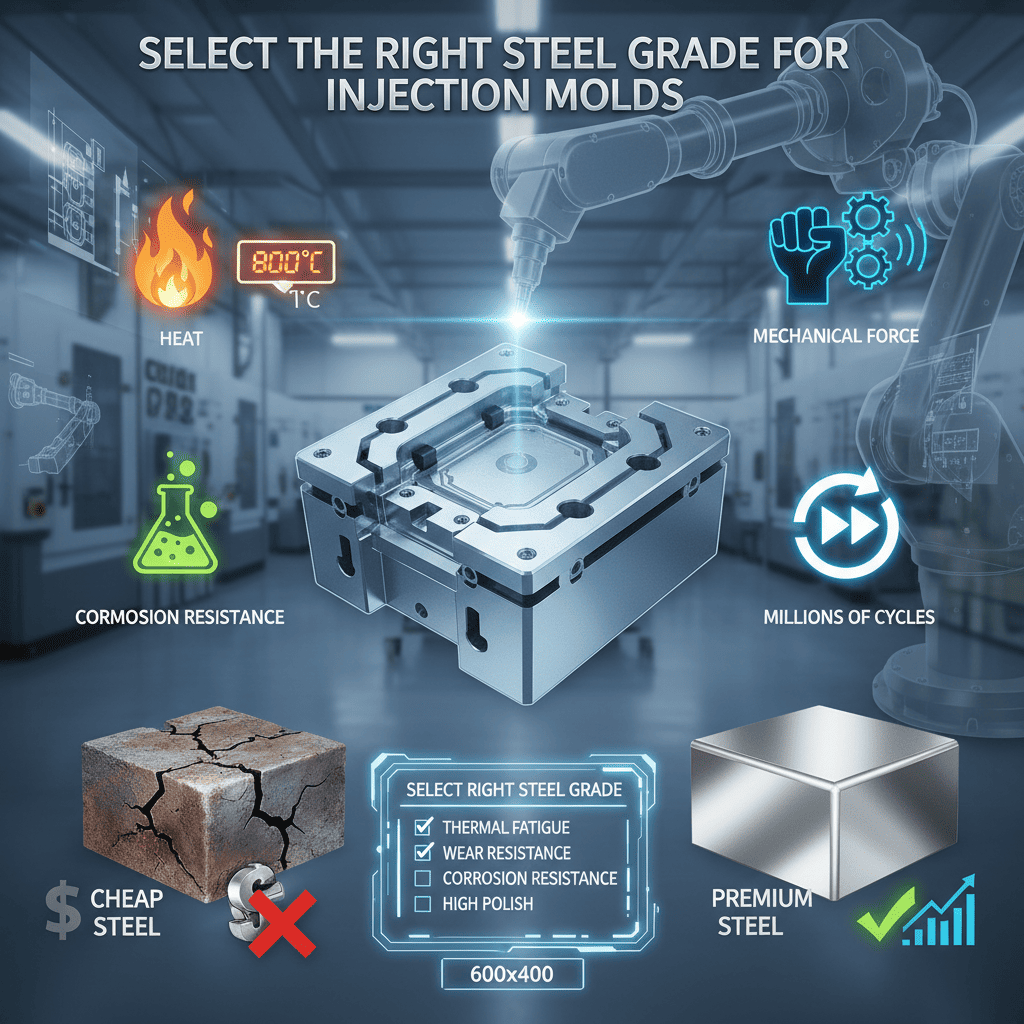
Struggling with mold failures and budget overruns? The wrong steel choice can derail your entire project. I will guide you to select the perfect steel by matching it to your product's specific needs.
To select the right steel, you must translate your product requirements into material properties. For a high-gloss finish1, you need steel with high purity. For a long production life, you need steel with excellent thermal fatigue resistance. Always match the steel to the job, not just the price.

Over my 15 years in custom mold making, I've seen many projects succeed or fail based on one early decision: the choice of mold steel2. It's a common mistake to just look at the hardness or the price tag. But the best choice is never that simple. The real secret is to think like the mold itself and understand the challenges it will face day in and day out. This approach has saved my clients, from automotive parts distributors to educational toy developers, countless hours and dollars. Let's dig into how you can do the same.
How do you match steel to the real-world stresses on your mold?
Are your molds failing sooner than expected, even with "hard" steel? These surprise failures stop production and create huge delays. Let's analyze the real working conditions to prevent this.
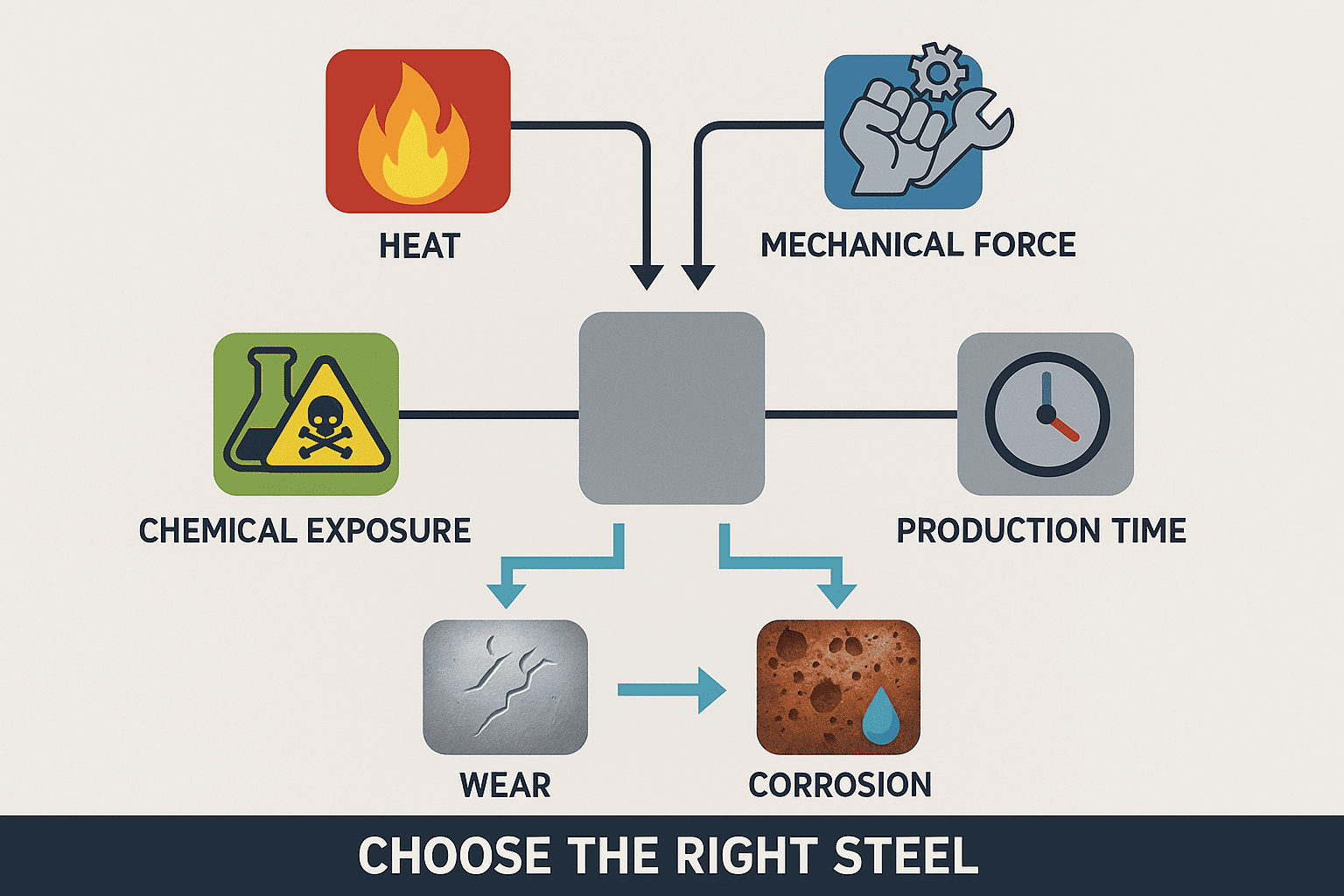
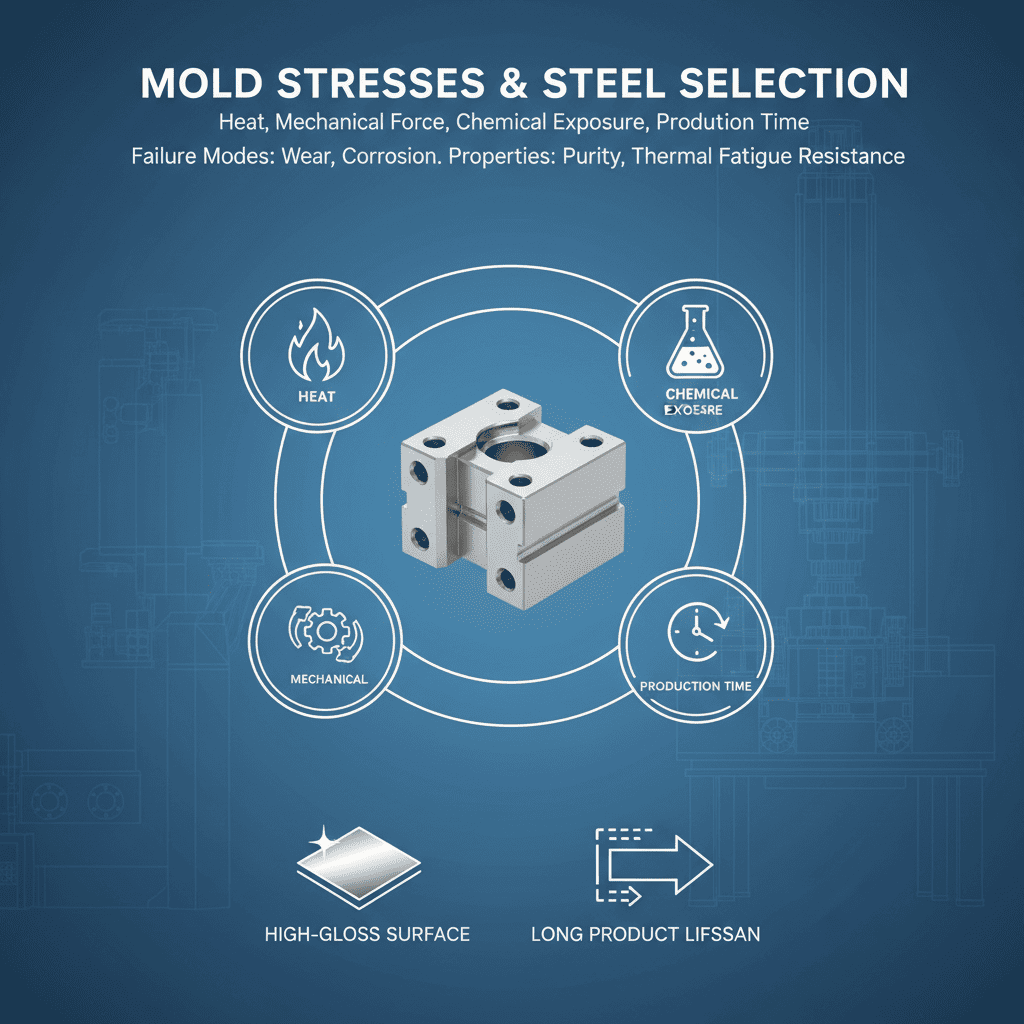
Focus on the four key stresses your mold will face: heat, mechanical force, chemical exposure, and production time. By identifying the most likely failure mode for your specific process, such as wear or corrosion, you can choose a steel with the right properties to resist it effectively.
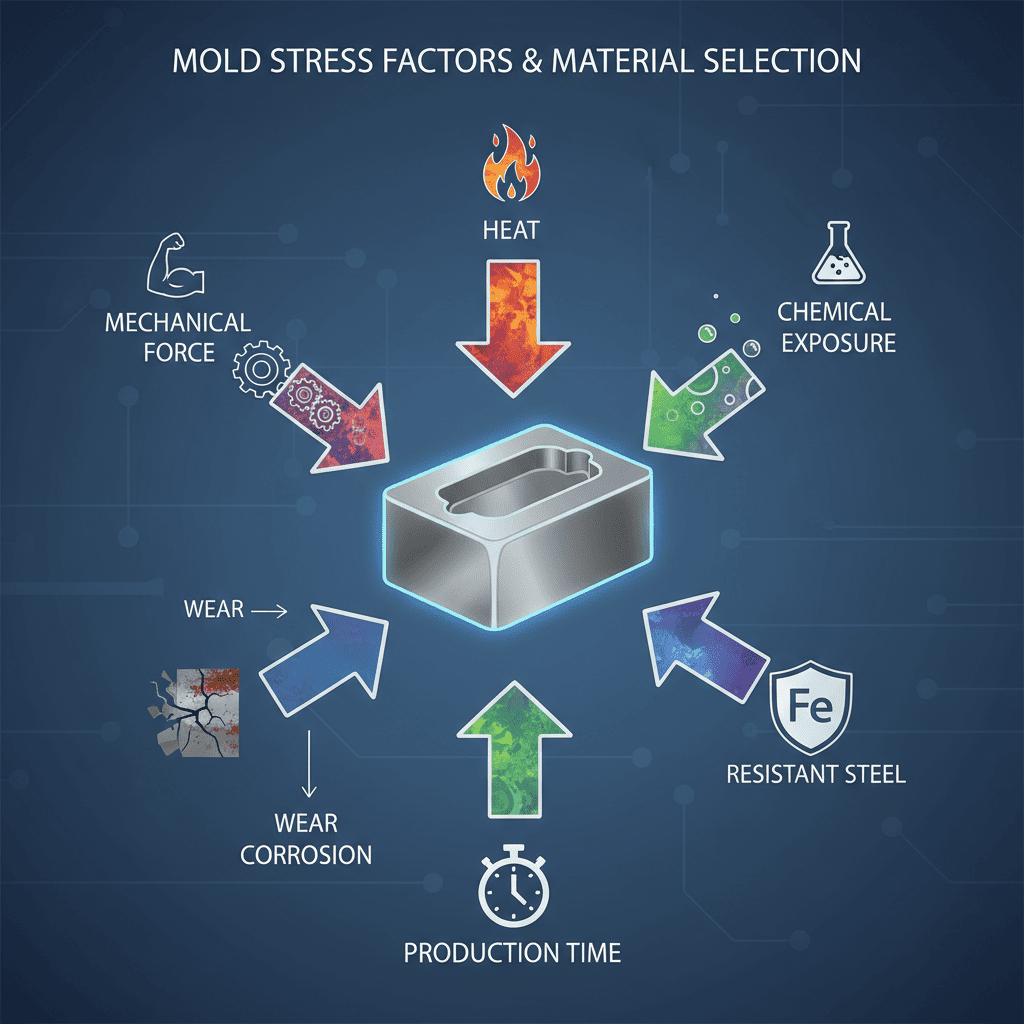

For years, I've taught my team to think beyond a steel's hardness rating. We focus on its "service conditions." This means we predict how the mold will perform under the unique pressures of a specific project. It's about looking at the complete picture. A mold isn't just a static block of metal; it's a dynamic tool that endures a constant cycle of stress. I break these stresses down into four main categories.
The Four Core Stresses
- Heat Stress: Hot plastic is injected into the mold and then rapidly cooled. This constant temperature fluctuation can cause tiny cracks to form over time, a problem known as thermal fatigue. For molds running high-temperature plastics like PEEK or with very fast cycle times, this is a major concern.
- Mechanical Stress: This includes the immense clamping force holding the mold shut and the pressure of the plastic being injected. It also covers the abrasive wear from filled plastics, like those with glass fibers, which can scratch and erode the mold surface over many cycles.
- Chemical Stress: Some plastics, like PVC, can release corrosive gases during molding. This can slowly eat away at the mold cavity, ruining the surface finish and dimensional accuracy. The type of plastic you use directly impacts this risk.
- Time (Longevity) Stress: How many parts will this mold make? A prototype mold for 5,000 shots has very different requirements than a production mold expected to run over a million cycles. The "time" factor is about fatigue and wear resistance over the long haul.
By evaluating these four factors, you can build a profile of the ideal steel for your specific application.
| Stress Factor | Potential Failure Mode | Required Steel Property |
|---|---|---|
| Heat | Thermal fatigue, cracks | High hot strength, good thermal conductivity |
| Force | Wear, deformation, chipping | High hardness, toughness, wear resistance |
| Chemical | Corrosion, pitting | High chromium content, corrosion resistance |
| Time | General wear and tear, fatigue | High fatigue strength, dimensional stability |
How do you translate product features into the right steel properties?
You need a perfect, mirror-like finish on your product, but your mold can't produce it consistently. This leads to endless polishing and quality issues. The solution lies in decoding your product's needs.
Think of it as a translation. A "high-gloss surface" requirement translates to needing a very pure, uniform steel that can be polished to a mirror finish3. A "long product lifespan" translates to needing steel with high thermal fatigue resistance and high-temperature strength to endure millions of cycles.
A client once came to us needing a mold for a premium cosmetic case. They specified a "flawless, piano-black finish." Their previous supplier used a standard P20 steel4, and they were spending a fortune on post-production polishing, with inconsistent results. The problem wasn't the polishing; it was the steel. P20 is a good all-around steel, but it lacks the ultra-fine grain structure and purity needed for a true Class A finish. We switched them to a high-purity, electro-slag remelted steel like S136. The initial cost was higher, but the mold produced perfect parts right away, eliminating the need for extra labor and drastically improving consistency.
This experience taught me a valuable lesson: you must translate your product's marketing language into the technical language of metallurgy.
From Feature to Material Specification
Let's break down some common product requirements and what they mean for your steel choice.
-
Requirement: High-Gloss / Mirror Finish This means your product surface must be flawless. For the mold, this requires a steel with exceptional purity and a uniform microstructure. Impurities or inconsistencies in the steel will show up as tiny defects on the polished mold surface, which then transfer to every part you make.
- Steel Property Needed: High Purity, Excellent Polishability.
- Example Steels: S136 (Stainless), NAK80 (Pre-hardened).
-
Requirement: Long Production Run (1 Million+ Shots) This means the mold must resist wear and fatigue over a very long time. The steel needs to maintain its hardness and shape after millions of heating and cooling cycles.
- Steel Property Needed: High Wear Resistance, High Thermal Fatigue Strength.
- Example Steels: H13, 1.2344, SKD61 (Hot-work tool steels).
-
Requirement: Abrasive Materials (e.g., Glass-Filled Nylon) Plastics with additives like glass or carbon fiber act like sandpaper on the mold surface. You need a steel that is exceptionally hard and tough to resist being worn away.
- Steel Property Needed: Very High Hardness, Excellent Wear Resistance.
- Example Steels: PM-steels (Powder Metallurgy), or hardened tool steels with surface coatings (e.g., Titanium Nitride).
By making this translation early in the design process, you align the mold's capability directly with the product's quality requirements from day one.
Is the cheapest steel really the most expensive choice?
You chose a low-cost steel to save money upfront, but now you're facing constant repairs and production downtime. These hidden costs are quickly erasing your initial savings.
Absolutely. The cheapest steel often becomes the most expensive option when you consider the total lifecycle cost. A more expensive, higher-grade steel can dramatically reduce expenses from maintenance, downtime, polishing, and mold replacements, providing far greater value over the project's lifetime.
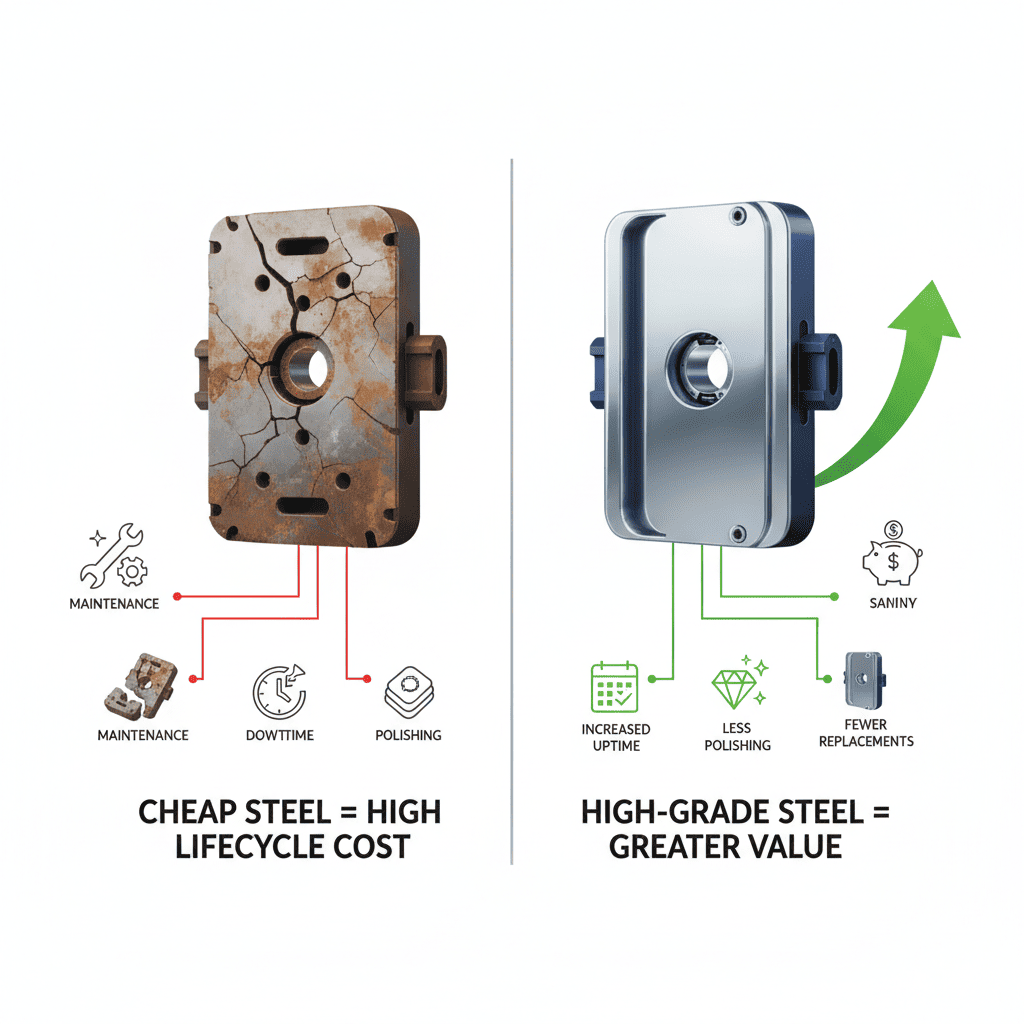
I often talk to project managers who are under pressure to reduce the initial mold cost. The easiest target is often the raw material: the steel. Opting for a cheaper grade can shave thousands of dollars off the initial quote. However, I always ask them to consider the "Total Cost of Ownership." This is a concept we use at Ambition Industrial to help clients see the bigger picture. The price you pay for the mold is just the beginning of the story. The real cost includes every dollar spent over the mold's entire service life.
Let’s run through a typical scenario.
The True Cost Calculation
Imagine you have a project to produce 500,000 parts with a slightly abrasive plastic. You have two options for the mold steel:
- Option A: Standard P20 Steel
- Initial Cost: $15,000
- Option B: Higher-Grade H13 Steel
- Initial Cost: $20,000
The $5,000 savings with P20 looks attractive. But let's project the costs over the production run. The abrasive plastic will wear down the softer P20 steel. After 150,000 shots, the mold will likely need to be pulled from production for re-polishing and repair, causing several days of downtime. This might happen two more times before the run is complete. The H13 steel5, being much harder and more wear-resistant, will likely complete the entire 500,000-shot run with minimal maintenance.
| Cost Factor | Option A (P20 Steel) | Option B (H13 Steel) |
|---|---|---|
| Initial Mold Cost | $15,000 | $20,000 |
| Maintenance (x2) | $4,000 | $0 |
| Downtime Cost | $6,000 | $0 |
| Total Lifecycle Cost | $25,000 | $20,000 |
In this simple example, the "cheaper" steel ended up costing $5,000 more. This doesn't even account for the stress of production delays or the risk of shipping late to your customer. Investing in the right steel from the start is an insurance policy against future headaches and expenses.
Conclusion
Choosing the right mold steel is about matching the material's properties to your product's needs and the mold's entire life cycle, not just its initial price tag.
Explore this link to understand the steel types that can help you achieve a flawless, high-gloss finish for your products. ↩
This resource will guide you through the critical factors in choosing the right mold steel for your projects. ↩
This link provides insights into the best steel grades for achieving a flawless mirror finish in your molds. ↩
This resource outlines the advantages and disadvantages of P20 steel, helping you make informed decisions. ↩
Discover why H13 steel is often recommended for injection molds and its benefits over other grades. ↩