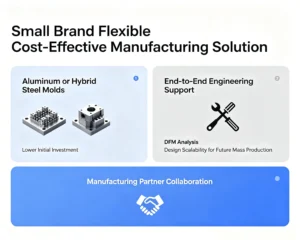
Struggling with high mold costs for small projects? These expenses can quickly ruin your budget. But a smart mold design approach makes low-volume production affordable and fast.
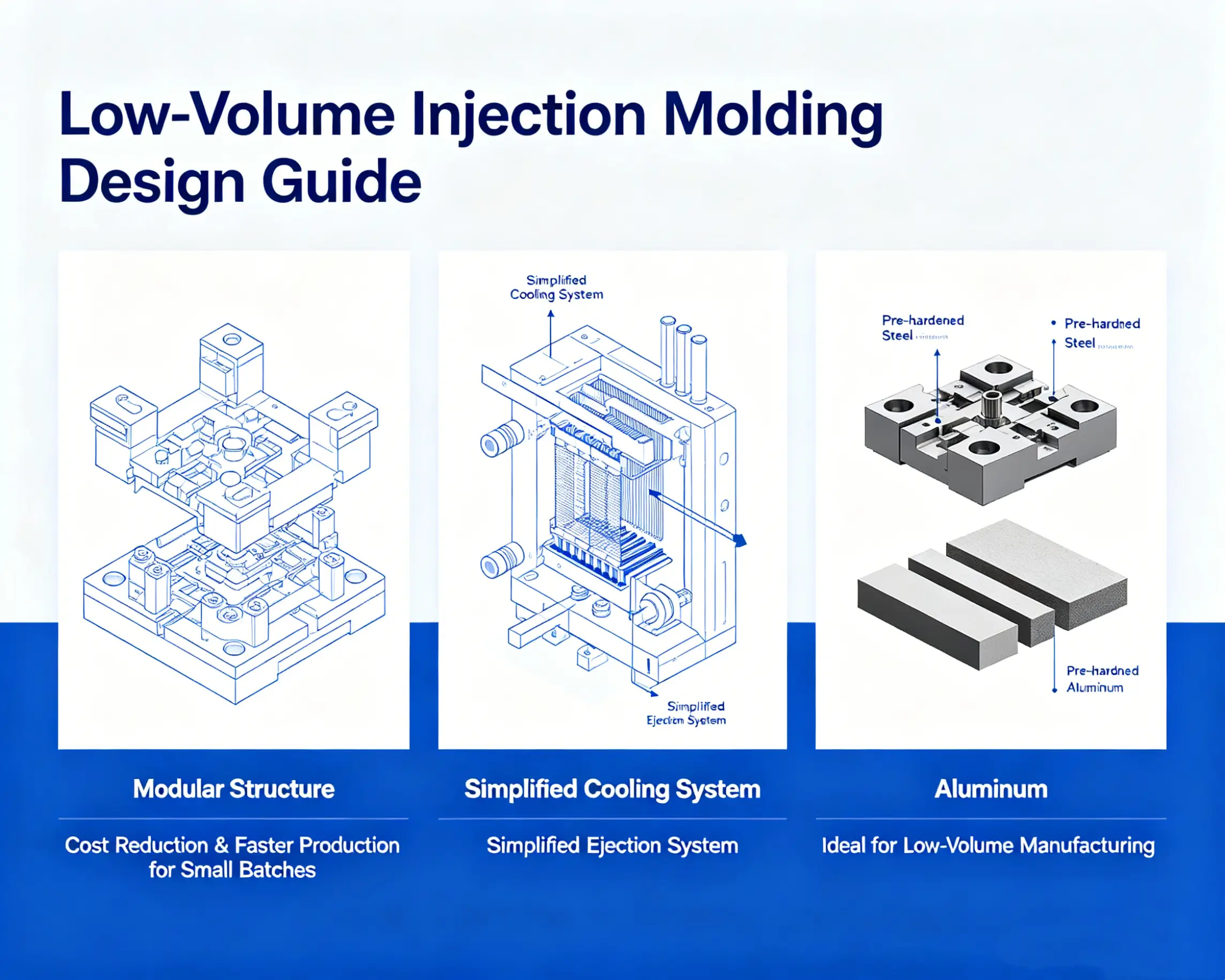
The most suitable designs for low-volume injection molding use modular structures, simplified cooling and ejection systems, and softer materials like pre-hardened steel or aluminum. This combination significantly cuts costs and speeds up production for small batches, perfectly matching low-volume manufacturing needs.
This might sound simple, but getting the details right is what really makes a difference. I've seen many clients overspend on molds that were designed for mass production, not their actual needs. At Ambition Industrial, we've spent 15 years perfecting our approach for low-volume runs, especially for clients like STEM toy developers and boutique electronics brands who need to move fast. It's about being clever with the design from the very beginning. Let's break down how these specific design choices can save you a lot of time and money, and help you get your product to market faster.
Why should you choose modular designs over one-piece molds for low-volume runs?
Finding that your mold costs are too high for short production runs? Traditional one-piece molds are slow and expensive to make, killing the agility needed for small batch projects.
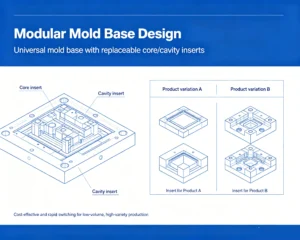
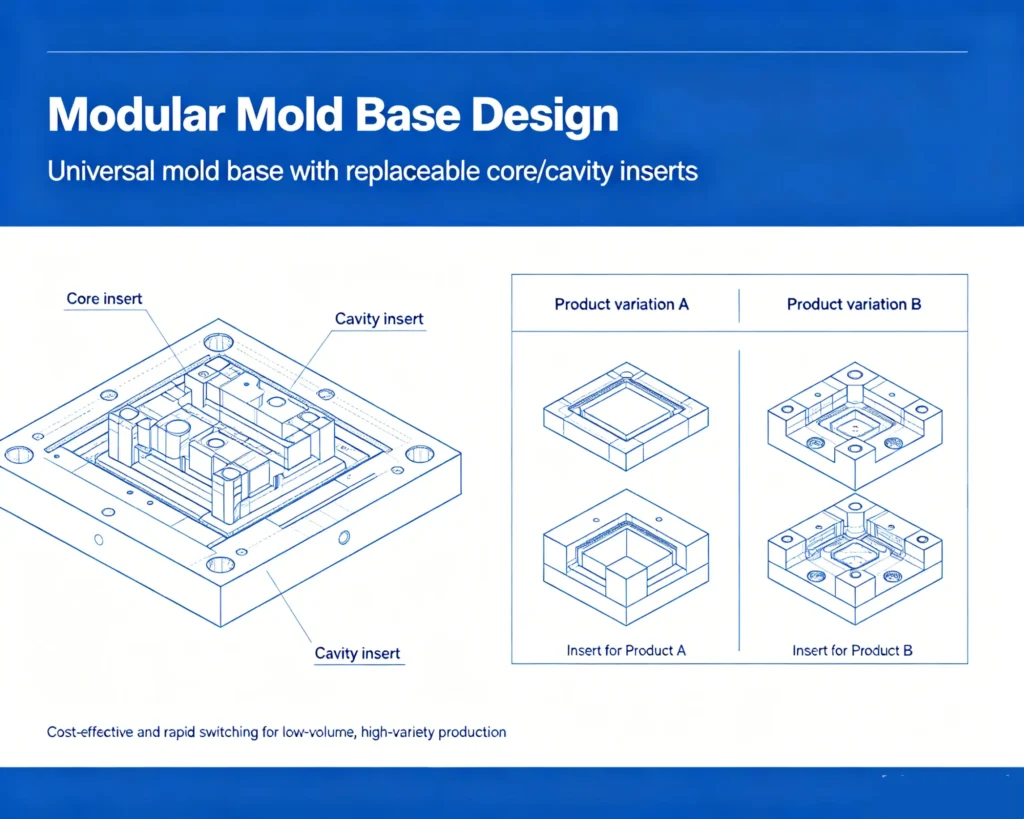
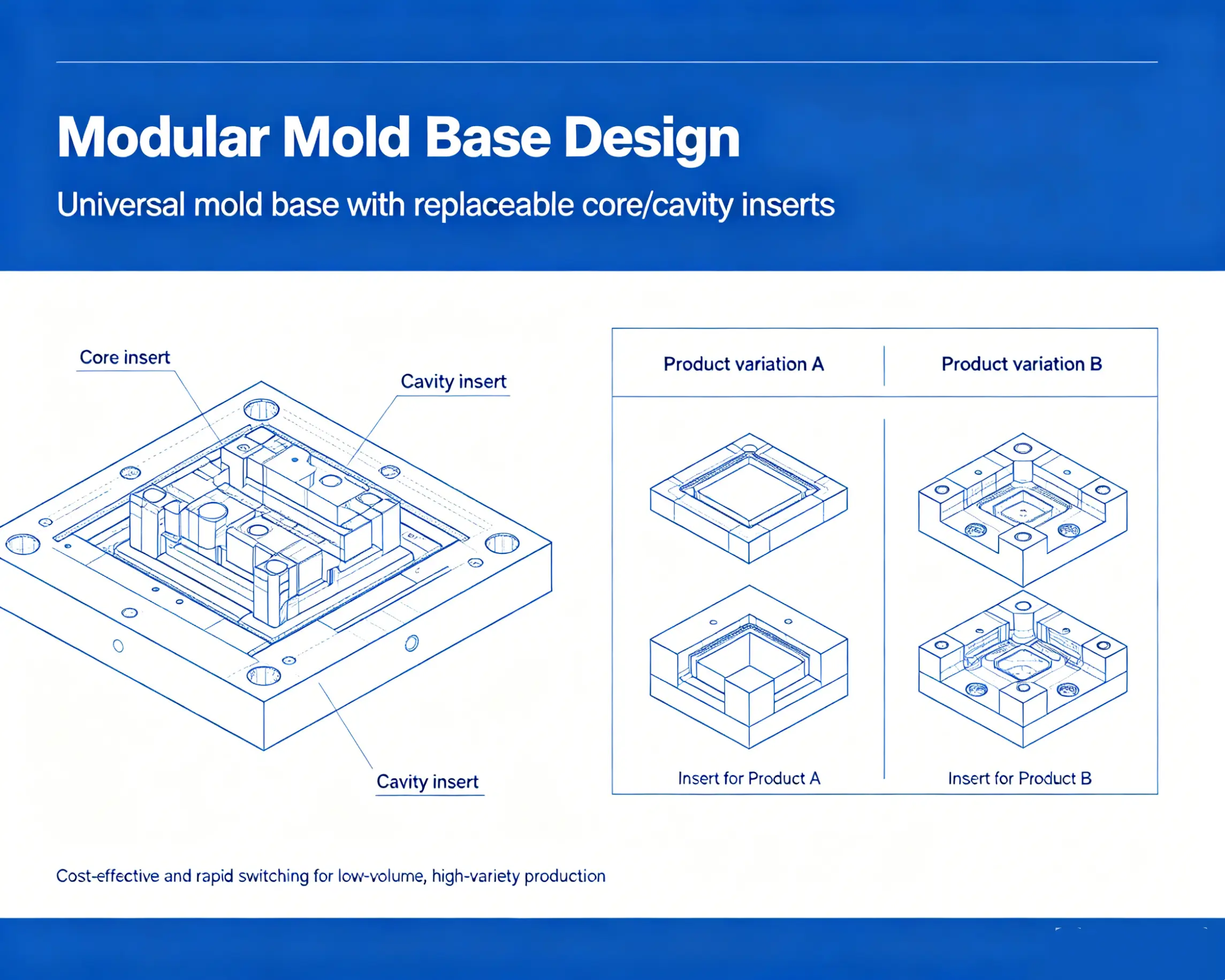
A modular design is your best bet. We create a universal mold base and use replaceable inserts for the core and cavity. This makes it much cheaper and faster to switch between different product variations. It’s a perfect fit for low-volume, high-variety production.
Let me dive deeper into this. I remember a project with a client developing educational toys. They had five different characters but a limited initial budget. A traditional one-piece mold for each character would have cost them a fortune. Instead, we proposed a modular approach.
The Modular Advantage
We designed one master mold frame that could hold different inserts. Each character's unique shape was machined into a smaller, separate insert. This dramatically cut down the cost and time. If one part of a mold gets damaged, we only need to replace a small, inexpensive insert, not the entire mold. This is a game-changer for businesses that need to iterate quickly and keep initial investments low.
Here’s a simple breakdown of the benefits:
| Feature | One-Piece Mold (Hard Mold) | Modular Mold (Split Structure) |
|---|---|---|
| Initial Cost | High | Low (shared base reduces cost) |
| Lead Time | Long | Short (only inserts need custom machining) |
| Flexibility | Low (one mold, one product) | High (easy to swap inserts for new products) |
| Repair | Complex and expensive | Simple and cheap (replace only the insert) |
This strategy perfectly aligns with the core needs of low-volume production: fewer parts, more styles, and minimal waste. It’s how we help our clients stay competitive without breaking the bank.
How does a simpler mold design improve low-volume production?
Worried that simplifying your mold will compromise quality? Complex systems with many moving parts can cause unexpected delays and maintenance headaches, especially when you are not running the machine 24/7.
For low-volume runs, a simpler mold is actually better. By using straightforward cooling and ejection systems, we reduce manufacturing complexity. This makes the mold more reliable, easier to debug, and more tolerant of small changes in materials or process parameters, which is common in small batches.
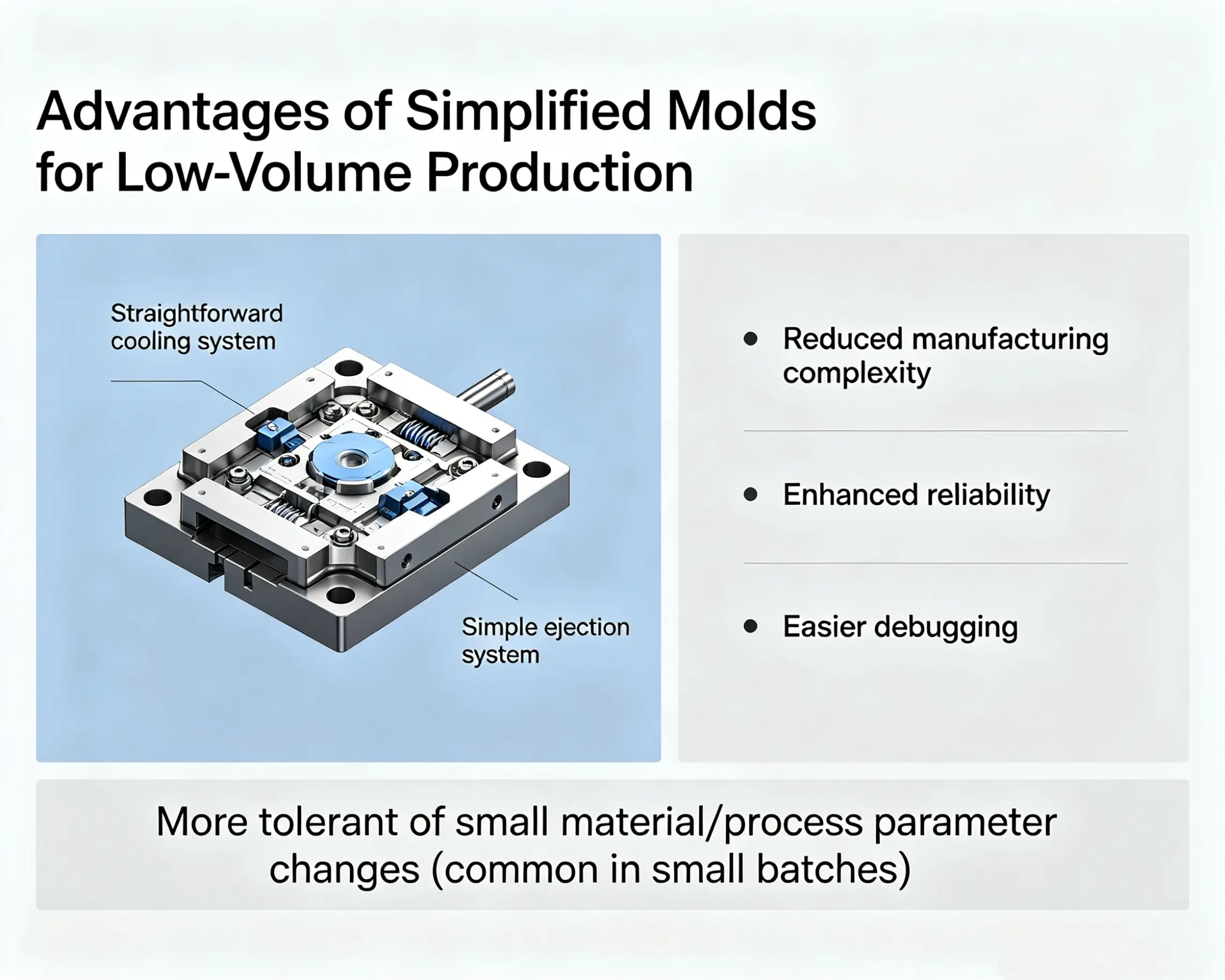
This is something I explain to project managers all the time. For large-scale production, you need complex cooling channels that wrap around the part to minimize cycle time by seconds. You also need intricate ejection systems to handle high-speed operations. But for low-volume projects, the production frequency is much lower. Shaving a few seconds off the cycle time doesn't justify the huge increase in cost and complexity.
The Beauty of Simplicity
We focus on what truly matters for small batches: reliability and cost-effectiveness. A simpler design has several key advantages that make it ideal for clients who need flexibility.
- Simplified Cooling: Instead of complex conformal cooling, we use simple, straight-drilled cooling lines. They are easy to machine and provide more than enough cooling for the slower pace of low-volume production. This prevents a lot of potential issues down the line.
- Simplified Ejection: We reduce the number of delicate ejector pins, slanted ejectors, and other complex parts that are prone to wear and tear. This makes the mold less likely to jam or require frequent maintenance, which is a common pain point for our clients.
A simpler mold has higher "process tolerance." This means it can handle slight variations in plastic material or injection settings without causing defects. This robustness is incredibly valuable when you're producing only a few thousand parts and can't afford long downtime for adjustments. It’s about making the mold work for your process, not the other way around.
How can soft mold materials balance cost and lifespan?
Do you think you need expensive hardened steel for your mold to last? For low-volume projects, this is often overkill and a waste of money that could be better spent elsewhere.
Soft mold materials like pre-hardened steel or aluminum are the perfect solution. They are much faster and cheaper to machine, cutting mold costs by up to 50%. These materials are durable enough for production runs from a few hundred to tens of thousands of parts.
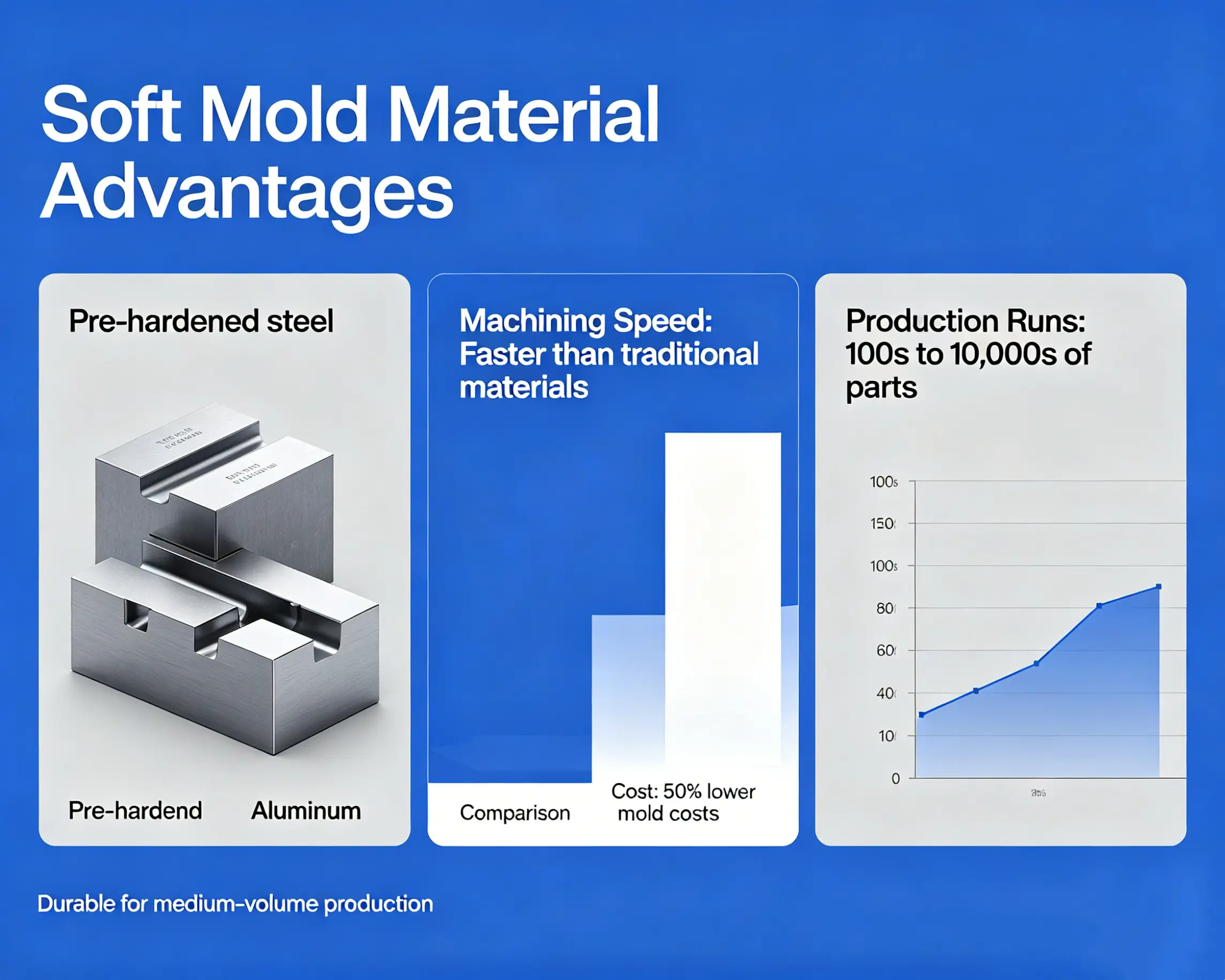
I always advise my clients, especially those in fast-moving markets like consumer electronics, to think about the total project cost, not just the mold itself. A high-end, hardened steel mold (like H13 or S136) is designed to produce millions of parts. But what if your product life cycle is only 20,000 units? You would be paying for a lifespan you will never use.
Choosing the Right Material for the Job
The key is to match the mold material to your production volume and budget. This is a core part of our one-stop manufacturing solution at Ambition Industrial. We help clients choose the right path to balance cost, speed, and quality.
Let's compare the common options:
| Material | Typical Lifespan (Shots) | Cost Factor | Best For |
|---|---|---|---|
| Aluminum (7075) | 500 - 10,000 | Low | Rapid prototyping, very low volumes |
| Pre-hardened Steel (P20) | 10,000 - 50,000 | Medium | Low to medium volume production |
| Hardened Steel (H13) | 500,000+ | High | High-volume mass production |
For most of our clients, P20 steel is the sweet spot. It offers a great balance of durability and cost. Furthermore, we can simplify the surface treatment. Instead of expensive mirror polishing or nitriding, a basic sanding or textured finish is often sufficient for the product's functional and aesthetic needs. This pragmatic approach helps control upfront investment and allows businesses to launch their products quickly, which is the ultimate goal.
Conclusion
Success in low-volume molding depends on smart design choices. Use modular structures, simple systems, and soft materials to cut costs, reduce lead times, and get your product to market faster.