Sourcing molds from China seems complex and full of risks. A wrong move can lead to project delays and quality nightmares. Understanding a few key precautions is the secret to success.
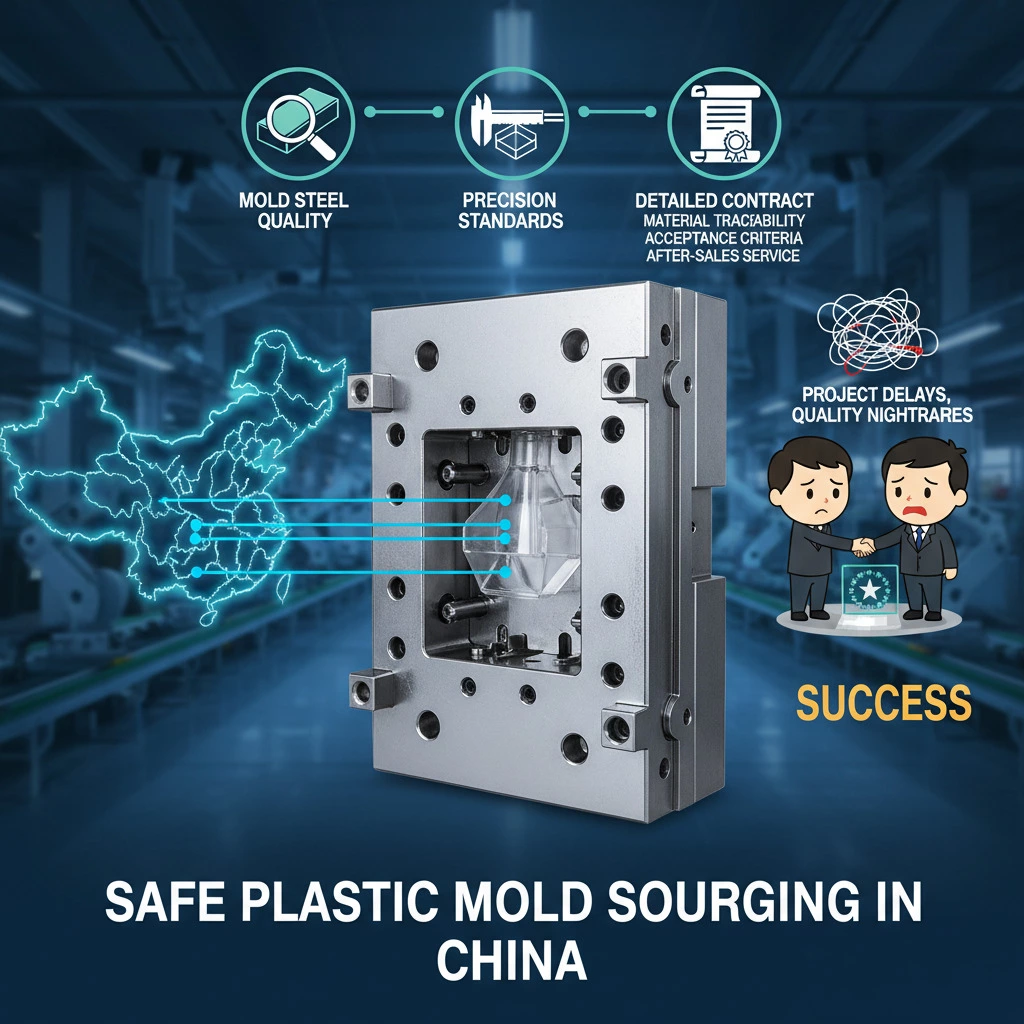
To purchase plastic molds safely in China, focus on suppliers in the Pearl or Yangtze River Deltas. You must verify the mold steel quality1 and precision standards2. Also, secure a detailed contract3 that covers material traceability4, acceptance criteria5, and after-sales service6 to ensure long-term value.
This sounds straightforward, but the real challenge is in the details. You need to know exactly what to look for to avoid common mistakes and find a partner you can trust. Let's break down the most important points to protect your investment and ensure your project runs smoothly.
Why Does a Supplier's Location in China Matter So Much?
You found a supplier with a great price, but they are in a remote area. Now you are dealing with slow communication and shipping delays. Choosing a supplier in a major industrial hub changes everything.
Suppliers in the Pearl River and Yangtze River Deltas7 are part of a mature industrial ecosystem. This gives them faster access to raw materials, skilled labor, and logistics. This synergy means quicker turnarounds, better problem-solving, and more reliable delivery for your project.

When we talk about location, we are not just talking about a spot on a map. We are talking about being inside a powerful manufacturing ecosystem8. For over 15 years, our factory in Dongguan has been in the heart of the Pearl River Delta. This location is a huge advantage for our clients. Everything we need, from specialized steel suppliers to heat treatment experts and international ports, is right here. This complete supply chain means we can solve problems quickly and keep projects on schedule. Sourcing from a hub like this is not just about convenience; it is a strategic move to reduce risk and improve efficiency.
The Power of Industrial Clusters
Choosing a supplier inside one of these clusters directly impacts your project's success. The difference is clear when you compare the resources available.
| Feature | Inside Industrial Cluster (e.g., Dongguan) | Outside Industrial Cluster |
|---|---|---|
| Material Sourcing | Fast, diverse options, competitive pricing | Slower, limited choices, higher shipping costs |
| Skilled Labor | Large pool of experienced engineers/technicians | Difficult to find specialized talent |
| Logistics | Major ports, efficient land transport | Remote, longer shipping times, higher risk |
| Collaboration | Easy access to heat treatment, polishing, etc. | Outsourcing specialized tasks is complex |
How Can You Avoid the Hidden Costs of a "Cheap" Mold?
You received a surprisingly low quote for a new mold. But it failed after just a few thousand cycles, costing you much more in downtime and repairs. A low price often hides bigger problems.
To avoid hidden costs9, you must investigate the mold's technical specifications10. Insist on a material certificate for the steel, like P20 or H13. Also, clearly define the required precision, especially for high-end parts where a ±0.05mm tolerance is standard.

A low price is often the first sign of trouble. The two most common areas where suppliers cut corners are the mold steel and the manufacturing precision. Substandard steel will wear out quickly, leading to constant repairs and a short mold life. Likewise, poor precision means your final parts will not meet specifications, causing assembly issues or product failure. I have seen this happen many times. A client came to us after their "cheap" mold from another supplier failed. The steel was not what they were promised, and the parts were inconsistent. We had to build a new mold from scratch, which completely erased their initial savings. You have to look past the initial quote and focus on the total cost of ownership.
Steel and Precision: The Two Pillars of Quality
These two factors determine the mold's performance and lifespan. You must be very specific about them in your technical requirements.
- Mold Steel Verification: Always ask for the steel's certificate of origin. For high-volume production or abrasive materials, you need high-quality imported steel11. Don't just take their word for it; make it a contractual requirement.
- Precision and Tolerance: The required precision depends on your product. For many of our clients in the automotive and electronics industries, a tolerance of ±0.05mm is the standard. For some highly specialized parts, we achieve ±0.02mm. Clearly state your tolerance requirements12 and how they will be measured and verified. This prevents any misunderstandings later on.
What Should Your Contract Absolutely Include?
You thought your project was protected by a contract. But when a problem with the material quality came up, you found the agreement was too vague to help. A weak contract is as bad as no contract at all.
Your contract must be a detailed technical document. It should specify raw material traceability4, define clear inspection points, and outline after-sales service6 terms. It also needs clauses for handling material price fluctuations and potential supply chain delays13.
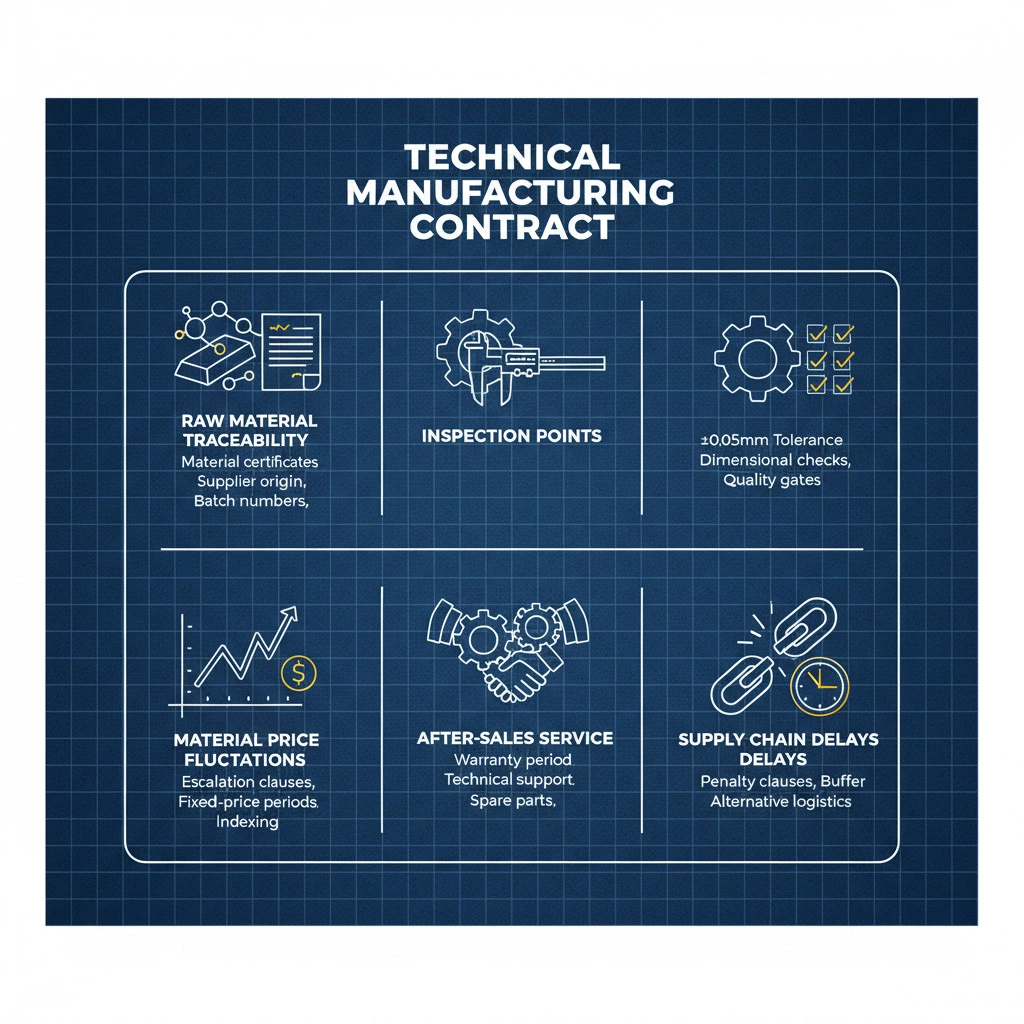
A good contract is your best protection. It is not just a commercial agreement; it is the blueprint for your entire project. Over the years, I've learned that clarity is everything. We work with our clients to create contracts that leave no room for doubt. For example, we specify the exact brand and grade of plastic resin and steel. We also define the inspection process, including when and how we will send samples for approval. We even include terms for maintenance and repair after the mold is delivered. This level of detail builds trust and ensures everyone is on the same page. It turns the contract into a tool for success, not just a piece of paper.
Key Clauses for a Bulletproof Agreement
Think of your contract as your project's insurance policy. Make sure it includes these critical sections to protect your interests.
- Material Traceability: The contract should require the supplier to provide certificates for all key materials, especially mold steel and plastic resins. This ensures you get exactly what you paid for.
- Acceptance Criteria: Define the specific conditions for mold approval. This should include sample part approval, a successful trial run (T1), and maybe even a short production run to test stability. Using AI inspection data can make this process even more objective.
- After-Sales and Warranty: What happens if the mold needs repair? The contract must clearly state the warranty period and the supplier’s responsibility for maintenance and support.
- Risk Management Clauses: The modern supply chain is unpredictable. Your contract should include clauses that address how to handle unexpected events, like sharp increases in raw material prices or shipping delays. This creates a fair plan for both sides to navigate challenges.
Conclusion
To buy molds in China successfully, focus on suppliers in industrial hubs, verify technical details like steel and precision, and secure a strong, detailed contract3.
Reference
Learn about the best practices for ensuring high mold steel quality to avoid costly mistakes. ↩
Discover the essential precision standards that can impact your mold's performance and longevity. ↩
Find out the critical elements that make a contract effective in protecting your investment. ↩
Understand how material traceability can safeguard your project and ensure quality. ↩
Explore the necessary acceptance criteria to ensure your molds meet quality standards. ↩
Learn about the importance of after-sales service and how it can affect your project. ↩
Explore this link to understand how these regions enhance mold sourcing efficiency and reliability. ↩
Discover how being part of a manufacturing ecosystem can enhance sourcing efficiency. ↩
Discover the potential hidden costs that can arise from choosing low-priced molds. ↩
Explore how detailed technical specifications can prevent costly issues in mold production. ↩
Learn why high-quality steel is crucial for the durability and performance of your molds. ↩
Understand the importance of tolerance requirements in achieving precise mold performance. ↩
Explore effective strategies to manage and mitigate potential supply chain delays ↩